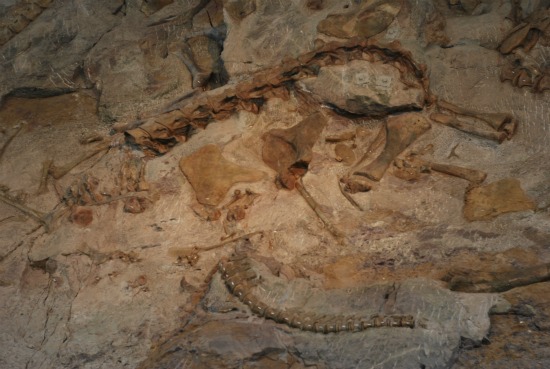
Omnivorous Dinosaur Fossils Evidence Of Hunger

Monday, October 31, 2011


Dinosaur fossils from southern Alberta have shown that some of the creatures that roamed the seas about 74 million years ago, could only eat something that classifies life flourish.

A research group improved the remaining two samples prognathodon, often described as marine reptiles of six meters in length is also directly related to lizards, 30 km south of Lethbridge in 2002 and 2007. The newly exposed fossils believed to be the world's only fossil of this species is found both skulls and skeletons in one piece.

The study was conducted by the Royal Tyrrell with Takuya Konishi and Donald Brinkman, who thought the dinosaur fossils in an attempt to loosen a puzzle really primitive. When the investigation has sealed the courage to prognathodon others, also part of the family mosasaurs, researchers unveiled a large fish of about 1.6 meters long, 60 inches of a turtle coverage, and this they describe as a potential ammonite jaw. "What was important was prognathodon was not only able to feed on fish, like most mosasaurs did, but it can also eat turtles," said Konishi. "He told us he was able to piece of meat with his teeth, and it can also chew hard-shelled animals." Thus, recent studies indicate prognathodon was "omnipotent" in its marine food chain, Konishi also added more off.

The discovery will help researchers to put together again as part of an evolutionary mystery of research has shown that, although the heads prognathodon were huge, their torsos turned out to be much smaller. "Regardless of its enormous head, the skeleton was not large, was too thin," said Konishin. The latest study showed that the mosasaurs heads' were surrounded by creatures first to develop parts of the body, and was adapted as the reptiles could expand their eating habits, especially by improving the survival rate of interest, and a significant thrive in the upper part of their ecosystem.

For more information related to dinosaurs, visit rareresource.com.

The Dinosaurs Are Rare Exhibit In Paris


Three unique dinosaur fossils and a series of fossils and minerals on display in Paris before going under the hammer at auction. Sotheby present three copies of previously unidentified dinosaur. With all three, the focus is a dinosaur mummy Prosaurolophus maximum established in the U.S. the state of Montana - which measures 11 meters long and predictable in order to obtain a cost of between 1.2 and € 1.5 million. The beast was established early with the mummies of the pieces of skin can still be seen. The information that is 95 percent of all brands of exclusivity a rare piece.

Highlights include the 175 million years old dinosaur Suuwassea Emiliae. A sort of Diplodocus lived in the latter stages of the herbivore zone Jurassic 147 million years ago, and currently estimated at 900 000 and 1 200 000 euros. There are more than two specimens of this kind is known around the world. The last main piece of a 98 per cent throughout the period Tenontosaurus Early Cretaceous, and expect to get between 600 000 and EUR 700 000.

In addition to the skeletons are 85 secret agents of the government and European and American collections will be presented. Fans of dinosaurs, with and without money to provide these resources can have a great respect for the exhibits


For more information related to dinosaurs, visit rareresource.com.

Alaska Crater: Where Dinosaurs Once Roamed

Sunday, October 30, 2011


Aniakchak National Monument and Preserve is the name of a 6 miles (10 km) located in the middle of the boiler in the Alaska Peninsula. Geographers first noticed circular function on the landscape, and 1922 geological expedition confirmed the cause of depression. Several decades later, paleontologists made another discovery in Aniakchak: Dinosaurs lived in the area, and they have left behind some of its fossilized footprints.

Aniakchak is one of the 232 U.S. parks with a reserve of fossil fuels. The National Park Service offers information on these natural relics as part of the National Day of fossil fuels (October 12) Week and Earth Sciences.

Major Thematic Mapper Plus is a Landsat 7 attached to this natural color image Aniakchak National Monument and maintain 15 September 2000. Caldera is dominated by the view shed and the southern edge of blue-gray shadow of snow and ice nearby. (As the angle of the sun, this picture may cause an optical illusion known as the inversion of relief.)

A lake is located near the northeastern margin of the caldera. The vegetation is sparse immediately around the caldera, but far from the slopes are green.

The caldera formed about 3,500 years ago, when an explosive eruption blew up near 3,000 feet (1,000 meters) mountain range. The most recent volcanic activity took place the boiler cinder cones and lava flows.

Aniakchak dinosaur tracks are much older than the crater. Plants were left eating dinosaurs some 70 million years ago. Anthony Fiorillo, which is based on the Museum of Nature and Science in Dallas, found the songs, and wrote them in 2004. Hadrosaurs the left, the tracks consist of small and large footprints to handprints.

Many people think that dinosaurs lived in temperate, tropical, or at least the lack of high-latitude environments such as Alaska. So how dinosaurs could thrive so far north?

The theory of plate tectonics shows that some countries are now at high latitudes, once rested closer to the equator. Thus, one explanation could be that the landform was not in the same place where the traces are formed. However, studies rock layers in the region, the area was already Aniakchak at about the same parallel of latitude 70 million years.

Although Aniakchak was about the same location (near 57 degrees north latitude), it does not mean he had the same climate. Indeed, the global climate 70 million years, considerably warmer than today. So the dinosaurs did not have to withstand the temperatures common in modern Alaska, although they had some cold conditions and possibly snow. Regardless of temperature, dinosaurs lived at high latitudes done with longer periods of darkness that night lasted nearly 18 hours during the winter in Aniakchak


For more information related to dinosaurs, visit rareresource.com.

One Study Shows That The Teeth Of The Great Dinosaurs Walked On Food


What are the plants giant dinosaurs eating what they could not find enough food in the arid western U.S.? Set off. An analysis of the fossilized teeth adds further evidence that long-necked dinosaurs called sauropods - the largest creatures on earth - went on road trips to meet their huge appetites.

Scientists have long theorized that the sauropod gathered valuable resources in drought-preserved pieces and long legs, which were "perfect for the machines in motion," and gave them over long distances, said Matthew paleobiologist Bonnan of Western Illinois University.

The latest research is the best proof but at least one of the sauropods, "took to the hills in search of food were hard times, plains," says paleontologist Kristi Curry Rogers, Macalester College in Minnesota.

The new work, published online Wednesday in the journal Nature, led by geologist Henry Fricke Colorado College.

The researchers analyzed 32 teeth of sauropods collected Wyoming and Utah. Teeth has become a huge plant-eaters surrounding a semi-arid basin of the American West during the late Jurassic period about 150 million years ago.

Most sauropods weighed 100 tons and was 120 feet long. The present study was small - about 60 feet long and weighing 25 tons.

Scientists can get a glimpse of the water source of the dinosaurs by comparing the oxygen stored in the enamel of the teeth found in ancient sediments.

Chemical analysis revealed differences in the teeth and pelvis when the dinosaurs were buried, which means you must have wandered hundreds of miles of flood plains in the highlands of water and food.

Fricke said, the movement seems to be tied to the seasons. Sauropods left the pool during the summer - trek that lasted about five months - and is back in the winter.

At times lush, sauropods would have celebrated in a variety of plants, including ferns, horsetails, conifers, and mosses, said John Foster, director of the Museum of Western Colorado, who had not participated in the investigation.


For more information related to dinosaurs, visit rareresource.com.

Deinonychus: A Dinosaur Of The Deadliest

Thursday, October 27, 2011


Although Deinonychus was only as big as a compact two-seater car, every inch of this dinosaur have contributed to its reputation as one of the most deadly dinosaurs of the world. When the opening of the powerful jaws, teeth over 60 daggerlike bright, ready to dig a lot more like dinosaurs and Sauropelta Tenontosaurus. Greedy claws on his hands can inflict serious damage that would have been worse if Deinonychus decided to karate-kick unfortunate victims of one or two of his toenails.

Terrible Claws

When a more complete fossils of Deinonychus was excavated in the 1960s, paleontologists first discovered this dinosaur swung sickle-shaped claws on the second toe of each "foot". It could build on these as a Switchblade, but to preserve the sharpness of his precious weapon Deinonychus claws held up and held its third and fourth toes. Thus, the "terrible claws" do not drag on the ground where they could catch or drowsiness. A thick sheath cornea, which covers similar to birds and cat scratch today, surrounded by both his hands and claws of the foot.

Deinonychus Gangs

While an individual Deinonychus would have a formidable opponent, this species probably included in the band to kill all large, fleshy dinosaurs. A fascinating piece of evidence for this is a fossil site containing the remains of a brutally Tenontosaurus surrounded by four Deinonychus dinosaur bones. One possible interpretation is that the Tenontosaurus, which could reach up to 27 feet long, set up a good fight, but was killed and eaten by members of the gang of Deinonychus. Winners may disappear, leaving their less fortunate cohorts.

Attack techniques

Despite heavy losses Deinonychus possible during the fighting, this predator could attack in several ways. Since his cock was strong, it can be balanced on one foot all the courage and sacrifice gored by a claw toes. Given its strong legs, he could also jump directly to the prey, digging its claws into the victim, as he landed. If several such movements Deinonychus made simultaneously, it is not surprising that the predator probably 165 pounds valued multitone animals.

Built like a bird violent

Structures associated with feathers close relatives of Deinonychus dinosaur suggests feathers covering muscle, but with a light body. Dino is also shared some of the anatomical characteristics of modern birds, such as the shape and structure of the pelvic bones. Moreover, he could move like a bird, fly, turning, running and balancing themselves with relative ease.


For more information related to dinosaurs, visit rareresource.com.

Brachylophosaurus: The Elvis Of Dinosaurs


Brachylophosaurus be its official name, but many affectionately know relatively dinosaur "new" as "Elvis" for his unusual head crest, which resembles the hair of the famous rock 'n' roll singer. Collector of fossils and dinosaur paleontologist Charles Sternberg first described in 1953. Not valid for other specimens have been noted dinosaur expert Jack Horner identified Brachylophosaurus second skeleton from the Judith River formation in Montana 1980.

Head Crest

The crest of the head extended solid framework of the mouth of the canyon, located at the top of the flat head of the dinosaurs and then finished with a peak of style in the back. Besides the Elvis hair comparison, which also looked a bit like a race of modern bicycle helmet, and maybe it was a similar head-protection function. You may Brachylophosaurus involved in pushing the head to head competition, similar to the male with antlers or horns of today often struggle for the leadership position or choice of the female during mating season.

Teeth and Diet

Brachylophosaurus was a duck-billed dinosaur, but its upper beak was higher and wider than most of hadrosaurs. Both the upper beak and jaw covers hundreds of teeth. Their position and structure of the jaw suggests Brachylophosaurus chewed plant material from side to side, like cows and horses do today. The analysis of stomach contents of an individual to disclose preserved ate ferns, conifers, magnolias, and pollen from more than 40 different types of plants.

Cancer

Paleontologists in 2003 were surprised to discover that dinosaurs suffered from cancer. They found at least four forms of this deadly disease in many Brachylophosaurus skeletons. Cancer appears to be rare in other dinosaurs, or perhaps even limited to this species. Experts are not sure why, but I suspect that genetic or environmental factors are to blame.

Guinness World Record Holder

Since its discovery in early 1950, a series of well-preserved remains have been excavated Brachylophosaurus. In 2003, a model, named Leonardo, had the honor of the Guinness Book of World Records as "the best preserved dinosaur in the world." Certificate of continued, "about 90 percent of the body is covered with soft tissue in fossils." Paleontologists as the value of the dinosaur "mummies," because they provide a rare tissue samples, as well as bones.


For more information related to dinosaurs, visit rareresource.com.

70 Million Years Back Of The Skull To Mexico

Wednesday, October 26, 2011


This is not your ordinary puppet.

This is nearly four feet long, 3 meters tall and weighs about 300 pounds.

And instead of knowing smile, you would see if an athlete is twisting the head, it has a big smile threatening.

Cranium is like a monstrous Tyrannosaurus Rex, who died in Asia 70 million years.

This is the last project carried out for tours of Prehistory, the husband and the wife of James Barry and April that the company operate near Sunbury paleontology.

Barry James soldier a special frame for the skull, which is related to a museum in Mexico. Typically, these packages have a metal bar at the mouth wide support of the dinosaur. But James has designed your head, cantilevered over the three support bars are out of sight.

This allows the head to wiggle and move.

"It seems more alive than just their feet as one," said Barry James, a vertebrate paleontologist.

So what do you call a dinosaur's head wobbles when it launched?

"We call on Bob," said James in April.

Bob is unique in that he is 85 percent of the original. And all 40 teeth are more real. Orbits should be able to keep the eyeball, the size of softball.

As a human head, the skull of the dinosaur was jointly organized by the joints of the bones, covered by skin. Each piece has reached Sunbury wrapped in plaster by the crew to dig for protection.

It took three months, 10 hours a day, seven days a week, to lift his head.

"It takes much time and labor, and has incredible patience and scientific expertise," said James in April.

The dinosaur skull will be packed and sent to Mexico next week.

Now you Jameses in the Upper Augusta Township office to a big red barn, where also are working to restore the unique Triceratops - bone plate above the head of the famous Dino has two holes naturally, so it's lighter than animals 8-foot- long - and other creatures from around the world.

This is the same store where they worked on "Apollo", a Brontodipolocus 83 feet that was exposed to the Sunbury Armory, and the State Capitol Rotunda in Harrisburg last year.

Fortunately, insurance dinosaur bones are covered by the organization for which you are restoring, April, James said.

"We are only temporary custodians," he said.

A couple came to Pennsylvania in Santa Barbara, California, in 1997, the family and friends. Hope Jameses' was to open a museum, where dinosaurs and other items of historical interest in Central Susquehanna Valley. Their goal was to use the museum again to revive the city.

He first encountered problems in finding affordable building in the city, and a slow response from the powers that be.

But their love for their adopted city continues.

In fact, the last in April James wrote a book "Journeys prehistoric dreams, nightmares and survival of an American family," which tells the couple's experience with federal authorities in Utah. There was James accused of stealing an Allosaurus fossil Earth in Utah in 1991.

Ultimately resolved the case, after a long process, which left them with questionable health and economic status.

The book is about the power and small town America, and the help received and Sunbury warmth and down the road to recovery.


For more information related to dinosaurs, visit rareresource.com.

Archaeopteryx Retrieve The Bird Perched On The Tree Of Family


Archaeopteryx, the famous feathered fossil was probably the earliest and most primitive bird, after all.

For 150 years held the top spot on the avian evolutionary tree, until this summer when the discovery of a close relative suggested it was just a dinosaur-like birds. It seems to have regained his perch old, with a more sophisticated anatomical analysis.

"This shows that when you look at the data with a higher degree of analytical rigor that supports the traditional view that Archaeopteryx is a bird," said Dr Paul Barrett, dinosaur researcher at London's Natural History Museum.

The first complete specimen of Archaeopteryx was discovered in Germany in 1861, two years after the publication of Charles Darwin's Origin of Species.

He lived about 150 million years ago, had sharp teeth, three fingers with claws, a long bony tail feathers, wings wide, could grow by about 0.5 meters long and could fly.

This is a combination of avian and reptilian features I saw placed in a key position in the branching tree of life for birds, dinosaurs, and if concrete evidence to support Darwin's theory of evolution by natural selection.

Since then, paleontologists have been largely the starting point of the bird life.

But in July, researchers led by Xing Xu of the University of Linyi, China, the exhumation of Xiaotingia zheng, an unknown chicken-sized dinosaur. The group conducted a statistical analysis of its anatomical features, which placed him in a group of birds as dinosaurs called deinonychosaurs.

Archaeopteryx was so closely associated with the new arrival, the resulting refinement of the tree of life as it moved into this group too.

Now Dr. Michael Lee of South Australia Museum in Adelaide, Australia, repeated the exercise with the same technique, known as phylogenetic analysis, but this time applying a more sophisticated statistics.

Instead, take into account all the anatomical features, see how informative, Dr. Lee put more emphasis on the slowly evolving features in order to minimize the biological properties that are related lineages evolve independently.

"When we did this for we found that Archaeopteryx torn from dinosaurs like Velociraptor and submit it with the birds," said Dr. Lee.

The research was published Wednesday in the Charters of the Royal Society Biology.

As the species and the specimens were found, the differences between them are reduced, leading to numerous species of run between the two groups.

"Now there's a fine line between birds and dinosaurs and birds, with only subtle differences between them," said Dr. Barrett. "Therefore, it is not surprising that the positions of these animals occasionally going around the tree as they really are very close."


For more information related to dinosaurs, visit rareresource.com.

Crater In Alaska Where Dinosaurs Once Brushed

Friday, October 21, 2011


Aniakchak National Monument and Preserve is the name of a 6 miles (10 km) located in the middle of the boiler in the Alaska Peninsula. Geographers first noticed circular function on the landscape, and 1922 geological expedition confirmed the cause of depression. Several decades later, paleontologists made another discovery in Aniakchak: Dinosaurs lived in the area, and they have left behind some of its fossilized footprints.

Aniakchak is one of 232 parks in the American fossil stash. The National Park Service provides information on these findings as a natural part of the celebration of National Day Fossil (October 12), and the Earth Science Week.

Enhanced Thematic Mapper Plus on Landsat 7 satellite captured this natural color image Aniakchak National Monument and Preserve on September 15, 2000. The boiler dominates the view, and the southern coast casting a shadow over the blue-gray snow and ice around. (Due to the position of the sun, this image can make the optical illusion known as the relief of back.)

The lake is located near the Caldera, the northern coast of the margin. The vegetation is sparse right on the Caldera, but far from the slopes are green.

Caldera formed about 3,500 years ago when an explosive eruption blew about 3,000 feet (1,000 meters) of the overlying rock. Recent volcanic activity hailed caldera cinder cones and lava flows.

Aniakchak dinosaur tracks are much older than the crater. Plants were left eating dinosaurs some 70 million years ago. Anthony Fiorillo, which is based on the Museum of Nature and Science in Dallas, found the songs, and wrote them in 2004. Hadrosaurs the left, the tracks consist of small and large footprints to handprints.

Most people believe that dinosaurs lived in the tropics, or at least in temperate environments at high latitudes such as Alaska. So how dinosaurs grow so far north?

Theory of plate tectonics states that certain lands which are now located at high latitudes, once rested near Ecuador. So one explanation could be that relief was not in the same place where the footprints were formed. However, studies rock layers in the region indicate that the Aniakchak area was already in place at approximately the same latitude as 70 million years.

Although Aniakchak was about the same location (near 57 degrees north latitude), it does not mean he had the same climate. Indeed, the global climate 70 million years, considerably warmer than today. So the dinosaurs did not have to withstand the temperatures common in modern Alaska, although they had some cold conditions and possibly snow. Regardless of temperature, dinosaurs lived at high latitudes done with longer periods of darkness that night lasted nearly 18 hours during the winter in Aniakchak.


For more information related to dinosaurs, visit rareresource.com.

The Museum Displays Old Whale Fossil


Fossil whale, estimated at two to five million years, will http://www.blogger.com/img/blank.gifbe part of a dinosaur exhibition at Te Manawa.

The vertebrae and ribs were discovered in February during the construction of a new road in the near Taihape Ohingaiti.

Te Manawa has been in storage about six months, but now the staff preparing for the display.

Te Manawa science curator Miriam Sharland has a date for the new exhibit to open has not been confirmed. Te Manawa staff worked with experts at the University of Otago and GEOnet preserve fossils.

The dinosaurs fossils are embedded in a block of two tonnes of mudstone. The size of the bone indicates that the whale was over 12 m long.

They were exhumed from 24 meters below the ground staff of contractors Palmerston North company building Stringfellows.

Mrs Sharland said the fossils were the first to Te Manawa and would be a great educational tool. The fossils showed how some parts of New Zealand was lifted by geological processes hundreds of thousands of years, she said. The whale fossils were found 245m above sea level and 80 kilometers from the nearest coast.

"In the past, New Zealand did not have the mountains and the sea covered much more ground. As the mountains were pushed over the last million years, the ancient stones of the sea were brought to the surface," said MS Sharland.

Further investigation can confirm the exact species of whale, but Mrs. Sharland said that the bones were almost certainly of a baleen whale. "Baleen whales gather huge amounts of water in the mouth and filtering plankton and small fish," she said. "Blue whales, the largest animal that ever existed, are baleen whales. The first baleen whale known dates to about 35 million years."

Fragments of fossils of large baleen whales had been found elsewhere in New Zealand from geologically young rocks from the last 10 million years. Ancient marine sediments were common in parts of New Zealand, who was now far from the sea


For more information related to dinosaurs, visit rareresource.com.

sauropod variety over time

Thursday, October 20, 2011


PhD student Phil Mannion company now out on the Musings. Phil will work on sauropods and has just had a new report revealed looking at their traditional record and variety eventually. Do they really arrive at a top of variety in the Jurassic, or is this just a disposition from how total the types are from that time?

Deducing variety styles over time is one of the most important components in knowing the macroevolutionary record of a number of creatures, allowing us to acknowledge key activities in the record of life, such as flexible radiations and extinctions. However, there is growing details that variety styles discovered right from the traditional record are powerfully motivated by variations in the excellent of our testing of the mountain record and so any styles we see may indicate testing tendencies, rather than real natural details. As such, a variety of people have investigated the excellent of the traditional record with consider to testing biases; however, few research have regarded the completeness of the traditional is still themselves.

The process actual the use of testing proxies is that there should be some procedure by which the proxies adjustments our options to view variety in the traditional record. For example, sedimentary mountain outcrop area could influence discovered variety because the total of mountain maintained has some management over our options to obtain fossils. One ingredient of discovered variety that is not caught by earlier testing proxies concerns how the condition of maintenance of fossils adjustments our options to recognize particular genera or types. Some time period might contain a relatively lots of sedimentary mountain, such as several structures, and might also have been thoroughly sampled with regards to the variety selections made, but discovered variety will still be low if the restored fossils are so fragmentary that they can be given only to indeterminate people of increased taxa. Our capability to recognize fossils to reduce taxonomic stages, such as genus or types, will depend on which areas of the patient are maintained and the taxonomic/phylogenetic details information of those areas.

New completeness metrics

Over the course of my PhD looking at the environment and geological adjustments that influence sauropodomorph old variety and submission, I was “keen” to try to handle this issue in a quantitative way. Thus, along with my PhD manager and co-author John Upchurch, we created two new achievement for quantifying the completeness of the traditional is still of taxa over time. The “Skeletal Completeness Metric” breaks the bones up into rates using the total of bone tissue for each location, whereas the “Character Completeness Metric” is using the variety of people that can be obtained for each skeletal ingredient in phylogenetic descriptions. For both achievement, the completeness of the most total specific and of the variety sample was determined. We also determined how well the taxon as a whole is known from its is still (i.e. it uses all known people of that taxon). Gathering these details and determining the achievement for 175 sauropodomorph genera offered me with months of fun, which I will never ever be able to get back.

For more information related to dinosaurs, visit rareresource.com.

Illustrating Zhuchengtyrannus


Yes another guests submit and yes we’re again on the tyrannosaurines again. While I’ve already discussed somewhat about the influence of the graphics (that by now everyone is acquainted with) I’ve not discussed procedure. Here is a possibility to create that up as Bob Nicholls results to the Musings again (see here, here and here for starters!) to discuss how he designed this element. My thanks once again to him for his fantastic work:

Being the first designer to show you a new types of vanished dog is an excellent complete. The line of activities that are essential to properly fossilise a old and for that specific to be unveiled to the community a lot of a while after passing is an impressive tale. In brief, the old first passed away in a place where its is still were included by deposit fast. The animal’s is still then hid within the The planet and lay undisturbed for some period we cannot consider.

During this large time the expended creature’s types will develop out of living and new life styles will endure catastrophes to colonize the world. Gradually a types of power greedy ape created a new in looking at world Earth’s record and against the possibilities our fossilised old was found. One of the apes, let us phone him Lady Develop, then determined to disclose the old to his complete ape types and expected a buddy, let us phone him Bob Nicholls, to exhibit you the superb development. It may appear like a simple story, but if you really think about it, it is amazing. To be a small sector of it makes the hair on the back of my throat have up. There is no increased complete for a palaeontologist than to be the first to exhibit the world what a long vanished dog searched like. Especially a tyrannosaur!

For more information related to dinosaurs, visit rareresource.com.

Dinosaur Fossil Found In Bavaria

Wednesday, October 19, 2011


Fossil collectors in Germany have discovered one of the best preserved dinosaur skeletons of which have been found - a baby theropod carnivore that resembles a small Tyrannosaurus - and the media is quickly gaining fame, aided by little sympathy probable.

Just 72 centimeters long, the fossil is supposed to be 150 million years and found 98 percent intact in the limestone near Kelheim, in Bavaria, southern Germany, two years ago. Even some of his skin and hair like filaments, which is an early form of feathers - called "protofeathers" - is preserved.

The discovery was kept secret until now. The fossil has undergone scientific studies and will be presented to the public for the first time on October 27 in Munich Show, an international exhibition of minerals, gems and fossils.

"This is one of the most complete dinosaur skeleton ever found all over the world," Oliver Rauhut, curator of paleontology and geology collection in Bavaria, who led the international team that examined the animal, said in an interview.

"When I saw him, it was hard to believe it was true, because it was so well preserved. It seemed that he had been made by a person to hang in their living room. However, studies have shown that it was genuine. "

Theropods, which includes the fearsome Tyrannosaurus, are the rarest of dinosaur finds. Fossil of Tyrannosaurus, but has not found a new species of dinosaurs previously unknown.

The Lord said, Rauhut Find the "great scientific importance 'because of the completeness of the skeleton, the presence of hair-like filamentous structures in it, and his youth. It is believed to have been an older baby or a little over a year, when he died.

"It 'very hard to tell how the animal was raised as an adult. It is possible that it would be up to eight or nine feet long, but it can also be just two or three meters," he said.

The large size of the skull from the rest of the body was a sure sign that he was very young when he died, he said.

The studies of theropod young people can help shed light on the mechanisms of evolution, because recent research suggests that changes in the process of rising played an important role in how the creatures evolved.

Theropod bones are better preserved than those of the feathered dinosaurs discovered in China in the 1990s, the researchers said. These are the ones who are so full, but there are millions of young people.

"The good thing about this discovery is the preservation of the bone," said Rauhut. "Similarly, complete skeletons have been found in China dinosaur feathers. They look good from afar, but if you study under a microscope, you can see that the conservation of bone is not so great. "

Another remarkable aspect of the discovery of Kelheim is preserving thick hair-like structures in parts of the animal. Hair of the dinosaurs was investigated as it could have developed in feathers first detected in the fossils of Archaeopteryx, the earliest known bird, found in Germany in the 19th century. This finding suggests that dinosaurs evolved into birds.

"This new theropod is probably the most important fossil found on German soil after the discovery of the original bird Archaeopteryx," said Mr. Rauhut.

A small dinosaur in his mouth opened to reveal a little 'teeth is rapidly gaining a reputation in Germany, where a radio station has launched a phone in a name. Bild, the country's main tabloid, already one - the "baby-Schnapposaurus" - because it seems to want to take someone's ankles.

"He has won many hearts in Bavaria. People here are really moved by him," Dan Ravasz, a spokesman for Munich Show in Monaco, said in an interview. "You can almost detect his personality, because it seems so lively and cheerful, as if it bounces all over the place. You can also see her little teeth."

Mr. Rauhut said it was impossible to say what killed the animal, but can be drowned. Fossil is registered in the German cultural treasure, which is why it will never be sold.


For more information related to dinosaurs, visit rareresource.com.

Giant, Super-intelligent, "Kraken" Eating Dinosaurs


A funeral was unusual Triassic scientists postulate the existence of a huge octopus-like creature mythological Kraken.

Mount Holyoke College paleontologist Mark McMenamin formulated the theory after exploring a site in Nevada contains the remains of nine ichthyosaurs, giant creatures who once ruled the ocean food chain. But something struck McMenain bizarre: the bones icthyosaur lies in a model that seemed to imply that they had deliberately organized.

"It 'became very clear that something very strange was going on there," McMenamin said the press release. "It 'was a very strange composition of the bones."

This McMenamin was wondering if a higher, intelligent predator can be neatly arranged bones. A modern octopus is known to mix the bones around the determination, which McMenamin is to think that icthyosaurs was chased by a huge, intelligent invertebrates such as Kraken and Lore.

"I think these things were captured by the Kraken and taken to the manure and squid would take them apart," said McMenamin.

Proposed Kraken would be wise never spineless. McMenamin said that there is a precedent for similar creature Kraken attacks the icthyosaur comparison is dangerous and that the staff of the Seattle Aquarium recently discovered sharks dying octopus, who have shared their tank.

For more information related to dinosaurs, visit rareresource.com.

Major New Dinosaur Trackway Found In The U.S.

Tuesday, October 18, 2011


Fossilized dinosaur tracks "trample in the mud" were discovered in southwestern Arkansas, scientists say.

Extending the length of two football pitches, impressions hint that the predator was a little giant pigeon.

Many species, including eight tons Acrocanthosaurus atokensis-one of the largest predators ever to walk the Earth and sauropod, or long-necked herbivores, left their footprints 120 million years ago in the Cretaceous limestone.

At that time, Arkansas was a mud flat and wide, like a bank hot, dry and salty Persian Gulf today, is not particularly "nice place", said the group's leader, Stephen Boss, University of Arkansas at Fayetteville geologist .

Acrocanthosaurus predators such as sauropods, probably attracted by the site, and prey species, but "what sauropods doing there, who knows?" The boss said.

Although in other parts of North America, the dinosaur footprints are rare in the southern United States, he said. In fact, most people tend to think that dinosaurs lived in the "traditional" lands in western Colorado and Utah.

"I do not think this is a place once inhabited by dinosaurs, but it is, and here's the proof."

(See the "first dinosaur footprints found in the Arabian Peninsula.")

Dinosaur footprints reveal Predator dove?

A citizen recently discovered the tracks, which may have been exposed after a storm discovered a thin layer of shale. The shape of the cavity and the age of the limestone leaves "no doubt" that were left by dinosaurs, said the chief, whose new research has not yet been published.

"The pictures seem to make it clear that they really are traces of theropod dinosaurs," vertebrate paleontologist Thomas R. Holtz, Jr., said by e-mail. Theropods, which includes T-Rex was a two-legged predators.

"Songs Acrocanthosaurus are already well known in Texas, and we Acrocanthosaurus fossil forms closely related to Texas, Oklahoma, and Maryland, as it almost certainly lived in Arkansas, too," said Holtz, University of Maryland.

The tracks were probably left by the dinosaurs and many must have been completed relatively quickly if they were exposed too long, the slopes are eroded beyond recognition, patron member of the team said.

Laser set "Discovery"

Boss and his colleagues scanned with a laser trackway with high resolution. The digital scan tracks preserved that scientists can analyze them and "go through this surface in cyberspace," he said.

For example, will be further investigated Acrocanthosaurus of 2-foot-long (0.6 meters) space to help meet the key issues, such as "What is this thing when it seems that was the meat?" The boss said.

Already, scans have revealed that the three fingers Acrocanthosaurus not have webbed feet, a discovery that would not be possible with only the bones of the evidence.

Songs may also appear on the digital research researchers detail how dinosaurs walked. "One thing that surprised me [first analysis]," the chief said, "feet turned inwards a sort of pigeon-toes."


For more information related to dinosaurs, visit rareresource.com.

Butch Is A Carnotaurus Dinosaur Tail Champion Sprinter


If you look at the skeleton of a carnivorous dinosaur called Carnotaurus, two features stand out immediately: the head and arms. The skull is short formidable, deep and surmounted by two horns bad. Therefore, the name "bull meat." The weapons are much less dangerous. - They are so short that Tyrannosaurus forelimbs are stunted as a wrestler These body parts are different, but Scott and Philip Currie of the University of Alberta that the most interesting parts of Carnotaurus are the hips and tail.

Reconstruction of the hind legs of meat-eating bull, and Currie, people have found evidence that this dinosaur was much faster than anyone hahttp://www.blogger.com/img/blank.gifd thought. Powered by a massive tail muscles, Usain Bolt is Cretaceous Carnotaurus was adapted to a short burst of sprinting.

Carnotaurus is the most famous member of abelisaurids, a group of large predatory fish, dinosaur hunting in the Southern Hemisphere, while tyrannosaurs ruled the north. When an Argentine paleontologist José Bonaparte found the animal in 1990, suggested that it would be a good runner. Others argue that this view into question, when they found more closely related to abelisaurids by the hind legs of the arts mentioned a slower rate.

But dinosaurs leg bones are not telling the whole story speed of operation of a dinosaur. We must also see the tail. Carnivorous theropods such as Tyrannosaurus and the Carnotaurus had a pair of large muscles along the sides of the tail. These muscles, known as caudofemoralis inserted into the thigh bone of the animal. When they entered, took his back leg, a demonstration of force-feeding operation.

Last year, people and Currie analyzed caudofemoralis the show that T. rex probably run faster than people thought before. But Carnotaurus was probably even faster. It could have been one of the fastest of all large theropods, although individuals and Currie have not calculated a top speed again.

The duo found that the dinosaur had a special caudofemoralis butch. Its tail bones each have a pair of unusual crescent-shaped protruding tabs on each side. Currie and people think that these bands - also known as "caudal ribs" -. Served as anchor points for abnormally high muscle caudofemoralis was bigger for the size of the animal than any other theropods, which accounted for 15 percent of their total body weight. When this muscle contracted Carnotaurus powerful, has withdrawn its hind legs back with extreme force of "sudden sprints and expenses simple."

Carnotaurus but paid a price for its speed. His ribs could have a tail anchored strong muscles running, but they were also very stiff tail. When theropods race, they have become an almost like a snake, which led to their head, then with the neck, torso, hips and tail. But Carnotaurus tail was so stiff that his entire back half would have to rotate as a whole. It could dash to hell in a straight line, but cornering was out of question. Prey could probably shot and the tissue around it.

Carnotaurus was a recent abelisaurids on stage, and many of his contemporaries who also had Aucasaurus Skorpiovenator and caudal ribs. These species could probably have gathered the same bursts of speed. However, former members of the group had less distinctive tail, suggesting that these hunters gradually evolved into sprints.

Carnotaurus was still alive when it is divided into South America with a much larger group of theropod - the carcharodontosaurids, or shark-toothed lizard. These include some of the largest theropod ever lived, including the Giganotosaurus and Tyrannotitan, big enough to drive the booty as Titanosaurus really huge.

People and see Currie, Carnotaurus, and their ilk went the opposite - an evolution is the smaller fighter, agile, quick bursts of speed of prey. Maybe they were the equivalents of the Cretaceous cheetah, sprint after smaller prey when they went to great quarry is more powerful than lions. If the asteroid had been out among the dinosaurs, perhaps Carnotaurus would eventually become the fastest stripes, and rear spoiler ...


For more information related to dinosaurs, visit rareresource.com.

Old Fossils To Solve The Mystery Of The First Birds To Extinction

Monday, October 17, 2011


Many of the early birds suffered from the catastrophic loss as well as dinosaurs, new research shows.

The impact of a meteorite which coincided with the disappearance of the dinosaurs 65 million years, has also seen a rapid decline of primitive birds.

Only one group of birds have survived thanks to the mass extinction, from which all modern birds are descended.

Researchers at Yale University published their findings in the journal PNAS this week.

There was a long debate over the fate of the first "archaic" birds, which first evolved about 200 million years.

It is the population decreased slowly towards the end of Cretaceous time, and suddenly the mass extinction at the Cretaceous-degree (KT) boundary is unresolved because of contradictory evidence.

DNA studies have attempted to date the origin of modern birds, with some suggesting they appeared before the extinction of dinosaurs, with many of them survive the extinction event.

But the molecular clock suffers from "methodological issues", said Dr. Rich Long at Yale University, and the well-dated fossils are needed 'stratigraphic control' is extinguished.

There are problems with the fossil record, however. It is incomplete because of the extreme rarity of fossil birds.

The bones of birds are very difficult to maintain in the form of fossils, as they are small and lightweight, and easily damaged or washed into the rivers.

But a new study led by Dr. Rich Long, has used fragmentary fossils of birds collected up to 100 years ago, which places all over North America.

The new diversity

The fossil beds in North and South Dakota and Wyoming in the United States, and Saskatchewan in Canada, the date from 1.5 million years of the Cretaceous period.

A more precise date of the bird fossil sites within the extinction 300,000 years - a very short period of geological time scales.

These fossils were studied before, but have been "stuck" in the modern groups based on their overall similarity.

Dr Rich Long and his team reanalyzed and reclassified these important fossil fragments, using the functions of the shoulder joint to attribute to modern and ancient fossil groups.

For more information related to dinosaurs, visit rareresource.com.

Create An Asteroid Killed The Dinosaurs Can Not Be Guilty


The new space, and have questioned the identity of the asteroid, which led to the extinction of the dinosaurs.

The current theory is that a large asteroid called Baptistina collided with another stone, the construction of huge fragments of the solar system.

One of these fragments are believed to have come to Earth 65 million years ago, wiping out the dinosaurs.

But new information on the telescope of NASA, the term Wise Baptist fragments are too young.

The asteroid Baptistina candidate, believed to have collided with another asteroid in the "main belt" between Mars and Jupiter, about 160 million years.

Huge fragments of rock, remnants of this collision, scattered around the main asteroid belt, and some are believed to have been ejected from the earth, causing a mass extinction of life when it affected 65 million years.

The researchers initially identified as a Baptist, the source of this fragment, using an estimate of the information collected in visible light telescopes on the ground.

Make estimates of the size and age are difficult to do with the sunlight just reflects, however, and if NASA scientists used infrared emission of asteroids, as measured by the explorer wide field of Infrared investigation, to recalculate the sizes and ages of thousands of asteroids in the Solar System.

This new, more precise data suggest that Baptistina not break until about 80 million years, giving it less time to get to Earth.

Planetary Ball bat

The effect of a stretch of 10 km wide asteroid has left its mark on the Chicxulub crater in Mexico great, and a deposit of fine ash and rare elements in the geological record in the world 65 million years.

The effect coincided with the extinction event of the Cretaceous-Tertiary (KT), so the loss of approximately 75% of all species on Earth, including dinosaurs.

Dr. Amy Mainzer, principal investigator on Neowise (Near-Earth Wise observations) project at the Jet Propulsion Lab (JPL) in California, said that "the estimate of the age and origin of asteroids will help us to correlate events on Earth and impact craters on the moon with what is happening in the solar system. "

Previously, estimates of age of the asteroids were the size of the object and how it is reflective, in-depth analysis of asteroids is generally thought to be younger.

The size of an object in space has traditionally been measured by looking at the amount of sunlight is reflected from it.

But this method has many problems. As the Moon, asteroids may wax and wane, depending on their position relative to the Sun. Dark like bricks of charcoal-also reflect less light than bright icy objects.

These problems can combine to make the estimates inaccurate size and age.

Wise

Wise, a telescope rather than looking infrared light can be achieved by space rocks, which is related to the temperature of the object.

Infrared light is emitted by all objects, even if they are dark, allowing a more precise estimate of its size and therefore age.

Dr. Mainzer said: "We have collected information about 120 000 asteroids, and this helps us to learn to belt up."

Critical Baptistina family of asteroids - those that were formed when large asteroids destroyers entered the main belt - was formed only about 80 million years.

This gives the rock dinosaurs kill only 15 million years ago and moved to a suitable place to be ejected from the main belt and travel to Earth at the time of the impact 65 million years.

Scientists believe that it would take an asteroid about 10 million years traveling the main belt to Earth, so "this does not give a Baptist, a fragment of a lot of time to reach a suitable place," said Dr. Mainzer .

"The jury is still out, and we have not completely excluded Baptistina."

After a relatively recent version of data Wise Telescope in April this year, teams will have the Jet Propulsion Laboratory of NASA's "treasure" of information with.

Dr. Mainzer expect the calculations, simulations and models based on such data "will keep people busy for decades."


For more information related to dinosaurs, visit rareresource.com.

Fragments Of Fossils Reveals Giant Pterosaurs To The Full

Thursday, October 13, 2011


The examination of a small fossil - the tip of the snout of a pterosaur teeth and some of his teeth - found that a group of extinct, flying reptiles could reach larger sizes than previously thought.

"What this study shows that some of the toothed pterosaurs reached enormous dimensions, and now offers us the opportunity to probably exceed the limit on the size of about 7 meters (23 feet) wingspan," said David Unwin of ' University of Leicester, one of the researchers to examine the dinosaurs fossil, which was the collection of the Museum of Natural History in London since 1884. [New Jawbone Pterosaur found cabinet]

Pterosaurs were flying reptiles that lived at the same time as dinosaurs, between 210 million and 65 million years. This fossil is assumed to belong to a kind of ornithocheirid, a type of fish, reptile food, which was the largest of the pterosaurs teeth. He used his teeth on the tip of its jaws to capture prey while flying low over the water surface. Other types of pterosaurs, such as those that do not have teeth, they can reach much larger sizes, with a wingspan of up to 33 feet (10 meters).


For more information related to dinosaurs, visit rareresource.com.

Perfect Dinosaur Fossils Could Be The Most Comprehensive


Dinosaur fossils are not much more impressive than this. When 98 percent of its skeleton preserved, this young theropod predators in southern Germany might be the most complete dinosaur ever found. Oliver Rauhut, curator of the Paleontology and Geology Bavarian Collection in Monaco of Bavaria, announced last Find.

Although the bird and dinosaur fossils from China is famous for its delicate details like feathers, do not meet this 72 cm long theropod clarity and completeness of the store.

The young dinosaur has been dated to 135 million years, put it in the early Cretaceous, but has not been formally named and described. He presented to the public in Munich mineral show, which begins October 27.

For more information related to dinosaurs, visit rareresource.com.

The Cretaceous

Wednesday, October 12, 2011


The Cretaceous period marks the end of the age of dinosaurs and small Dinosaurs.Big lived in the vast forests of cycads, conifers and ferns. There were large marine reptiles in the oceans and large flying reptiles in the air.

Some things have occurred in the Cretaceous period, which were important for life on earth. One was the development of flowering plants. At the end of the day, there was much we know today, such as magnolias and water lilies.

The number of different insects increased during this period as well. The beginnings of many modern insects at that time: the ants, grasshoppers, butterflies, aphids and termites among them.

At the end of the Cretaceous period, there was an extinction of many large species, including dinosaurs. Birds, small reptiles and mammals, many marine animals and plants survived.

Scientists believe that a giant meteor hit the Earth, causing massive destruction, tsunamis, acid rain, and huge clouds of dust that blocks the sun's rays reach the earth in the light and heat. Dinosaurs were among the many species that have disappeared. After the mass extinction, there was a slow recovery and the evolution of new species.


For more information related to dinosaurs, visit rareresource.com.
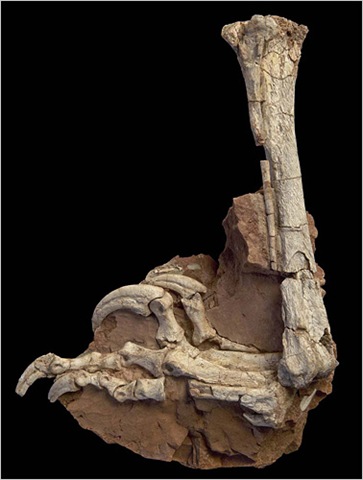
Some Dinosaurs of the Triassic Period


The name refers to the hollow bones.Coelophysis 220-200000000 lived years ago during the late Triassic. It 'was about 1-3 meters long and weighs about 30 kg.

He had a long slender neck. Coelophysis was a double-hinged jaw so that prey can cut with a sawing action, if necessary. Its jaws were many small, sharp teeth, indicating that it was a carnivore. She even ate Coelophsis others. It was built for speed.

In 1947, hundreds of Coelophysis skeletons were found buried together in New Mexico. Paleontologists believe they likely died in a flash flood.Plateosaurus (say PLAT-ee-oh-SAW-rus)

And '22-215000000 lived some years ago during the Late Triassic. Its name means "lizard dish."

Plateosaurus belonged to a group of dinosaurs known as prosauropods, which was related to the Jurassic and Cretaceous sauropod.

Plateosaurus was a herbivore 9 meters long weighing about 4 tons. It was about 4 feet high. It has become the Triassic Period, and lived until the early Jurassic period.

It 'was the first giant dinosaurs to feed only on plants, and the first to be able to eat the vegetation, the trees grow a long neck. It 'been a long hind legs and long tail. His mouth was like a beak, but had teeth. It walked on all fours, but was probably in the back of the legs and grabbed the branches of the front legs, as the nails are fed leaves. Paleontologists believe they have lived in herds.

The dinosaurs fossils were found in Germany, France and the "winged lizard" refers to the Switzerland.The name. It was not a dinosaur, but a flying reptile that lived in the same time.

It lived about 222 to 215,000,000 years ago in the Triassic period

It was an early pterosaurs or flying reptiles with a wingspan of about 60 cm in diameter. He weighed about 100 grams.

Peteinosaurus was a very light bone structure. It 'was strong, cone-like teeth. It 'caught and ate insects while flying. It 'been a long finger of the hand, and the skin is tight here at the foot of a wing on each side. Wings on the body and thighs. Directed he was about 20 cm long, and has been used to drive when you fly.

Peteinosaurus is one of the first vertebrates to be able to fly rather than finesse. Complete fossils were found in the CENELEC, in the Italian Alps


For more information related to dinosaurs, visit rareresource.com.
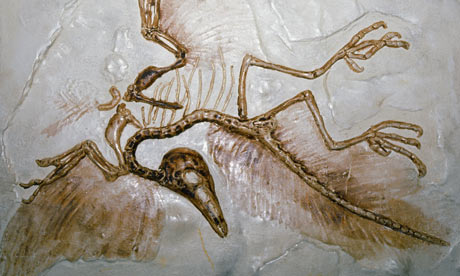
Dinosaur Tracks Found In Victoria

Tuesday, October 11, 2011


http://www.blogger.com/img/blank.gif
Paleontologists have discovered the largest deposit of dinosaur footprints in South Australia.

Every one around the waist of a human footprint, measures of several dozen recorded in the sand 100 million years form the largest collection of dinosaur remains discovered in Victoria. Discovered in two sandstone blocks Milanesi Beach, near Cape Otway, is the fourth time, dinosaur footprints were discovered in the state.

One section is particularly interesting because it contains the first dinosaur known Trackway (progress) has never found Victoria three footprints made by a small carnivorous dinosaur about 105 million years ago during the early Cretaceous.

"This is the most important dinosaur discovery of traces of Victoria," said Dr. Tom Rich, a paleontologist at Museum Victoria in Melbourne, and co-author of the paper in detail to find. "There are at least 24 tracks of dinosaurs [here], do a variety of dinosaurs."

Create a good impression

"The essence of dinosaur footprints - unlike dinosaur bones or teeth - is proof of the existence of dinosaurs," said Tom. "Trace Fossils tell us how the dinosaurs lived in the area at the time."

"Trace fossils in Australia is rare and may reveal new information on the types of dinosaurs were in the region," said Dr. Aaron Camen, an expert marsupials treads at the University of Adelaide. "Well-preserved prints tell us that the concrete footing of the animal looked like. They can be used to study how the animal market, and tracks can even provide information on speed, movement and behavior. "

Tom and his colleagues believe that the footprints were made by ornithomimosaurs or "bird mimic" the dinosaurs that were the size of a cock to a cassowary. "We can estimate the speed - between 7 and 9 km / h - based on the separation of the sections and the size of the clues," Tom said "We can also calculate the size of the animal, probably about four times. The maximum the track. "

Posters were the animals that may be of different ages and were walking on a marsh in March to create the snow melted on the storm in the spring. At the time, Victoria would have been within the Antarctic Circle, and it was completely dark and coldest of the year.

"These footprints are different from others in the region, so they made the dinosaurs [carnivores] theropod instead of [herbivorous] ornithopods," said Dr Steve Salisbury, a paleontologist at the University of Queensland, which was not involved in the research. "It is difficult to trace these in context. It may be that the prints were made at a similar, but even that is difficult to confirm, to the point where they were found on the beach ".

Get into the action

One of the sandstone slabs first noticed a local landowner Greg Denney. Professor Pat Vickers-Rich paleontologist at Monash University and co-author of the book describes Greg as "one of the best trackers in the world Dino".

Both patents and Steve invite interested members of the public to look for these types of fossils. "If fingerprints have already been found in a particular place, it is always a good place to look for other," says Steve. "But in many cases it may be difficult for an untrained eye to see if a dinosaur footprints."

The most important thing you can not find a verified, but leave it alone, says Steve. "Taking photos is a great way to find out if you have something interesting, but if you do not know the law in you, it is best not to disturb the new discovery. I was just in Kimberley, where a lot of steps that are very important and tracksites for local Aboriginal culture. " He says. "Take any one of these fossils would be a serious crime."


For more information related to dinosaurs, visit rareresource.com.

American Real Jurassic Park Reopens


Two summers ago I visited Dinosaur National Monument for the first time. The park was one of the most beautiful places I've seen, but I must admit, I left a little disappointed. Since I am a dinosaur mad child who wanted to see the wall of the famous quarries dotted with hundreds of bones that represent some of the most famous dinosaurs of the Jurassic. But when I arrived, the building that housed the bones had already been closed for three years. The geology of the site has worked on developing and building contractor in small amounts, over and over again, so much so that some parts of the building had changed dramatically and made the whole structure could collapse.

Shortly before my first visit, however, it was announced that the park would receive more than $ 13 million restoring the building and welcome visitors once again. I could not wait for the re-grand opening, especially after I spent over a week and a half for fossils at the monument with the new Natural History Museum of Utah team on the field this summer . I saw the construction of the road careers every day, I was in the area, but I had to wait 4 October 2011, the doors of the new career opened to the public.

At present, the wall of the famous race is only part of what it was. The site was extended to 100 meters on each side of the face of the current race and also extended to bonebed highest hill paleontologist Earl Douglass and his associates abducted during the 20th century. Many fossils are found in parts of today's race can be seen in museums like the Carnegie Museum of Natural History in Pittsburgh. (These old bones have been recently renovated dinosaur in an exhibition I saw in last year's conference, please.) However, the face is always a beautiful place. Partially articulated member, a sauropod skull at the end of a chain cable, the pieces of different backbones and many isolated bones can be seen around the rock bite. This is how prepared the work was stopped in the fossils, and remain in place as a lesson about life and death of 149 million years ago.

The bones are the main draw, of course, but the new museum also has some impressive extras. More skeleton casts on the lower level to introduce visitors to some of the most charismatic creatures seen scattered over the quarry wall, and a beautiful mural by artists Bob Walters and Tess Kissinger embodies the late Jurassic dinosaurs, like Stegosaurus, Torvosaurus, Dryosaurus and Apatosaurus, plus many small mammals and reptiles that lived with them. Be sure to turn around to look at the mural behind the casting baby Stegosaurus when they leave the building, I do not think I've ever seen an illustration of an Allosaurus chomping down on a baby Stegosaurus before.

Other upgrades and improvements are planned but are not ready when the big revelation. The museum will include virtual screens that explain how for many dinosaurs came to be accumulated in one place, and the bones in the quarry wall that correspond with the dinosaurs. Even without these supplements, however, the wall of new careers is a great testimony of deep time, evolution, and a lost world, we always strive to understand.


For more information related to dinosaurs, visit rareresource.com.

Dorset County Museum, Dorchester

Monday, October 10, 2011

dinosaurs


SVPCA new this year was the visit to the museum in Dorset in Dorchester. OK, so a trip to a museum may not look like a big change for a conference, but throughout the meeting raised mostly adheres to the afternoon and moved with one more round of negotiations taking place in the Museum before an evening public lecture. This was one of the sessions of the marine reptiles appropriate given the presence of massive skull pliosaur found in his collection.

Also on display were a couple of models Dimorphodon. Although their anatomical accuracy leaves something to be desired, I really like them. There is something beautiful about the details here, and the wings, which so often gives people the real problems were well done. Food for thought, if I can build my own museum pterosaurs.


For more information related to dinosaurs, visit rareresource.com.

Nigersaurus


Yes, I still * * be more images become Dino Expo in Tokyo in 2011, and it's nice to go back to the sauropods. More specifically, the sauropods, rarely Nigersaurus. A rare and unusual characteristics of the type mower rebbachisaurs of the skull is very evident here, and the neck is quite short and reminds dicraeosaurs. To me, this was really great to see so I am yet to meet any materials or install a member of this group, so even if only a general feeling for the size and see some of the details were beautiful.

For more information related to dinosaurs, visit rareresource.com.

Dinosaur Fossils Found In Laurel, Clearly In The Rain

Sunday, October 9, 2011


Years of scraping the rocks and go through the lose dirt Hacker Dave taught important lessons of the fossil record. So when recent storms dumped nearly 10 inches of rain is an area of ​​Silver Spring resident grabbed a knife and headed for the Dinosaur Laurel Park to see what he could find.

What he found was the largest dinosaur fossil to leave the park in five years - probably a big dinosaur bone from a herbivore and the evidence that after 300 years of archaeology excavations, the floor of the metropolitan region has a rich history to discover buried .

"Usually what we have here are small fragments and bones, but in this case is a much larger bone," said Hacker, who made a hobby of volunteering in the Dinosaur Park. "It struck me because it looked a little different. To the untrained eye, it looks like a big rock."

The dinosaurs fossil was released Wednesday from its 100 million-year-old tomb at the Smithsonian Institution PREPARATORY Y Steve Jabo. The size of a head of cabbage and the color of a dirty potato was wrapped in the fossil plaster custody until a team of technicians and volunteers at the Smithsonian National Museum of History natural could purify and identify the bones.

Last week, researchers at Johns Hopkins University announced that a fossil found in College Park belonged to a dinosaur called nodosaur rearing tanks. It was found in 1997 in the stream bed and donated to the Smithsonian.

As Mr. Jabo shoveled a delicate mixture of damp earth, clay and wood away from the large fossil, he told the curious type, bone excavated Mr. Hacker will be quickly identified, but reduced to a kind of dinosaur can take time.

But a good guess is that it came from Astrodon, a large herbivore with a long neck, which also happens to be the official dinosaur of Maryland.

Scientists believe that an adult could Astrodon stretch 60 feet from nose to tail and weigh several tons. 20 years ago, a 6-foot, 220 pounds of large reptilian femur was discovered in the park.

"This is an important finding for the park," said Donald Creveling, Director of Archaeology Department Prince George's County Parks and Recreation. "What makes this park significant is that it is one of few places east of the Mississippi River, where dinosaur bones and fossils commonly found. "

The fossils found on the surface of the park, but the torrential rains are what give the erosion occurs, and to reveal new specimens.

Wednesday's digging was limited to shovels professionals throughout the year the park opened to the public, so history buffs can give way a hand in the fossil finds.

Smithsonian archeologists did not make the trip to Laurel in five years, said Peter Kranz, a paleontologist and education program coordinator for the dinosaur park.

The park is located at the end of an industrial park, about five miles northwest of Baltimore-Washington Parkway, just off Route 1.

Although the place is half way between Washington and Baltimore, the story of the appropriate place for a wide variety of fossils.

More than 100 million years, climate and geography of Maryland was similar to the swamps of southern Louisiana today.


For more information related to dinosaurs, visit rareresource.com.

Winifred Rancher Finds Dinosaurs


For six years, Bill Shipp has been keeping a secret from their neighbors, which is not easy in this town of about 150 people in the south of the falls of the Missouri River.

On Wednesday, he broke his long silence, before a crowd of about 35 people per Winifred Museum, revealing a replica of a dinosaur skull of 75 million years, searched his property. The museum will be the new home of the replica, one of four created from fossilized bone fragments in position.

Beaked whale, three horns, frilled dinosaur ceratopsian Direct is believed to be the most complete skull of this species ever found, according to Chris Ott, a paleontologist who wrote the book that the fossil is still awaiting publication.

"You can see all other horned dinosaur species which are nothing like this," he said.

How does it differ mainly Ott said, is that the two horns of this dinosaur near his stick in the eye instead of forward, and their culture - the great, difficult to use bone plate behind his eyes - is decorated in a style never seen before. In life, the adult may have weighed about three tons, with a brain the size of a can of beer. Ate plants, breaking the branches with his sharp beak large.

"It takes a lot to impress me with a dinosaur, but I'm impressed by it," said Ott.

Shipp, semi-retired physicist, said he found the fossil in 2005 while walking his property within six miles of the city local fossil hunter Patrick Gil.

"We paleontologists have a strong belief in beginner's luck," he said in October "I know people who are hunting for fossils of 50 years and never found anything like it."

The fossil was integrated into the hill with its rear end near the surface. The first signs of the animal was a leg bone back. Although Shipp had to leave shortly after the discovery, it has hired Patrick and his friend, George Fisher, start searching the site.

"We have not a clue what we were," said Fisher. "It was fun. It's very exciting."

Small paleontologist Joe was hired to help manage the pits while the paleontologist Peter Larson assembled the pieces when they were taken from the site and created the mold pieces reassembled.

They collect original fossil - except for its formidable beak - is through the Black Hills Institute of South Dakota. The tooth fossil remains with the replica of Winifred.

Shipp said it was important for him to reveal the fossil replica he calls Judith - because it was found in the Judith River Breaks - to his friends and neighbors first. It is also important for him to stay on a replica Winifred Museum.

"I feel that since it was found six miles away, is part of this community is part of this environment, it should remain part of the environment," he said.

Curator Helen Rich did not know about the gift of dinosaur that last Thursday, when Shipp came to her class the school to talk to him. By the time she was wearing a cowboy hat and red cape as part of a week-long event in mind.

"So, it was fast and furious," she said. "Our collection of Tonka toys of 3000 parts used to be our claim to fame. Now ... "

Winifred resident Ron Poertner said that the donation of a replica is an addition to the incredible museum. Amateur fossil hunter himself, he said that there are fragments of dinosaur bones scattered throughout the prairie landscape, but there are some that can be put together individual and Shipp found.

He asked how much it cost to dig, clean and have a replica made of dinosaur skull, Shipp joked that his wife, Linda, had financed the project of saving money to buy food.

"Linda is often said that he wished we had never found," he said.

"And, hopefully, will never find another," he joked again.

Despite the cost and a lot of hard work to excavate the fossil bed of sandstone and bentonite, a call Shipp said he would continue looking for alternative fuels.


For more information related to dinosaurs, visit rareresource.com.

Old Bones Are Hollow Modern Dinosaur National Monument

Wednesday, October 5, 2011


Some of the oldest objects in the world is a new exhibition space, where the re-opening this week and Hall Quarry Quarry Visitor Center exhibit in Dinosaur National Monument in Utah.

Farm for the past five years, the plant has a spectacular cliff 200 meters long with 1500 embedded dinosaur bones from the Jurassic era. Hall will also reveal new dinosaur-related exhibits, including a mural of more than 50 species represented in the region, as it may be some 149 million years.

About half a mile from the new Visitor Center is open quarry. 1950-The original structure was closed for safety concerns.

Salt Lake City is also welcome two great museums of onset. Opening Saturday, Leonardo, billed as "a modern Ski + Art + Tech Museum, where today the great ideas, questions, discoveries, inventions, and is connected to a whole new way." Interactive mode is working in laboratories and workshops sponsored by the Community.

And in November, make the Natural History Museum of Utah, a new home in Rio Tinto Center. The "green" building, opening Nov. 18, also has outdoor exhibits and performance spaces.

For more information related to dinosaurs, visit rareresource.com.

Dinosaur Tracks Found In The New West Arkansas


Researchers at the University of Arkansas study the new field of fossil footprints of dinosaurs, including one of a series that seems to come from a large predator three fingers, the university said Wednesday.

The tracks were found on private land in southwest Arkansas and give a window of life forms that roamed the area for as long as 120 million years ago during the early Cretaceous.

"The quality of tracks and trackways length makes it an important place," said Stephen K. Boss, who led the project.

The research effort is funded by a grant from the National Science Foundation.

Based on the cliff where the tracks have been found, scientists have a good idea of ​​how the climate would have been like, Boss said.

"Picture of a very similar environment to the shores of the Persian Gulf today. The air temperature was hot. The water was shallow and very salty," said Boss. "It was a hostile environment. We're not sure what animals were made here, but clearly they were there in abundance. "

Some of the tracks in the region has not been documented before in Arkansas. The researchers will work to broaden the knowledge about dinosaurs that lived in the region and climate of the time.

Three-toed dinosaur tracks are about 2 feet long 1 foot wide, and is likely to come from Acrocanthosaurus atokensis, one of the largest predators ever known. It also prints sauropods, large, long-necked plant-eating dinosaurs. Other songs such as sauropods have been found in the state, including on-site at Nashville, also in south-west of the state.

"Thanks to the slopes, you can learn all kinds of things the biomechanics and behavior of dinosaurs," said researcher Kansas State University Brian Platt, who participates in the program. "Dinosaur bones can be transported by animals or washed away by the sea. But we know that about 120 million years, dinosaurs walking around here."


For more information related to dinosaurs, visit rareresource.com.