
A bizarre dinosaur with 15 horns is one of the two new close relatives of Triceratops that scientists unearthed in southern Utah. The dinosaur, named Kosmoceratops richardsoni, had a horn over its nose, one above each eye, one at the tip of each cheekbone, and 10 across the rear margin of its bony frill. Its head is the most ornate among all the dinosaurs.
It's name comes from the Latin word "kosmos" meaning ornate, the Greek word "ceratops" meaning horned face, and the latter part honors Scott Richardson, the volunteer who discovered the two skulls of this animal in 2007.
Kosmoceratops is one of the most amazing animals known, with a huge skull decorated with an assortment of bony bells and whistles with 15 feet long and about 5,500 pounds in weight.
Its larger relative which was newly discovered, is the Utahceratops gettyi which was named honoring Mike Getty, the paleontology collections manager at the Utah Museum of Natural History, who discovered this dinosaur in 2000. It possessed a large horn over the nose, and short, blunt eye horns that projected strongly to the side rather than upward, much more like the horns of modern bison than those of Triceratops and its other relatives, known as ceratopsians.
Utahceratops was roughly 18 to 22 feet long and about 6 feet tall at the shoulder and hips, and weighed about 6,600 to 8,800 pounds. They also possessed a skull about 7 feet long.
Although scientists have speculated that the ornate horns and frills of ceratopsians might have helped fight off carnivores, for the newly discovered dinosaurs. Most of these bizarre features would have made lousy weapons to fend off predators.
Source: http://www.livescience.com/
For more information related to dinosaurs, visit rareresource.com.
Horny dinosaurs found from lost continent
Monday, November 29, 2010

Longest dinosaur thigh bone found in Europe

The Dinopolis Foundation, a dinosaur research institute said that a 1.92-metre dinosaur bone was found earlier this year at Riodeva near Teruel in eastern Spain along with a 1.25-metre tibia and 15 vertebrae. This bone is believed to belong to a giant long-necked dinosaur, the Turiasaurus Riodevensis weighing more than 40 tonnes and measuring 30 metres which was first discovered in 2004.
The new fossils which were discovered in addition to those obtained from 2004, should allow the foundation to construct a skeleton of the animal, which lived some 145 million years ago.
The announcement comes two weeks after palaeontologists revealed the discovery in the same region of a new type of dinosaur with a hump that they believe is the forerunner of flesh-eating leviathans which once ruled the planet.
This fossil was uncovered in the Las Hoyas formation in central Spain's Cuenca province, a treasure trove of finds that date to the Lower Cretaceous period of between 120 and 150 million years ago.
Source: http://www.physorg.com/
For more information related to dinosaurs, visit rareresource.com.
Pterosaurs used pole vault trick to fly
A new study reveals that the Pterosaurs used a "pole-vaulting" action to take to the air. These creatures took off using their four limbs.
These reptiles vaulted over their wings pushing their hind limbs first and then thrusting themselves upwards with their powerful arm muscles - not dissimilar to some modern bats.
Pterosaurs and dinosaurs lived at the same time, but the pterosaurs belonged to a different group of reptiles. They existed from the Triassic Period until the end of the Cretaceous.
Dr Mark Witton at Portsmouth University, UK, and Dr Michael Habib of Chatham University, Pennsylvania, US, reappraised giant pterosaur fossils. Their findings challenges others that the giant pterosaurs such as Pteranodon and the largest azhdarchids were not capable of flying.
For more information related to dinosaurs, visit rareresource.com.
Dinosaur's extinction allowed mammals to 'go nuts'
Researchers say that the mammals rapidly filled the "large animal" space left by the dinosaurs about 65 million years ago. They went from creatures weighing between 3g and 15kg to a hugely diverse group including 17-tonne beasts.
Felisa Smith of the University of New Mexico in Albuquerque concluded that the rise of the mammals was by no means inevitable, and owes most to the chance obliteration of the dinosaurs, be it by comet, asteroid or another event. She also said that mammals actually evolved almost around the same time as dinosaurs, about 210 million years ago. Mammals were basically vermin scurrying around the feet of the dinosaurs and not really doing much of anything
for the first 140 million years.
She also said that a comet would have come and hit the Earth and killed off all dinosaurs but mammals as a class probably had characteristics that helped them survive that impact. She believes most of the mammals were burrowers that lived through the ensuing environmental mayhem largely underground, feeding on whatever food they could find, be it plant or meat.
For more information related to dinosaurs, visit rareresource.com.
Vertebrae of Alamosaurus
Friday, November 26, 2010
Ten vertebrae of the 65-million-year-old dinosaur which were uncovered in 1997 are being prepared to be displayed at the Perot Museum of Nature & Science in Victory Park during its opening in 2012.
Tony Fiorillo, the curator of earth sciences at the museum said that no one would have ever seen the neck of an Alamosaurus before. He also said that they're not the biggest vertebrae ever found, but they're certainly the biggest ever excavated in Texas.
The cervical bones were found in the Big Bend National Park in West Texas by accident. They weren't taken out of the park until 2001. Only after extended negotiations with Big Bend officials, they were moved out. Since the vertebrae were so heavy, some had to be airlifted out of the park by helicopter.
Now they sit in the museum's basement in plaster casts, waiting to be uncovered by the museum's fossil preparators. It takes six to seven months to chip away at all the plaster and uncover the bone and get it ready for the museum.
For more information related to dinosaurs, visit rareresource.com.
Tyrannosaurus Rex ran much faster

Two Canadian paleontologists re-examined the muscle and bone structure of Tyrannosaurus rex and have found that king of the dinosaurs used its big tail to generate more speed and predatory power. T-rex was more a scavenger than a pursuer of live prey.
In contrast to earlier theories, T. rex had more than just junk in its trunk. These additional attributes has made T. rex one of the fastest-moving hunters of its time.
For more information related to dinosaurs, visit rareresource.com.
First dinosaurs walked on four legs
The first dinosaurs were extremely small animals and they walked on four legs. They would have probably came to rule the world after a mass extinction knocked out many big reptiles.
The 250-million-year-old footprints are the oldest evidence of dinosaurs. Reports say that the animal was about the size of a small domestic cat and would have lived near rivers where larger crocodilians thrived.
Fossils indicate that a mass extinction occurred when an asteroid or volcanic event drove the dinosaurs into extinction and allowed mammals to thrive.
The new footprints only slightly postdate the greatest mass extinction of all time suggesting that the origin of dinosaurs occurred in the immediate aftermath of this catastrophe.
For more information related to dinosaurs, visit rareresource.com.
The origin of dinosaurs
Thursday, November 25, 2010
Dinosaurs were remarkably successful during the Mesozoic and remained an important component of modern ecosystems. Although the extinction of non-avian dinosaurs at the end of the Cretaceous has been the subject of intense debate, comparatively little attention has been given to the origin and early evolution of dinosaurs during the Late Triassic and Early Jurassic, one of the most important evolutionary radiations in earth history.
Dinosaurs are deeply nested among the archosaurian reptiles, diagnosed by only a small number of characters, and are subdivided into a number of major lineages. The first unequivocal dinosaurs are known from the late Carnian of South America, but the presence of their sister group in the Middle Triassic implies that dinosaurs possibly originated much earlier. The three major dinosaur lineages, theropods, sauropodomorphs, and ornithischians, are all known from the Triassic, when continents were joined into the supercontinent Pangaea and global climates were hot and arid. Although many researchers have long suggested that dinosaurs outcompeted other reptile groups during the Triassic, we argue that the ascent of dinosaurs was more of a matter of contingency and opportunism. Dinosaurs were overshadowed in most Late Triassic ecosystems by crocodile-line archosaurs and showed no signs of outcompeting their rivals. Instead, the rise of dinosaurs was a two-stage process, as dinosaurs expanded in taxonomic diversity, morphological disparity, and absolute faunal abundance only after the extinction of most crocodile-line reptiles and other groups.
For more information related to dinosaurs, visit rareresource.com.
Horned dinosaurs unearthed on lost continent
Wednesday, November 24, 2010
The newly discovered dinosaurs are a close relatives of the famous Triceratops. The bigger of the two new dinosaurs, with a skull 2.3 meters long, is Utahceratops gettyi. The first part of the name combines the state of origin with ceratops, Greek for "horned face." The second part of the name honors Mike Getty, paleontology collections manager at the Utah Museum of Natural History and the discoverer of this animal.
For more information related to dinosaurs, visit rareresource.com.
Dinosaurs are significantly taller
It might seem obvious that a dinosaur's leg bone connects to the hip bone, but what came between the bones has been less obvious. Now, researchers at the University of Missouri and Ohio University have found that dinosaurs had thick layers of cartilage in their joints, which means they may have been considerably taller than previously thought.
The study of the limbs of modern-day relatives of dinosaurs shows that dinosaurs were significantly taller than original estimates. The ends of long bones, which include leg bones such as the femur or tibia, are rounded and rough and lack major articulating structures like condyles, which are bony projections. This indicated that very thick cartilages formed these structures, and therefore the joints themselves, and would have added significant height to certain dinosaurs.
For more information related to dinosaurs, visit rareresource.com.
Bizarre Dinosaurs

The turkey-size Shuvuuia had a small, beaky head and a long neck. The fast-running dinosaur is considered one of the more bizarre theropods—and an animal that gives credence to the theory that dinosaurs and birds are closely related.
Luis Rey's dinosaur art has been featured in numerous exhibitions and books. He bases his work on rigorous anatomical studies. Check out Rey's Web site to see more of his work. Find out more about his books A field guide to dinosaurs, published in the U.S. by Barron's Educational Series, and available from all bookstores, or direct from the publisher.
For more information related to dinosaurs, visit rareresource.com.
Hunchback Dinosaur
Many modern birds have bumps where the wing feathers are attached to the bone. The bump on the back is unique among dinosaurs. Concavenator’s skin appears to be composed of both scale and non-scale appendages. Concavenator belongs to the Carcharondosaurid family of dinosaurs that until now have only been known from the southern hemisphere. This specimen was discovered near Cuenca in the west of Spain.
For more information related to dinosaurs, visit rareresource.com.
Giant Pterosaur Discovered
For more information related to dinosaurs, visit rareresource.com.
Dinosaurs are not so fierce at all
Monday, November 22, 2010
A new dinosaur species discovered in Arizona suggests that dinosaurs did not spread by overpowering other species, but by taking advantage of a natural catastrophe that wiped out their competitors.
At the end of the Triassic period, one of the five great mass extinction events in Earth's history happened, wiping out many of the potential competitors to dinosaurs. Evidence from Sarahsaurus and two other early sauropodomorphs suggests that each migrated into North America in separate waves long after the extinction and that no such dinosaurs migrated there before the extinction.
We used to think of dinosaurs as fierce creatures that outcompeted other creatures, but its not the case. They were more opportunistic creatures which didn't invade the neighborhood. They waited for the residents to leave and when no one was there they moved in.
Source: http://www.sciencedaily.com/
For more information related to dinosaurs, visit rareresource.com.
Pterosaur dinosaurs could fly across continents
Scientists have discovered that a Pterosaur with the size of a giraffe was capable of flying for thousands of miles.
Dr. Mark Witton, from the University of Portsmouth and Dr Michael Habib from Chatham University have studied how the giant Pterosaur could get off the ground. They found that the reptiles took off by using the powerful muscles of their legs and arms to push off from the ground, effectively pole-vaulting over their wings. Once airborne they could fly huge distances and could even cross continents.
Most birds take off either by running to pick up speed and jumping into the air before flapping wildly. Theories suggest that giant pterosaurs were too big to perform either of these and therefore they would have remained on the ground but when examining pterosaurs the bird analogy can be stretched too far.
These were not birds but they were flying reptiles with a distinctly different skeletal structure, wing proportions and muscle mass. The anatomy of these creatures is unique.
Source: http://www.telegraph.co.uk/
For more information related to dinosaurs, visit rareresource.com.
Tyrannosaurus rex tail built for speed

Based on the new study of the muscular tail of Tyrannosaurus rex's, it was found that t-rex was one of the world's fastest moving hunters. Its long tail didn't just serve to counterbalance the up-front weight of the carnivore's large head. Paleontologists previously suspected that it was the tail's primary function.
The new research led by the University of Alberta researcher Scott Persons reveals that T.rex's powerful tail muscles helped to give this dinosaur super speed.
This conclusion was given after comparing the tails of modern-day reptiles, like crocodiles and Komodo dragons with T.rex's tail. He also founded that the biggest muscles in the tail are attached to the upper leg bones for all these animals. These caudofemoralis muscles provide the power stroke allowing fast forward movement.
Source: http://news.discovery.com/
For more information related to dinosaurs, visit rareresource.com.
Tyrannosaurus Rex ate themselves at Jurassic Period
Tuesday, November 16, 2010

Tyrannosaurus Rex was the undisputed king of the dinosaurs. They ate each other. The Yale researcher Nick Longrich found vast gouges in the bone of a Tyrannosaurus rex.
He said, “They’re the kind of marks that any big carnivore could have made,” said Longrich, “but Tyrannosaurus rex was the only big carnivore in western North America 65 million years ago.”
Longrich unremitting to investigate for other signs of Tyrannosaurus rex cannibalization and excavated a total of three foot bones and one arm bone that showed signs of being chobbled on by another Tyrannosaurus rex, which, allowing for the amount of fossils we have represents a important proportion.
For more information related to dinosaurs, visit rareresource.com.
Scientists discover different dinosaur stomping grounds

By examining rocks in which dinosaur fossils were found, scientists have determined that different species of North American dinosaurs occupied different environments during the Late Cretaceous period 65 million years ago.
According to the research, Hadrosaurs or duck-billed dinosaurs, along with the small ornithopod Thescelosaurus, preferred to live along the edge of rivers. While Ceratopsians, which include the well-known Triceratops, preferred to be several miles inland.
The findings, which appear in the online edition of the Proceedings of the Royal Society B, give scientists a more complete picture of the distribution of different species and help explain how several large herbivores managed to coexist.
Source: http://www.sciencedaily.com/
For more information related to dinosaurs, visit rareresource.com.
World's oldest dinosaur embryo
Monday, November 15, 2010

Paleontologists have found the world's oldest dinosaur embryos. The embryos are found in their still well-preserved eggs, date to the early Jurassic Period 190 million years ago. Researchers have said that these are the oldest known embryos for any land-dwelling vertebrate.
These belong to Massospondylus, a member of a group of dinosaurs called prosauropods that were ancestors to the giant, plant-eating sauropods. Sauropods are the iconic four-legged dinosaurs known for their long necks and long tails.
Professor Robert Reisz and his colleagues made this discovery while analyzing the fossilized eggs which were originally found in South Africa. Reisz’s research assistant, Diane Scott, prepared the delicate fossils under high-powered microscopes and compiled the illustrations.
The embryos are so remarkably well preserved that they permitted a complete reconstruction of the skeleton and detailed interpretations of the anatomy.
For more information related to dinosaurs, visit rareresource.com.
Dinosaur bones on sandstone block
For more information related to dinosaurs, visit rareresource.com.
Where dinosaurs hung out?
Saturday, November 13, 2010
Scientists have determined that different species of dinosaurs from the Late Cretaceous period occupied different environments separated by just a few miles.
Hadrosaurs or duck-billed dinosaurs and small ornithopod Thescelosaurus, preferred to live along the edge of rivers, while Ceratopsians preferred to be several miles inland.
Tyler Lyson of Yale University and the Marmarth Research Foundation, along with Yale researcher Nicholas Longrich, analyzed more than 300 fossils representing more than half a dozen dinosaur species from Western Canada, Montana, Wyoming and surrounding areas.
They used what palaeontologists usually throw away when excavating the fossils as clues to where these different species spent most of their time.
Tyrannosaurs rex appears to have roamed both habitats, most likely feeding on large herbivores.
The study also shows that the dinosaurs had specialized eating habits and likely fed on different types of plants found in each environment.
"It also emphasizes the importance of recording data about the rock in which fossils are preserved, which can give us important clues as to the paleoecology of these animals.
Source: http://news.oneindia.in/
For more information related to dinosaurs, visit rareresource.com.
New dinosaur trackway discovered

This summer some Australian exchange students who were working for Tim Millward came across dinosaur tracks in a steep canyon setting. Though they were not sure about it they had read the local literature and therefore knew that such a find was possible. Later, Tim went to the site, got a locality reading, took photos, and brought his laptop in to the Peace Region Palaeontology Research Centre (PRPRC) in Tumbler Ridge to alert the palaeontologists to the potential discovery.
One look at the photos made it clear that this was an important find, and a subsequent visit to the site has confirmed this. There is a neat little trackway with a number of larger prints criss-crossing the track-slab. This may be suitable for helicopter retrieval in the future.
Source: http://www.tumblerridgenews.com/
For more information related to dinosaurs, visit rareresource.com.
Dinosaur species named after a philanthropist
Friday, November 12, 2010
Sarah Butler has discovered a new species of dinosaur and it was named after her. This dinosaur was introduced to the world as Sarahsaurus.
According to Rowe's research, this 14-foot-long, 250-pound Jurassic Period dinosaur was gregarious, territorial and nurturing. It also had great vision, huge eyes and no sense of smell. It vocalized, foraged for food and had powerful shoulders and forceful hands.
Thirteen years ago, Rowe and a team of researchers and students took a field trip to northern Arizona to search for Jurassic Period dinosaur bones. It was a dusty, remote area filled with sand dunes and cliffs. The team had to walk 90 minutes down cliffs to reach the area where they wanted to search.
Butler says she's flattered to be Sarahsaurus' namesake. And Rowe says the dinosaur and the philanthropist have at least one thing in common.
Source: http://www.theeagle.com/
For more information related to dinosaurs, visit rareresource.com
Argentina exhibits new dinosaur species
Wednesday, November 10, 2010
The fossils, which were found at Luna Valley in western Argentina 16 years ago were exhibited by Argentina's San Juan Province and the Natural Science Museum of the San Juan National University.
This predator called Sanjuansaurus gordilloi was 2 meters long and 1.5 meters high. The fossils, discovered by fossil preparator Raul Gordillo in 1994, included a mouth bone, the spine from the first vertebra in the neck to almost the end of the tail, bones from the chest and the hand.
The Sanjuansaurus is recognized by international scientific circles as a new member of the Herrerasaurus family, which includes other species found in the same zone.
Alcober said that the Sanjuansaurus was probably the one which ran fastest in this family of dinosaurs.
For more information related to dinosaurs, visit rareresource.com
Korea's own dinosaur - Koreanosaurus

The Korea Dinosaur Research Center succeeded in recovering the figure of the dinosaur, which lived only in Korea.
This dinosaur was named as Koreanosaurus Boseongensis which lived 99.6 million to 65.5 million years ago on the southern coast of Korea during the Late Cretaceous Period.
This dinosaur is classified as a hypsilophodont, weighing 100 kilograms with about 1 meter (3.28 feet) tall and 2.5 meters long. Despite the sharp shape of its head and piercing eyes, the dinosaur seemed to be of the mild-mannered herbivorous kind. It seems to have dug into the earth to hide itself from predators.
Since a research team at the center found the fossil remains in May 2003 in Boseong, South Jeolla, the team had struggled with determining the dinosaur’s exact shape. With few dinosaur experts in Korea and with the rock containing the fossil being very hard, it took five years to differentiate the dinosaur from other fossils at the site.
Since the team began studying the dinosaur, it has focused on proving that the dinosaur is the first one to have lived only in Korea and naming it after a Korean region.
In the paper, the team introduced the dinosaur as “Koreanosaurus Boseongensis”.
For more information related to dinosaurs, visit rareresource.com
What Did Tyrannosaurus Rex Eat?
Tuesday, November 9, 2010

A new information have been revealed that the undisputed king of the dinosaurs, Tyrannosaurus rex, didn't just eat other dinosaurs but also each other. Paleontologists from United States and Canada have found bite marks on the giants' bones that were made by other T. rex.
While searching through the dinosaur fossil collections for another study on dinosaur bones with mammal tooth marks, Yale researcher Nick Longrich discovered a bone with especially large gouges in them.
It was only after discovering the bite marks were from a T. rex that Longrich realized that the bone also belonged to the behemoth. After searching through a few dozen T. rex bones from several different museum fossil collections, he discovered a total of three foot bones and one arm bone that showed evidence of T. rex cannibalism, representing a significant percentage.
For more information related to dinosaurs, visit rareresource.com
World's largest dinosaur museum in east china
 The Tianyu Museum of Nature in East China's Shandong Province has been recognized as the world's largest museum dedicated to dinosaurs.
This museum was opened in 2004 and it holds an unequalled collection of dinosaurs samples and other prehistoric fossils. English.news.cn has reported that this museum has applied for a Guinness World Record in early June and received the confirmation off late.
With an exhibition space of 28,000 square meters, this museum houses 1100 dinosaur specimens represented by almost complete skeletons. Moreover, the museum also has tens of thousands of other prehistoric fauna, such as birds and fish fossils.
Besides the new record, the museum also has five other world records, including the longest silicified wood fossil and the biggest amethyst cave.
For more information related to dinosaurs, visit rareresource.com
Rocks Reveal More Dinosaur Secrets
Thursday, November 4, 2010

The rocks in which dinosaur fossils are embedded can often tell scientists more about the creatures than the bones themselves. The rocks that enclose fossils offer clues as to what dinosaurs were up to and where they spent their time. Researchers say Triceratops avoided rivers, duck-billed dinosaurs lived near rivers, and T. Rex was everywhere.
U.S. scientists say they can learn a lot about where dinosaurs lived by looking not at their fossilized bones but at the rocks in which the bones were found.
Researchers say they believe Triceratops avoided rivers, duck-billed dinosaurs lived near rivers, and T. Rex was everywhere, probably because the beast went wherever there was meat, LiveScience.com reported Tuesday.
"We can use the rock enclosing these fossils as clues to what they were up to," paleontologists Tyler Lyson at Yale University said. "We're using what paleontologists usually throw away when excavating the fossils as clues to where they're spending most of their time."
For more information related to dinosaur fossils, visit dinosaurs.
Meet the earliest dinosaurs

Dinosaurs ruled the Earth during the late Triassic through the late Cretaceous periods, a span of some 160 million years. Their evolutionary rise and their ultimate reign was made possible thanks to the largest mass extinction the planet had ever seen, which occurred at the boundary of the Permian and Triassic periods. Newly uncovered tracks in Poland have revealed what are now considered to be the earliest known evidence of dinosaurs in existence.
For the first 20 million or so years after the Permian-Triassic extinction, dinosaurs' direct relatives were small and quite rare; larger crocodile-like reptiles ruled the planet, and finding early dinosaur remains has been difficult. A new paper in the Proceedings of the Royal Society B discusses the identification of fossilized footprints found in the Holy Cross Mountains of central Poland.
The paper focuses on three sets of tracks all found within a 25 mile radius that were created between 250 and 246 million years ago. The oldest of the tracks, the Stryczowice trackway, contains evidence of the earliest predecessors to dinosaurs ever discovered—a full five to nine million years older than the earliest skeletal remains.
For more information related to dinosaur fossils, visit dinosaurs.
Grandmother of All Sauropods Unearthed

The first complete skeleton of an early sauropod has been found in China, providing a glimpse of the ancestor of all those colossal, four-legged dinosaurs that came later.
The sauropod, tentatively named Yizhousaurus sunae, lived 200 million years ago on the plains of what is today the Yunnan Province of southern China. Yizhousaurus was 30 feet long and already had the signature sauropod long neck, heavy-duty skeleton and four-legged stance.
But what really makes the case for its pivotal role in the evolution of sauropods is its intact skull, which is an extremely rare find, explained paleontologist Sankar Chatterjee of Texas Tech University.
"The skull has very, very crucial information about its affinities," Chatterjee said. In the case of Yizhousaurus, the skull is wide, domed, short-snouted and has eye sockets on the sides to make it easier to watch for predators. It also has a broad, U-shaped jaw that looks a lot like those seen in later sauropods.
For more information related to dinosaur fossils, visit dinosaurs.
Tracks of a Running Bipedal Baby Brontosaur
Wednesday, November 3, 2010
 Staff at the Morrison Natural History Museum have again discovered infant dinosaur footprints in the foothills west of Denver, Colorado, near the town of Morrison. Dating from the Late Jurassic, some 148 million years ago, these tracks were made before the Rocky Mountains rose, when Morrison was a broad savanna full of dinosaurs. |
The tracks are on permanent display at the Morrison Natural History Museum in the recently redesigned "Fossils of the Foothills" exhibition funded by Scientific and Cultural Facility District (SCFD) grants. |
New dinosaur genus found in China
 | Chinese scientists have discovered a new genus of dinosaur. It's a meat-eating theropod estimated to have lived in Southwest China's Yunnan province about 180 million years ago or during the early Jurassic Period. |
| The fossils of the dinosaurs were unearthed in Longshan, Lufeng county in the Yi Autonomous Prefecture of Chuxiong in early September, an expert from the Chinese Academy of Sciences (CAS) was quoted as saying by Xinhua new agency. Dong Zhiming, a researcher from the CAS' Institute of Vertebrate Paleontology and Paleoanthropology said that this dinosaur was related to the Coelophysis, a small, meat-eating dinosaur, which lived in the North American continent in the late Triassic period. He also added that this dinosaur was at least 120 cm long and 70 cm high, with a long tail and sharp teeth. The discovery of the new dinosaur might promote research on the classification and evolution of dinosaurs in China, Dong said. The new dinosaur genus will be named after more detailed research is completed. For more information related to dinosaur fossils, visit dinosaurs | |
Dinosaur footprints found in east China city
Monday, November 1, 2010

Chinese archeologists said Friday they have exposed an exceptional large track of Dinosaur footprints in a city in the eastern province of Shandong.
After a 3-month excavation, more than 3,000 dinosaur footprints have been exposed on a 2,600-square-meter slope in a gully of Huanghua town in Zhucheng City.
Wang Haijun, a senior engineer at the Institute of Vertebrate Paleontology and Paleoanthropology under the Chinese Academy of Sciences and Xing Lida, a dinosaur footprints researcher, said the prints dated back to more than 100 million years before in the mid Cretaceous period.
The footprints in at least three layers are rare in the world in terms of both their number and entire size, they said.
The footprints, which sort from 10 cm to 80 cm in length, revealed more than six Kinds of Dinosaurs, including Tyrannosaurus, Coelurosaurs and Hadrosaurs.
The footprints were in the same direction. Wang said this might be a effect of migration or panic escape by plant-eating dinosaurs when facing a surprise raid from meat-eating counterparts.
Wang said as archaeology excavations persists, there could be more footprint findings.
Archeologists have established dinosaur fossils in some 30 sites in Zhucheng, known as a "dinosaur city".
Zhao Xijin, an expert from the Institute of Vertebrate Paleontology and Paleoanthropology, said Zhucheng exposed the largest Dinosaur Fossil field in the world in 2008 where more than 7,600 fossils had been uncovered.
Source from great site: http://www.rareresource.com
Read more interesting topic about dinosaur fossils.
Birds May Have Not Evolved from Dinosaurs
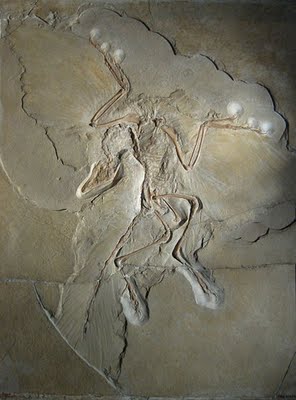
Over the past few years, many scientific studies that refute the widely held idea that birds evolved from Dinosaurs have been published in different respected journals around the globe. Such is the case with a latest paper appearing in the latest issue of Proceedings of the National Academy of Sciences (PNAS), which throws added doubts on the decade-old idea.
What the researchers behind this investigation advise is that ground-dwelling theropod dinosaurs were not the source for the ancestors of modern birds. This work casts latest doubts on the established theory of how flight evolved.
Oregon State University Zoology Professor John Ruben is the author of the new research, which deals primarily with the fossil of a creature known as a microraptor that was exposed back in 2003. While studying a 3D model of the creature, Ruben and his team determined that its flying potential was only limited to gliding on variety of air currents from atop trees, and that the tiny animal was unable to fly on its own.
This paper is consistent with previous ones published in the field over the previous years, and Ruben believes that evolution may have actually derived some dinosaurs from birds, and not the other way around.
“We're ending by breaking out of the conventional wisdom of the last 20 years, which insisted that birds evolved from dinosaurs and that the debate is all over and done with . This issue isn't resolved at all . There are just too many inconsistencies with the thought that birds had dinosaur ancestors, and this newest study adds to that,” the expert says.
According to the theory developed at Oregon, it may be that birds and dinosaurs actually had a common ancestor, very much related to the common link between humans and primates. After the two types of animals split, dinosaurs and birds each developed their separate ways, with the winged creatures eventually giving birth to raptors as we know them today.
Source from great site: http://www.rareresource.com
Read more interesting topic about dinosaur fossils.
Dinosaur 3D movie screens at IMAX theatre
Dinosaurs persist to fascinate old and young alike, Christine Catt, marketing specialist at science north said.
“Dinosaurs Alive! 3D featuring the most ancient dinosaurs of the Triassic Period to the monsters of the Cretaceous, reincarnated and life-sized for the giant IMAX screen, is now playing,” Catt said.
“From the exotic, trackless expanses and sand dunes of Mongolia’s Gobi Desert to the dramatic sandstone buttes of New Mexico, the film will pursue American Museum of Natural History paleontologists as they explore some of the greatest dinosaur finds in history.”
The film is presented in English and French, Catt added.
The movie is sponsored by a number of media companies, with Northern Life.
Source from great site: http://www.rareresource.com
Read more interesting topic about dinosaur fossils.
Island of dwarf dinosaurs did exist
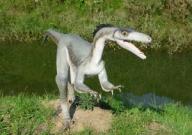
An island of "dwarf dinosaurs" which was only a theory for 100 years really did survive, scientists have announced.
The idea of the tiny prehistoric beasts on Hateg Island, Romania, was proposed 100 years before by the colourful Baron Franz Nopcsa, whose family owned estates in the area.
He discovers that many dinosaur remains on Hateg were half the size of their close relatives in older rocks in England, Germany, and North America.
The baron's theory has been checked for the first time by Professor Mike Benton at the University of Bristol, and six other authors from Romania, Germany, and the United States.
The team found that the Hateg Island dinosaurs were in fact dwarfs and not just young dinosaurs.
A favourite theme of evolutionary ecologists is whether there is an "island rule" - where gigantic animals isolated on islands evolve to become smaller.
Three species of the Hateg dinosaurs - the plant-eating sauropod Magyarosaurus and the plant-eating ornithopods Telmatosaurus and Zalmoxes - are half the length of their close relatives elsewhere.
The team examined these three dinosaurs, each of them represented by many specimens. They found no evidence of any large bones such as they would expect to locate in their normal-sized relatives.
More importantly, a close study of the bones proved that the Dinosaurs had reached adulthood so they were not just underdeveloped youngsters.
Source from great site: http://www.rareresource.com
Read more interesting topic about dinosaur fossils.
World's largest group of dinosaur footprints discovered in Shandong

At present, a large group of Dinosaur footprints were discovered at Zhucheng city, Shandong province.
Paleontologists from Chinese Academy of Sciences and Chinese Academy of Geological Sciences came to the location and verified the collection to be the largest ever discovered.
The group of footprints is located in an area of more than 2,600 square meters, and more than 3,000 footprints of different kinds of dinosaurs emerge in various shapes and sizes.
This is another significant discovery that follows the discovery of world's largest group of Dinosaur Fossils in the same city.
Source from great site: http://www.rareresource.com
Read more interesting topic about dinosaur fossils.
Prehistoric island 'Jurassic Parkette' ruled by dwarf dinosaurs
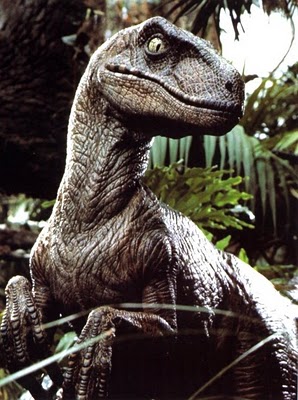
Paleontologists have found out a prehistoric "lost world" which was ruled by miniature Dinosaurs. Sort of a pigmy Jurassic Park, the island was the hometown of dinos who were up to 8 times smaller than some of their mainland cousins, reports the Telegraph.
Dwarf Dinosaur fossils were discovered in what is now modern day Romania, in an area known as Hateg, which, 65 million years before - when the creatures were living there - was an island, reports The Telegraph.
One of the fossils was of Magyarosaurus, which was slightly bigger than a horse, but was related to some of the biggest creatures to ever walk the Earth - gigantic titanosaurs such as Argentinosaurus, which reached up to 100 feet long and weighed around 80 tons.
Professor Michael Benton, from the University of Bristol, who carried out the research with scientists at the Universities of Bucharest of and Bonn, said: "Most of the famous dinosaurs that we know about were living on big landmasses at the last part of the Cretaceous period.
The curious thing about Europe at this time was that it was mostly covered by sea and much Eastern Europe was a sort of archipelago of islands.
If you are a gigantic dinosaur on a small island with limited food and space, then the evolutionary pressure is either to go extinct or to get smaller.
The discovering will be published in the scientific journal Palaeogreography, Palaeoclimatology, Palaeoecology.
Source from great site: http://www.rareresource.com
Read more interesting topic about dinosaur fossils.