Rare American Ferret Marks The Return Of 30

Friday, September 30, 2011


Ferret of the way blacks have been declared extinct in 1979, two years before the small group of survivors showed up in Wyoming. And now, 30 years of rehabilitation, the species is one of the top success stories in American conservation.

Thirty years ago this week, the Lucille Hogg and his dog accidentally brought an extinct species back from the grave.

The black-footed ferret - ferret is North America - was officially declared extinct in 1979, after the last known colony died five years earlier. But at the end of September 1981, Hogg was a ferret dog dead at his door in Meeteetse, Wyoming, prompting a stampede across the prairie for more science.

Search eventually led to a complex vacuum Prairie dog nearby, because the black-footed ferrets and prairie dogs to eat, and checking the caves. For two years they were extinct, the earth, the last black-footed ferrets few have been found living in a colony, which was apparently isolated since 1930. Wildlife officials decided to simply watch and monitor from a distance, hands-off strategy, which seemed to work, when the population grew by 61 1982-129 1984.

However, ferrets are not as healthy as they seem. 20 to 30 generations had occurred during the half century of isolation in Meeteetse, according to a research of the Thoreau Institute and demographic data suggest that genetic diversity was reduced to 60 percent. When sylvatic plague struck the colony in 1985, was almost fatal. Powder agents burrows with carbaryl, an insecticide to kill fleas plague of transport, but the colony remains a 22 per cent.

To save the species, biologists removed six ferrets released in October and November 1985, and then five adults and two pups in the summer of 1986. The captive population has increased to 18 in the spring, summer has produced two litters in captivity, for a total of eight new kits. It reached 180 in late 1990 and in 1991 scientists began to release black-footed ferrets in the wild. A history of conservation of the limited success had been in a decade - and provided a much needed model on how to save other endangered species.

Now, 30 years after their discovery, and 20 years after they were once again, about 1,000 feet blacks ferrets are thought to live in the central United States, four self-sustaining population in South Dakota, Arizona and Wyoming. In four zoos in the United States and Canada are now their growth, and the Smithsonian National Zoo has developed a technique of artificial insemination, which has so far produced a series of 139, according to the Associated Press. The researchers are also building a ferret sperm bank to protect genetic diversity, and five sets have already been bred with frozen semen. When the captive-bred ferrets have finished the wild, they spend the first 30 days, "the ferret's Boot Camp" to stabilize their self-sufficiency, strategy, reportedly increasing their chances of survival by 10 percent.

The black-footed ferrets are probably still living in the shadow of their glory days, when some one million to six million lived through the Great Plains, but at least they seem to be past the dark days 30 years ago . And while they will never know what they owe their lives to the Lucille Hogg, his dog and countless dedicated environmentalists across the country.

To celebrate this milestone year, here's a funny video of a black-footed ferret romp around its habitat recovered:


For more information related to dinosaurs, visit rareresource.com.

U.S. To Investigate The Water To Protect 374 Species


U.S. Fish and Wildlife Service, said he will make a thorough review to determine if these plants and animals must be listed as threatened or endangered by law.

Florida Crane, Alabama map turtle and Streamside Salamander is one of the 374 freshwater species that may warrant protection under the Endangered Species Act, the U.S. government said Monday.

U.S. Fish and Wildlife Service, said he will make a thorough review to determine if these plants and animals must be listed as threatened or endangered by law.

The 374 species in 12 southern states that are in place in this review are among the 404 that environmental groups have asked to protect.

The review includes 89 species of crayfish and other crustaceans, 81 plants, 78 molluscs, 51 butterflies, caddisflies and other insects, 43 fishes, 13 amphibians, 12 reptiles, three in four mammals and birds.

Florida Sandhill cranes can be a captivating creatures of the list, with long legs and long neck, it looks like a hero, but a bald, red skin on top of the head.


For more information related to dinosaurs, visit rareresource.com.

Darren Tanke Preparation Gorgosaurus 2: The Jacket

Thursday, September 29, 2011


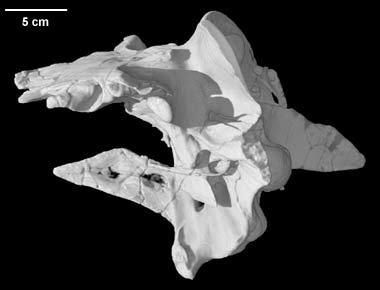
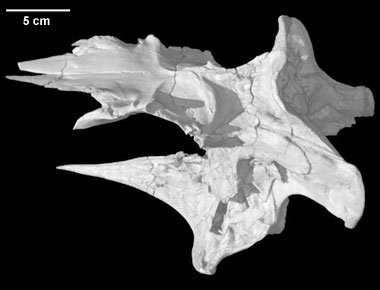
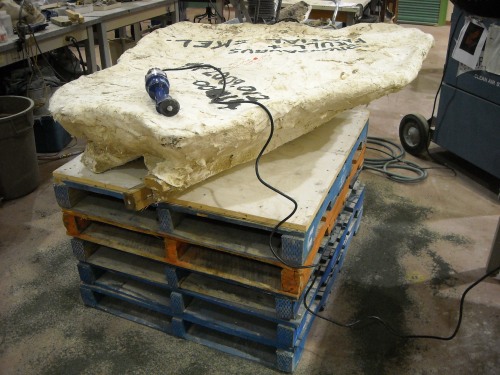
Gorgosaurus block was mainly in the preparation laboratory, now the Royal Tyrrell Museum. The product code is TMP 2009.012.0014. Explain why the numbers as some people do not understand how it works. TMP = Tyrrell Museum. = 2009 years of collecting. = 012 sites, in this case, the total number of Dinosaur Provincial Park. 14 = fourteenth. Therefore, it is translated Gorgosaurus 14 samples collected from the Dinosaur Provincial Park, in 2009, the Royal Tyrrell Museum.

All catalog data was from the coating and a linen jacket of land that would be deleted, so I downloaded the data to the side of the jacket, the rewriting of a black magic marker. You do not want to lose this number! Sometimes, I will consult the catalog of recordings, if I make a model unknown to me. May have noticed something on the model manifold that I can not see, for example, how a particular area is poorly preserved and broken. Warned that I can be particularly careful when I dig in this area. But as co-collector of the model that I know all his little peculiarities, you could bypass this step.

Then I got ready to open his jacket. Cut the plaster a lot of dust, so I sprinkled some materials (sand and sawdust fat) on the ground to keep dust levels down and limited, so I was not following the plaster dust all over the museum later. I have a vacuum cleaner (essentially a giant vacuum cleaner that filters the air) ready to trap the dust created during cutting. I threw a cutter, a piece of medical equipment used to cut rolls of broken arms, etc. of this blade does not turn, but turned back about 5 degrees. As I had only two plaster / burlap layer on this side of the jacket (for easy transport helicopter), the rapidly melting cutter work, I cut the edges in about 10 minutes. I got some flat screwdriver, insert the blade of a cut and in fact I just started searching the jacket, move along, curious and stopped gradually. In 10 minutes the entire room jumped out.

Then I vacuumed the dust from the edge of the jacket and threw the piece of cork.

The rock was dry inside the jacket and gave way, producing deep cracks. It is a common occurrence. I mixed a bit of dental plaster for the link between milk and poured into the cracks until they are full. Gypsum adds stability to the brim and can be removed if necessary. More plaster can be added as I work my way down the rock. The cut we mix plaster is made of rubber, it is easy to clean, you can simply wait for the rest of plaster to harden so you can pinch bowl and all the plaster becomes available. Most of the stones showing the jacket is now clay. Can I withdraw without delay, because the test itself is inside the white sandstone below it.

For more information related to dinosaurs, visit rareresource.com.

Not Quite According To Plan


Today we were at the local site known as Gomez, trying to chase some elusive marine reptiles in a section of the Upper Jurassic. Many beautiful ammonites were in evidence, much of the clams and oysters, and not much wood.

Yet, we recorded the show was well covered and the trip was really to work out long-term viability to get the time to dig beneath the layers after we know where the bones (skeletons were recovered purposes).


For more information related to dinosaurs, visit rareresource.com.

T.rex To Explode

Wednesday, September 28, 2011


This "explosion" is a skull of Tyrannosaurus exhibited in Tokyo. It's really a good idea, because I suspect that many people (of course) tend to think of the head as just a few bones - the skull and jaw, then of course there are many components and they are often naturally are a little more complicated than it appears from the outside with all the grooves and the parts that interconnect them together. So it gives a nice review of this issue with the parts arranged so that it is clearly a rex (and he got a few meters away), there is clearly something more complex to it.

Otherwise, the odd angle of this picture, because that was lying on the floor of a transparent walkway over it, so you can walk on it as if it were (as children seem to love), but the scratches do this "down" Photography impossible.


For more information related to dinosaurs, visit rareresource.com.

T.rex To Explode


This "explosion" is a skull of Tyrannosaurus exhibited in Tokyo. It's really a good idea, because I suspect that many people (of course) tend to think of the head as just a few bones - the skull and jaw, then of course there are many components and they are often naturally are a little more complicated than it appears from the outside with all the grooves and the parts that interconnect them together. So it gives a nice review of this issue with the parts arranged so that it is clearly a rex (and he got a few meters away), there is clearly something more complex to it.

Otherwise, the odd angle of this picture, because that was lying on the floor of a transparent walkway over it, so you can walk on it as if it were (as children seem to love), but the scratches do this "down" Photography impossible.


For more information related to dinosaurs, visit rareresource.com.

The Jurassic Coast


Of course, taking in Lyme Regis SVPCA was quite appropriate given the deep history of vertebrate fossil finds from the region, and the place of "Jurassic Coast" which is a UNESCO World Heritage Site. Although I have been here before fossil hunting, has been my first clue of a professional paleontologist, and a lot more appreciation of place and history and the area of ​​science.

Despite its name there are beds of the Triassic and Cretaceous along the same stretch of the coast (if you follow it far enough west and east, respectively). The first is at least relatively close as shown by the partial skull rhynchosaur (orange) on display at the museum in Lyme Regis.

The most important fossil sites in Lyme Regis lie on the beach just east of the city. There Marl mudstones and the former may give rise to wave cut platforms that appear and disappear gradually as the tide rises and falls, while the cliff falls regularly securing new tests to come throughout this.

While it is obviously the Ammonites, who has everything, they are so numerous and often in excellent condition. Within minutes you can find a handful, but getting back more, or even out of the rock can be a challenge.

It 'was great to see this place again, and go to the collection and, of course, visit local fossil shops of their huge selection of sales of local champion and not-so-local (and, unfortunately, in one case, Liaoning Bird). I cam back and throw more material than I expected, and a new value to this place when it comes to how my work in Asia on loan it made me think of places vertebrates.

For more information related to dinosaurs, visit rareresource.com.
New Dinosaur Species Found

Tuesday, September 27, 2011


Sure it's pretty scary--beady eyes and all--but 125-million-year-old Raptorex kriegsteini (seen above in a new model) was no T. rex, at least in the size department. The newfound, 150-pound (70-kilogram) dinosaur, however, was nearly identical to its descendant, the 6-ton T. rex in every other way, a new study says. (Read full story.)

That Raptorex, via evolution, "scaled up, almost without change, a hundred times," resulting in T. rex some 40 million years later is an "evolutionarily staggering thing," said paleontologist Paul Sereno, lead author of the study, to be published in the journal Science tomorrow.

Newly discovered Raptorex gets underfoot of its nearly identical, though a hundred times heavier, descendant, T. rex in an artist's conception. The tiny T. rex ancestor is not known to have lived alongside its titanic ancestor.

The Raptorex find, announced September 17, 2009, runs counter to previous theories, which had said that stumpy arms were a relatively recent evolutionary development for T rex.

Prior to Raptorex, said paleontologist Thomas Holtz of the University of Maryland, "we didn't know where and when in the history of the tyrannosaurs this arm-shortening occurred."

T. rex hypothetically could have swallowed a Raptorex head whole, skulls of both dinosaurs (pictured) suggest.

Raptorex has all the main characteristics of T. rex--big head, nipping teeth, stubby arms, fast legs--but packed into a 9-foot (3-meter) frame.

Paleontologist Paul Sereno of the University of Chicago adjusts the world's only known Raptorex skeleton, which was smuggled out of a Chinese fossil bed and later sold to U.S. collector Henry Kriegstein.

Kriegstein worked with Sereno to see that the T. rex ancestor, revealed in September 2009, was properly studied and allowed the skeleton to eventually be returned to China, where it eventually go on public display.

The Raptorex project can hopefully serve as a model for saving--and learning from--smuggled dinosaurs.


For more information related to dinosaurs, visit rareresource.com.

New Spiked Dinosaur fossils found


Agadez region, Niger, September 15, 2009 - Researchers digging 43 feet long (13 meters in length), the skeleton of a new species of sauropod - or four-legged plant-eater - in an undated photo released this week. (Theme: ". Bizarre New Dinosaurs Found in Sahara")

The dinosaur 170 million years, known Spinophorosaurus nigerensis had a spiked tail bone that the animal probably swung the predator, the authors of the study in the September 16 issue of the journal PLoS One. To find such a complete skeleton is extremely rare sauropod and the new fossil could help scientists to reconstruct the early development of long-necked giants.

For more information related to dinosaurs, visit rareresource.com.

Fossils Of 2 Million Years The Ancestors Of Man Hopes To Increase

Monday, September 26, 2011


A new analysis of bones, which are almost 2 million years, suggests that they are organisms that may be the candidate for the head of an ancient ancestor of humans, paleontologists reported Thursday.

Call sediba Australopithecus ape, South Africa, Lee Berger, chief of staff of the University of Witwatersrand in Johannesburg, suggests that many "human" traits - inches long, walking upright, wide hips - this evolved from extinct. This may be "the best candidate for the ancestor" to the people than any other species considered as a precursor to date, says Berger.

Africa is the cradle of humanity, where Australopithecus ("southern ape") precursors to modern humans and apes occurred over millions of years, as evidenced by the fossil and DNA evidence. Dinosaur Fossils of South Africa are among the best preserved examples.

"These fossils are important and remarkably detailed," says paleontologist Bernard Wood of George Washington University in Washington DC, there was not a part of the discovery team. Wood, other paleontologists have warned in the report claim the team of human parents. "I have some similarities with Warren Buffett, but I'm not a billionaire," Wood said. "A couple of similarities is not an ancestor to do."

About 4 feet high, were sediba fossils of Australopithecus ("southern ape source") discovered in 2008 and first reported last year Malapa a place in South Africa, a series of presentations ancient caves. species missing climbed trees like orangutans and travel through the earth as human beings. In five articles published in the journal Science, the team discovered an in-depth look on the human fossil-like features:

• Fossils reveal hands and wrists inches long that looks like a man of them, which would allow the tool to use. Curved fingers seem more ape-like.

• reveal the bones of the foot-righteous attitude as people walking, but the ankle bones of tree-climber.

• waist hip reconstructions reveal a large, "said by some to be a development that could be the ancestors of the birth of the great human brain children", says researcher Kibii work, including the University of the Witwatersrand.

• The brains were less than one third the size of a modern man, but retains the features of the skull-house, the team suggests, resemble the precursors of specialized brain areas in modern man.


For more information related to dinosaurs, visit rareresource.com.

Discover The Flooding Remains Of Dinosaurs In The MD


Discover flooding remains of dinosaurs in MD

"In those days, rivers would overflow their banks, and dump things that float in the flow channel to give up, which includes dead animals, and in that time including the dinosaurs," says Dr. Peter Kranz, who runs a dinosaur paleontologist at Laurel Park.


The bone fragment is the size of a large grapefruit and not very visible to the untrained eye. Kranz said he was washed to the surface by wind and rain of Hurricane and Tropical Storm Irene Lee.

"I found hundreds of pieces of bone over the years here, so it's not like the first time, but it is always exciting," said volunteer Dave Hacker, who discovered the find.

The fragment of fossilized bones sent to the Smithsonian Institution for examination and identification.


For more information related to dinosaurs, visit rareresource.com.

The Dinosaurs Do Not Hibernate, Says Study

Sunday, September 25, 2011


dinosaurs Fossil bones discovered in Victoria have revealed that the dinosaurs that once lived in the Antarctic Circle, have been slightly different than life in other climates when it came to stay active throughout the year.

During the Cretaceous (145-65000000 years ago) in Australia was much further south than it is today, and parts of it, sat inside the Antarctic Circle. This meant that should be experienced in total darkness for many months, and perhaps the temperature is too cold.

Team of palaeontologists in Australia and the United States, dismissed his theory, which suggested some of the dinosaurs hibernated in Australia to adapt to extreme conditions of their habitat near polar.

"The hibernation hypothesis" is based on the presence or absence of tree rings in the form of brand growth, called lines of arrested growth (LAGs) in sections of fossil bones. GAL can be used to determine the age of an animal, formed as a result of the slowing metabolic processes of animals, such as those experienced during hibernation.

University of Queensland palaeontologist Dr Steve Salisbury, who was not involved in the study, is not surprised by these results. He explained that the GAL is not unique to animals that hibernate. "Most of exothermic animals - those that depend on the environment to regulate body temperature, such as crocodiles, turtles, alligators different - go through periods of faster growth and slower growth," he said.

While the revelations about the reduction in theory hibernation, which still does not give the whole story about the differences between the dinosaurs that lived around the poles, and those who do not. "The new study does not mean that there was nothing special about polar dinosaurs, but these features are not present in the bone," said co-author Holly Woodward.

For more information related to dinosaurs, visit rareresource.com.

Dinosaur Bones Found In Laurel


Researchers working on Dinosaur Park Laurel on Wednesday, the largest dinosaur fossil found in Maryland dug in five years.

It is too early to say with certainty what kind of legs it had. "It's not a thigh bone, possibly part of a femoral head," said Smithsonian fossil PREPARATORY Y Steve Jabo, 50, who has most of the digging to free the fossil bones of Site dense clay.

The importance of the discovery will not be known before the fossil has been cleaned and studied at the National Museum of Natural History Smithsonian Institution, Jabo said.

But he said it could be a part of the plant eating sauropods leg bone, perhaps a relative of my Astrodon JOHNSTON - Dinosaur State Maryland - teeth and other remains have been raised in 150 years.

6-foot-long, 239-pound Astrodon femur was discovered there in 1991, and 2-foot model was born in 2006.

They all date from the middle of the Cretaceous era, about 112 million years ago when the Interstate 95 corridor was a coastal area like southern Louisiana Bayou today, with meandering rivers and lakes.

The latest discovery came out of the clay at September 10 amateur paleontologist David Hacker was discovered by inspecting the location of new fossils exposed by heavy rains from the remnants of Tropical Storm Lee.

Hacker, 52, is the lead volunteer in the park, and that includes many years. It checks the site regularly and cares for the fossil until it can be transferred to the Smithsonian.

Before the search, the visible part of their find was 8 to 10 inches wide and it appeared that some of the femoral condyles - the bottom of the thigh bone that forms the top half of the knee joint.

"David and [amateur paleontologist] Mike Styer probed around her and could not determine how [the dirt], it is," says Peter Kranz, a geologist who heads the Washington public programs in the park. "There can be little left of him, or it could be her."

Rather than risk the destruction of fragile bones, Kranz said, "they both concluded that the best is to have technicians out the Smithsonian."

"I think it's a dinosaur bone for sure," Jabo said shortly after arriving at the site. "There was nothing so great that it would not be a dinosaur here."

During the archaeology excavations an hour, Jabo and other trainer Peter Kroehler, 56, carefully cleared of sticky clay, rocks, iron ore and brown coal - anthracite, as remnants of ancient trees - the fossil contained.

For more information related to dinosaurs, visit rareresource.com.

Huge Crocodilian Lived Alongside Titanoboa, the World's Largest Snake in Columbia

Thursday, September 22, 2011


Researchers from the University of Florida have unearthed a previously-unknown massive crocodile measuring 20ft (6m) overall, which lived alongside Titanoboa, the world's largest snake. The findings help scientists better understand the diversity of animals that occupied the oldest known rainforest ecosystem, which had higher temperatures than today, and so could be useful for understanding the impacts of a warmer climate in the future on this type of habitat.

Competing for prey
The 60-million-year-old freshwater relative of modern crocodiles is the first-known land animal from the Paleocene New World tropical region which was specialized for eating fish, meaning it competed with Titanoboa for food. But the giant snake could have consumed its competition too, according to scientists.

"The younger crocodiles were definitely not safe from Titanoboa, but the biggest of these species would have been a bit much for the 42-foot snake to handle," said lead author Alex Hastings, a graduate student at the Florida Museum of Natural History and UF's department of geological sciences.

The new species is a dyrosaurid, commonly believed to belong to a group of primarily ocean-dwelling, coastal reptiles. The location of these adult specimens challenge previous theories that such crocodilians would only have entered freshwater environments as babies and then returned to sea.

Fossils of a partial skeleton of the species, now called Acherontisuchus guajiraensis, show dyrosaurids were key players in northeastern Colombia and that diversity within the family evolved with environmental changes, such as an asteroid impact or the appearance of competitors from other groups, said Christopher Brochu, an associate professor of vertebrate paleontology in the department of geoscience at the University of Iowa, who was not involved in the study.

This new species is the second ancient crocodyliform found in the Cerrejon mine of northern Colombia, one of the world's largest open-pit coal mines. The excavations were led by study co-authors Jonathan Bloch, Florida Museum associate curator of vertebrate paleontology, and paleobotanist Carlos Jaramillo of the Smithsonian Tropical Research Institute.

Long-snouted specialists
"This one is related to a group that typically had these long snouts" Hastings said. "It would have had a relatively similar diet to the other coastal species, but surprisingly, it lived in a more freshwater environment."

The genus is named for the river Acheron - "the river of woe" from Greek mythology - since this reptile occurred in a wide river that emptied into the Caribbean. Unlike its relative previously found in the area, which had a more generalized diet, the snout of this new crocodile was long, narrow and full of pointed teeth, displaying a specialization for hunting the lungfish and relatives of bonefish that inhabited these waters.

"The general common wisdom was that ancestrally, all crocodyliforms looked like a modern alligator, that all of these strange forms descended from a more generalized ancestor, but these guys are showing that sometimes, one kind of specialized animal evolved from a very different specialized animal, not a generalized one," Brochu said. "It's really showing us a level of complexity in their development that 10 years ago was not even anticipated."

In South America during the Paleocene, the environment was dominated by reptiles, including giant snakes, turtles and crocodiles. The dyrosaurid family originated in Africa about 75 million years ago, toward the end of the age of dinosaurs, and is assumed to have arrived in South America by swimming across the Atlantic Ocean.

For more information related to dinosaurs, visit rareresource.com.

How Do You Build A Dinosaur?


Complete skeleton of Tyrannosaurus rex ever found, so how can we know what appeared?

In 1854, exposure to the world of dinosaurs has opened in the Crystal Palace, south London. But in the 19th century the show had lost its credibility, scientific discoveries replaced these first impressions of the dinosaurs.

Now, scientists in the world of dinosaurs in an innovative work leading exhibition in Los Angeles, California, which claims to be an accurate representation of most scientifically the dinosaurs so far.

Luis Chiappe, director of the Natural History Museum of Los Angeles, says they aim to show how "we translate the evidence we find in the field of scientific knowledge."

The centerpiece of the exhibition will be a "growth-series" of three skeletons T. rex, and it will also be a model of T. rex baby.

Get both models and skeletons in their own right, a huge amount of science goes to every collection.

The starting point of paleontologists is that the fossilized bones discovered during excavations around the world, but there is always new excavations provide new information.

Darren Naish, a paleontologist at the University is based in Portsmouth, is looking for new dinosaur museum in the back.

"I do not necessarily have to go out there and find the dinosaurs, just poke around in the drawers of museums and is something new," he said.

He and a colleague recently discovered a new species hidden in storage, and says there is a large number of samples that could become new discoveries.

"We are the gold discovery of a dinosaur, there are about 50 new species of dinosaurs called every year," he said, adding that "about 90% of all the dinosaurs are named after the name around 1990".

The next step is to understand what fossils are discovered. It can take years to clean up the sediment from the whole skeleton.

When the skeleton is ready, it must be reconstituted and hung true.

Zawisha Paul is responsible for creating tailor-made steel frame for T. rex, which is strong enough to support the enormous weight of fossils.

He said: "Most of the bones are real, making them extremely heavy.

"We estimate the total weight of bone is a little more than a ton.

"The femur is probably a good 200-250 lbs (90 to 115 kg) each, we need to set up special devices rigging.

"God forbid that one of them fell, because it would take some 'time to get them back together."

Paul is responsible for collecting the head T. Rex in the show - known as "Thomas".

Work entrepreneur skeletons of T. Rex in Los Angeles is a reconstruction of the skeleton of a number of contractors in months

Thomas is one of the best samples T. rex found, but is still only 70%. His lack of bone will be led by Paul team, based on those who belong to more than 30 others partially T. rex, were found.

The steel frame is a work of art itself, inch perfect and subtle enough to not distract from the dinosaurs.

Because a dinosaur is suspended, while the real science, both in terms of artistic interpretation, in order to bring the exhibition to life really.

"We could change the fingers a little to give this a sneaky feeling or a sense of pause. But it is very, very subtle," says Paul.

"You could just move a toe one inch in one direction, and that changes how you see it all," he said.

Most experts now believe that although many dinosaurs died out 65 million years, some have survived and evolved into modern birds.

"What does it mean that since the dinosaurs are the descendants of the dinosaurs are not extinct, are not extinct at the end of the Mesozoic," says Luis.

"You know the 10 000 species of birds that will provide you with a wealth of information that can be used to understand biology."

One of the world's leading experts on the movement of the dinosaurs is Dr. John Hutchinson heard of Luis T. Rex to ensure reflect the latest theories on the muscles and physiology.

By comparing the anatomy of birds of the anatomy of dinosaurs, the estimated size of the muscles of extinct animals, and loads it into computer models, Dr. able to get an overview of how dinosaurs really moved Hutchinson.

Dr Hutchinson said: "We found the use of computer models of human sprinter, who can do 25 mph (40 km / h), or slightly faster than it would probably be very well matched and well muscled Tyrannosaurus.

"The average person can run about 15 miles per hour, would probably be a pretty good game for a poor version of a T. rex."

Also built for the exhibition for the first time a model of a small chicken-sized dinosaur called Fruitadens, the smallest dinosaur found in North America.

Painting Mon Fruitadens The researchers did not initially know what the color of the model should be Fruitadens

Fossils and imaging allows researchers to faithfully reproduce, but the mystery remains: its color.

How do we know what color the dinosaurs look like?

Doyle, Trankina, one of the artists who work on the model Fruitadens Luis says: "If you push things too far, do not go to points, purple and pink, the public simply does not believe it.

"If you pull the examples of live animals, you can actually earn a lot just by watching the crocodile skin color, maybe a few lizards and fish, but will remain credible."

But there is another way. Professor Mike Benton recently came across the remains of dinosaurs that were so wonderfully well-preserved feathers and bones were fossilized.

When scanning electron microscopy, which increases the objects 9000 times, the secrets of their pigment can be unlocked.

By comparing the structure of feathers to life, the colors have been identified - ginger, black, dark brown or gray.

It was found that has helped scientists create more accurate representations of the dinosaurs.

"Who would have thought a dinosaur is close to the bird? But we are. You know it's a sort of witness the skeletons, and now, if you will, testified anatomy of feathers," says Professor Benton.

Paleontology is an evolving field where new discoveries are changing the game all the time.

And it is a burden Luis is aware ". It is our responsibility to ensure that people understand that things are not written in stone, and the scientific conclusions change as we gather more evidence"


For more information related to dinosaurs, visit rareresource.com.

Raptor Was Recently Discovered "Switchblade" Anti-grip

Wednesday, September 21, 2011


A new dinosaur fossil suggests that there is not a raptor dinosaur spirit just use their claws to the show, but can be wielded as weapons hooked claws.

The newly excavated dinosaur feathers named Talos Sampson is a relative of the Velociraptor iconic, made famous in the book and movie "Jurassic Park". Raptor Dinosaurs were all unusually large, sickle-shaped claws on the second toe on each foot that has kept the earth as switch points folded.

The dinosaurs 75 million years, was named "Talos" for its resemblance to a giant bronze winged Greek mythology who could work at lightning speed and succumbed to an ankle injury. "Sampson" is in honor of the search for commissioner in the Natural History Museum of Utah and a collaborator of the "Train Dinosaur" PBS series, Scott Sampson.

The sample was found in 1.9 million acres of high-Grand Staircase Escalante National Monument in southern Utah, an area considered one of the last pristine dinosaur graveyards in the United States. At least 15 species of dinosaurs have been discovered in the region over the past decade, including the horned dinosaurs and Kosmoceratops Utahceratops, duck-billed dinosaurs Gyrposaurus monumentensis, the Turkey-like Hagryphus giganteus, and two new tyrannosaur and a collection of armored dinosaurs called Ankylosaurs.

Michael Knell, a doctoral student at Montana State University, met with the rest of Talos, while exploring the field of fossil turtles, as part of his doctoral research.

"I was surprised when I heard that I had found a new dinosaur," said Knell Live Science. "It 'a very rare discovery, and I feel very fortunate to be part of the exciting research happening right here in the monument."

Weapons dinosaur?

Thirty years ago, the fossil of a Velociraptor locked in mortal combat with the prey in Mongolia. Dubbed the "fighting dinosaurs", the finding suggests that these gases have wielded as weapons.

Thirty years later, Talos sheds light on how these dinosaurs lived with their weapons.

The new fossil shows the damage in the feet and the researchers think they know why.

"The Raptor is a special model of a dinosaur, because it shows proof of the foot toe broken foot, which is an enlargement of the house, we have interpreted as an injury sustained during combat operations with the other members of the species, or prey hunting, "Fang Lindsay, author of the study, told Discovery News.

Fang is an assistant professor of anatomy at the University of Wisconsin-Parkside, and a research associate at the Field Museum of Natural History in Chicago.

The characters are the trauma is like gold for researchers as a damaged specimen has a story to tell.

Evidence of damage to disseminate new information about how the body is used. For example, since the Talos evidence of trauma to the second finger of the left leg (which would be extended to the hook-like claws), scientists can reveal new information on the potential activity of the toes and nails.

"Generally, we think that the fossils of the most pristine, we find perhaps the most important gain, but in reality is sometimes the Up Beat, damaged specimens, injuries that can give clues about the biology of an extinct animal, otherwise not, "said Zanno LiveScience.

"People have speculated that the heel raptor dinosaur was used to capture prey, fighting with other members of the same species, or to defend against attacks," said Zann. "Our interpretation supports the idea that these animals regularly that toe in danger."

Footprints for the Raptors almost in proportion to the Talos suggests that they all loved the house flick started to walk.


For more information related to dinosaurs, visit rareresource.com.

The Asteroid Killed The Dinosaurs Destroyed Too Early Birds


Paleontologists have debated for years about the fate of the first "primitive" birds that were very different from today's species and their populations slowly declined over time or were killed by the impact of Giant in the Gulf of Mexico.

Now, researchers at Yale University have confirmed that a catastrophic attack meteor at the same time that the disappearance of the dinosaurs 65 million years ago may have wiped out even the old birds.

The team of paleontologists led by Yale scholar, Nicholas Long said Rich fossil evidence that many primitive species have survived to the time of the impact of a meteorite.

The team's findings, published in the Proceedings of this week the National Academy of Sciences, shows that all the samples examined lived within 300 thousand years of mass extinction event 65 million years.

"This shows that these species have become extinct rapidly in terms of geological time scales," he said in a statement Longrich University.

Although researchers had suspected that many ancient lineages of birds have become extinct with a number of other creatures in the late Cretaceous, "the fossil evidence was somewhat vague," noted Rich Long, MSNBC reported.

This uncertainty has left open the possibility that these birds really began to die out very slowly before the mass extinction.

To help clarify this mystery, the researchers examined a large collection of about two dozen bird fossils found in North America represent a wide range of species that existed during the Cretaceous period.

The researchers said the fossil birds from the Cretaceous are very rare bird bones are so light and fragile that they can be easily damaged or swept away by torrents.

The analysis of 24 samples, the researchers identified 17 species, seven of which were "archaic birds", who disappeared after the KT mass extinction, the BBC reported.

These results demonstrate for the first time a multitude of live birds archaic until the end of the Cretaceous period, this means that the birds have become extinct suddenly 65 million years.

Rich Long said he believes burglary archaic species of birds survived the Cretaceous and the impact of modern birds evolved.

"The design of a bird base was in place, but all the specialized functions have evolved after the mass extinction, when the birds are a kind of re-evolved with the diversity they show today. It is similar to what happened to the mammal after the age of dinosaurs, "said Rich Long.


For more information related to dinosaurs, visit rareresource.com.

The Asteroid Baptistina Not Responsible For The Extinction Of The Dinosaurs: NASA

Tuesday, September 20, 2011


Recent observations from NASA Wide Field Infrared Survey Explorer (WISE) is to suggest that the family of asteroids would be responsible for the extinction of the dinosaurs 65 million years can not be the culprit.

In their report, scientists at NASA currently maintains a widespread belief that a large meteorite crashes of 65 million, then froze the dinosaurs' extinction. 2007 Report simply puts into doubt the theory that the giant asteroid is a Baptist, as a possible suspect.

The 2007 study using data from the visible light from ground-based telescopes suggest that Baptistina crashed into another asteroid belt of the main action between Mars and Jupiter about 160 million years. This collision would have sent the broken pieces of asteroids as big as mountains, one of which was supposed to have hit Earth and caused the extinction of the dinosaurs, according to a statement from NASA.


For more information related to
href="http://dinosaurs-video.blogspot.com/"

title="dinosaurs">dinosaurs
, visit
href="http://www.rareresource.com">rareresource.com
.

Fossils Of Age To Solve The Mystery Of The Extinction Of The First Bird


Many of the early birds suffering from the same catastrophic extinction of the dinosaurs, new research has shown.

Impact of meteorites at the same time that the disappearance of the dinosaurs 65 million years ago, also saw the rapid decline in species of primitive birds.

Few groups of birds have survived the mass extinction, from which all modern birds are descended.

Researchers at Yale University published their findings in PNAS this week.

There was a long-standing debate over the fate of the first "archaic" birds, which first evolved about 200 million years.

It's population has declined slowly to the end of Cretaceous time, or are suddenly the mass extinction at the Cretaceous-degree (KT) boundary is unresolved, because the conflicting evidence.

DNA studies have attempted to date the origin of modern birds, some suggest that arose before the extinction of the dinosaurs, many of them survive the extinction event.

But the molecular clock is suffering from "methodological problems", says Dr. Longrich Yale University, and well-dated fossils are needed to "stress stratigraphic" extinctions.

The problems are the fossil record, however. It is incomplete because of the extreme rarity of fossils of birds.

The bones of birds are very difficult to maintain as fossils because they are small and lightweight, and easily damaged or washed away into rivers.

But the new study, led by Dr. Longrich, made use of fragmentary fossils of birds gathered until 100 years ago from different parts of North America.

New diversity

The fossil beds in North and South Dakota and Wyoming in the United States and Saskatchewan in Canada, the date from 1.5 million years of the Cretaceous period.

Specifically dating places the fossils of birds within 300,000 years of extinction - a very short period of geologic time.

These fossils were studied before, but have been "shoehorned" into groups based on their similarity to modern general.

Dr. Longrich and his team re-analyzed and reclassified these important fossil fragments, with the characteristics of the shoulder joint to assign the fossils of ancient and modern groups.

The bones of the shoulder, or "coracoid" used for classification, because it is the piece of bone most commonly preserved, and it does not vary much between individuals of the same species.

24 samples analyzed, the researchers identified 17 species, seven of which were "archaic birds" which are not observed after the KT mass extinction.

These results show for the first time a variety of archaic birds live to the end of the Cretaceous.

This would mean that the birds went extinct suddenly 65 million years ago, archaic, and that modern birds are descended from only a few groups, who survived the accident.

"The nail in the coffin"

Among the species identified early, there is considerable variation in size, but there are some specific adaptations.

Birds of today, however, has a wide range of adaptations, in particular their behavior or habitat.

This change would be born in an explosive evolutionary radiation during the few surviving groups, the first 10 million years after the KT mass extinction.

"It is similar to what happened to mammals due to aging dinosaurs." Long said Dr. Rich.

"Given that mammals hit eradication, reptiles, insects and plants, it would be surprising if the bird survived the incident unharmed," the researchers say in an introduction to their research.

There is evidence of growing for the theory that birds survived to the archaic extinction of fossil birds more were found in Madagascar, Mongolia and Europe.

But these fossils are not well dated, in contrast with the recently analyzed the fragments of North America.

Dr. Rich Long said that this display is a "nail in the coffin of the concept of slow decline."


For more information related to
href="http://dinosaurs-video.blogspot.com/"

title="dinosaurs">dinosaurs
, visit
href="http://www.rareresource.com">rareresource.com
.

Dinosaur Fossil Found In Maryland Neonatal

Monday, September 19, 2011


Researchers at Johns Hopkins University School of Medicine, which describes the help of amateur fossil Hunter College Park, Maryland, armored dinosaur hatchling. And 'the youngest nodosaur ever found, and the founder of a new species, which lived about 110 million years ago the first years of the Cretaceous. Nodosaurs has been found in many different places around the world, but rarely found in the United States. Results published in the Sept. 9 issue of the journal Paleontology.

"Now we can learn about the development of the members and the development of the skulls in the early life of a dinosaur," said David Weishampel, a professor of anatomy at Johns Hopkins Medicine. "The small size also reveals that there was a nesting area in the vicinity, or colony, as it could not have gone far from where he was born. We have the opportunity to learn about raising and breeding biology of the dinosaurs, and more on the lives of dinosaurs in Maryland in general. "

Fossil was discovered in 1997, Ray Stanford, Tracker dinosaur, which is often spent his time searching for fossils near their home. This time, he was looking for a Bed Creek after extensive flooding. Stanford has recognized and called nodosaur Weishampel, an expert on dinosaur paleontologist and systematic.

Weishampel and colleagues have established the identity fossil nodosaur recognizing a distinctive pattern of bumps and grooves on the skull. Then did a computer analysis of skull shape, comparing proportions with those of 10 skulls of different species of Ankylosaurs, the group that contains nodosaurs. They found that this dinosaur was closely related to some of the species nodosaur, even if it had an overall shorter muzzle than the others. Comparative measurements allowed them to appoint a new species, Propanoplosaurus marylandicus. In addition to being the youngest ever found nodosaur is the offspring of the first species of dinosaurs that have ever been recovered in the eastern United States, Weishampel said.

The area where the fossil was originally found a flood plain, where Weishampel said that dinosaurs were drowned. Cleaning nodosaur fossils shows a baby on her back, a large part of his body printed with the top of his head. Weishampel determined the age of dinosaurs in death by analyzing the level of skills development and articulating ends of bones, and suggests that the very porous bones, the bones of young people would not be completely solid.

Size also has an index. The body of the little fossil was only 13 cm long, slightly less than the length of a dollar bill. Nodosaurs adults are estimated to have been 20 to 30 feet long. Weishampel also used the position and the quality of the fossils to deduce the method of the death of the dinosaurs and conservation, and buried by drowning in the river sediments. The deposits have been found preserved in the area, as well as the arrangement of bones and the size of some very small traces nodosaur close Weishampel been led to believe that the dinosaur was a newborn, rather than as an embryo, and it was to walk independently.

"We do not know much at all nodosaurs newborns before this discovery," Weishampel said, which is affiliated with the Johns Hopkins Center for Functional Anatomy and Evolution. "And it is certainly enough to motivate the investigation of the dinosaurs in Maryland, with a new analysis of the dinosaurs of Maryland."

Stanford chicks donated to Smithsonian National Museum of Natural History nodosaur, where he is now on public display and available for research.

This study was funded by the Johns Hopkins Center for Functional Anatomy and Evolution. Valerie DeLeon, also of the Center for Functional Anatomy and Evolution, was an additional writer.

For more information related to dinosaurs, visit rareresource.com.

"Switchblade" Reveals How Dino Claw Fought And Killed


Battle damage associated with the dreaded heel curves ohttp://www.blogger.com/img/blank.giff a parent of the newly discovered dinosaur Velociraptor is to shed light on how it was used as a weapon, scientists find.

This research also contributes to the complexity seen in the mysterious lost continent where the dinosaur fossil was found, the researchers added.

Recovered 75-million-year dinosaur is called Talos Feathered Raptor Sampson - "Talos" in homage to the giant bronze winged Greek mythology that could run at the speed of light, and that has succumbed to an ankle injury, "Sampson" in honor of Scott Sampson is a PBS series "Dinosaur Train", and research curator at the Utah Museum of Natural History.

For more information related to dinosaurs, visit rareresource.com.

How long have you been producing palaeoart?

Sunday, September 18, 2011


I doodled dinosaurs all through my childhood. This eventually lead to a productive phase in my early 20s when I produced most of my ‘proper’ illustrations. These days other work keeps me busy so I only pick up the pencils occasionally.

It’s been a while but I now have the latest interview ready. Today it’s Adam Smith who I’ve known since I was starting my PhD at Bristol and Adam was doing the Masters course there. Adam’s art has appeared in a number of museums and books, but there’s a ton of it online in his various websites. Like me Adam is very big on his outreach and was the person who got Dinobase up and running before starting Plesionsauria, the Dinosaur Toy blog and of course, Dinosaurs and their Biscuits.

For more information related to dinosaurs, visit rareresource.com.

Who is your favourite palaeoartist or piece of palaeoart?


Every artist brings something different to the table so the more the merrier. Previous interviewees have already mentioned the big players in the world of palaeoart (the interviewees often are the big players!) and I enjoy them all too. But as a youngster I was also hugely inspired by the work of Graham Rosewarne whose work populated the pages of a magazine (‘Dinosaurs!’) and some popular books I read in the early 90s. His crisp, sharp style of illustration influenced mine considerably.

I’m not sure I have an absolute favourite piece of palaeoart though, so I’ll pick something a little different instead – dinosaur toys! I don’t know who sculpted the Natural History Museum’s old Invicta line of prehistoric animal replicas, but they are by far and away my favourite pieces of palaeoart.

For more information related to dinosaurs, visit rareresource.com.

Pterosaur

Friday, September 16, 2011


Lawrence M. Witmer, Sankar Chatterjee, Jonathan Franzosa & Timothy Rowe.

ABSTRACT: Comparison of birds and pterosaurs, the two archosaurian flyers, sheds light on adaptation to an aerial lifestyle. The neurological basis of control holds particular interest in that flight demands on sensory integration, equilibrium, and muscular coordination are acute. Here we compare the brain and vestibular apparatus in two pterosaurs [Rhamphorhynchus muensteri and Anhanguera santanae] based on high-resolution computed tomographic (CT) scans from which we constructed digital endocasts.

Although general neural organization resembles birds, pterosaurs had smaller brains relative to body mass than do birds. This difference probably has more to do with phylogeny than flight, in that birds evolved from nonavian theropods that had already established trends for greater encephalization. Orientation of the osseous labyrinth relative to the long axis of the skull was also different in these two species, suggesting very different head postures and reflecting differing behaviours.

Their enlarged semicircular canals reflect a highly refined organ of equilibrium, which is concordant with pterosaurs being visually based, aerial predators. Their enormous cerebellar floccular lobes may suggest neural integration of extensive sensory information from the wing, further enhancing eye- and neck-based reflex mechanisms for stabilizing gaze.

This specimen, a braincase, was made available to the University of Texas High-Resolution X-ray CT Facility for scanning by Dr. Sankar Chatterjee of Texas Tech University.

The braincase was scanned by Richard Ketcham on 18 June 1999 along the coronal axis for a total of 351 slices, each slice 1.0 mm thick, with an interslice spacing of 0.8 mm.

Literature

Chure, D. J., and J. H. Madsen Jr. 1996. Variation in aspects of the tympanic pneumatic system in a population of Allosaurus fragilis from the Morrison Formation (Upper Jurassic). Journal of Vertebrate Paleontology 16:63-66.

Madsen, J. H. Jr. 1976. Allosaurus fragilis: a revised osteology. Utah Geological Survey Bulletin 109, 163 pp.

Rogers, S. W. 1999. Allosaurus, crocodiles, and birds: evolutionary clues from spiral computed tomography of an endocast. Anatomical Record 257:162-173.

For more information related to dinosaurs, visit rareresource.com.

Theropod Dinosaur


Allosaurus is a tetanuran theropod known from the remains of at least 60 individuals, ranging from juvenile to adult. It was the dominant carnivorous dinosaur of the Jurassic Period, inhabiting western North America. The most productive site for Allosaurus remains is the Cleveland-Lloyd Dinosaur Quarry in Utah, where tens of thousands of disarticulated bones of individuals of varying age have been excavated. This represents the best-known collection of theropod remains for one particular genus in a single area.

This specimen, a braincase, was made available to the University of Texas High-Resolution X-ray CT Facility for scanning by Dr. Sankar Chatterjee of Texas Tech University.

The braincase was scanned by Richard Ketcham on 18 June 1999 along the coronal axis for a total of 351 slices, each slice 1.0 mm thick, with an interslice spacing of 0.8 mm.

Literature

Chure, D. J., and J. H. Madsen Jr. 1996. Variation in aspects of the tympanic pneumatic system in a population of Allosaurus fragilis from the Morrison Formation (Upper Jurassic). Journal of Vertebrate Paleontology 16:63-66.

Madsen, J. H. Jr. 1976. Allosaurus fragilis: a revised osteology. Utah Geological Survey Bulletin 109, 163 pp.

Rogers, S. W. 1999. Allosaurus, crocodiles, and birds: evolutionary clues from spiral computed tomography of an endocast. Anatomical Record 257:162-173.


For more information related to dinosaurs, visit rareresource.com.

Tyrannosauroid

Thursday, September 15, 2011


The imagery on this page was the basis for a paper entitled Variation, Variability, and the Origin of the Avian Endocranium: Insights from the Anatomy of Alioramus altai (Theropoda: Tyrannosauroidea) by G.S. Bever, S.L. Brusatte, A.M. Balanoff and M.A. Norell (PLoS One 6(8):e23393. doi:10.1371/journal.pone.0023393, 2005). The abstract is as follows:

The internal braincase anatomy of the holotype of Alioramus altai, a relatively small-bodied tyrannosauroid from the Late Cretaceous of Mongolia, was studied using high-resolution computed tomography.

A number of derived characters strengthen the diagnosis of this taxon as both a tyrannosauroid and a unique, new dinosaurs species (e.g., endocranial position of the gasserian ganglion, internal ramification of the facial nerve).

Also present are features intermediate between the basal theropod and avialan conditions that optimize as the ancestral condition for Coelurosauria—a diverse group of derived theropods that includes modern birds.


The expression of several primitive theropod features as derived character states within Tyrannosauroidea establishes previously unrecognized evolutionary complexity and morphological plasticity at the base of Coelurosauria.

It also demonstrates the critical role heterochrony may have played in driving patterns of endocranial variability within the group and potentially reveals stages in the evolution of neuroanatomical development that could not be inferred based solely on developmental observations of the major archosaurian crown clades. We discuss the integration of paleontology with variability studies, especially as applied to the nature of morphological transformations along the phylogenetically long branches that tend to separate the crown clades of major vertebrate groups.

For more information related to dinosaurs, visit rareresource.com.

Who were the oldest dinosaurs?

http://www.blogger.com/img/blank.gif
Hererrasaurus and Eoraptor are the oldest dinosaurs ever discovered. Both were small! Although the name ‘dinosaur’ commonly evokes images of huge ponderous creatures, the earliest dinosaurs were within the size range of humans. These early dinosaurs walked on their hindlimbs alone - they were bipedal, like we are. But from small bipedal forms resembling Hererrasaurus and Eoraptor evolved giants like Allosaurus, Tyrannosaurus, and Brachiosaurus. In some cases the giants reverted to walking on all fours, in order to support their hulking bodies. But in every case, the giant quadrupeds had ancestors that were small and bipedal and looked very much like Hererrasaurus and Eoraptor.

Several of the world's most famous dinosaurs are featured attractions of Digital Morphology. On the following pages you can see the two oldest known dinosaurs, Herrerasaurus and Eoraptor, along with their younger relatives, Syntarsus and Allosaurus.

These rare and priceless specimens were brought to UTCT to be scanned, so that their skulls could be examined from the inside out. Did dinosaurs have tiny brains? What was the brain of the oldest dinosaur like? Was anything going on inside its head? Until CT technology was available, these questions could only be answered using techniques that break and damage fossils. CT scanning provided the answers non-destructively, and you can see some of the results on the following pages.

For more information related to dinosaurs, visit rareresource.com.

Discovering dinosaurs and finding fossils

Wednesday, September 14, 2011


On the Isle of Wight almost any beach will have fossils of some sort or another. On average the cliffs surrounding the Isle of Wight erode at a rate of about one metre every year which means a lot of rocks fall down on to the beach revealing their hidden treasures.

Depending on where you go you’ll find different kinds of fossils. Some beaches have so many fossils in them that you almost fall over them! Others you could look around for months and not find a thing so you have to have more specialist knowledge about the area – that all comes with experience, which of course takes time.

Where to find dinosaur remains
There are two places on the Isle of Wight. One is along the south west coast of the Island and one is a small stretch near Sandown called Yaverland. Other places have more sea creature fossils - ammonites, seashells, sea urchins, crabs and lobsters.

Hanover Point is a great place to see dinosaur foot casts. These are impressions of dinosaur footprints cast in rock. At first glance they look just like a bog-standard boulder, but on closer inspection you’ll see the distinctive three-toed outline of a dinosaur footprint. The casts fall out of the cliffs as they erode, but before you think of hunting down one of these for your mantle-piece be warned – it is an offence to remove these from the beaches as they are protected by the National Trust.

For more information related to dinosaurs, visit rareresource.com.

Protoceratops Dinosaur found with its own tracks


A fossil housed for half a century in a Polish museum has turned out to be the first dinosaur skeleton preserved in its own tracks, say scientists.

A recent examination of the 80-million-year-old specimen revealed a single footprint preserved in the rocks encasing the fossilised bones.

Polish and Mongolian fossil hunters first unearthed it in 1965 in Mongolia.

Scientists now report the results of its re-examination in the journal Cretaceous Research.

The dinosaur is a Protoceratops, and since this is one of the most common dinosaurs found in the rich fossil beds of the Gobi Desert, it was not deemed to be very significant. But the scientists say it is the first example of a dinosaur being preserved with its own footprints.

Polish palaeontologists Grzegorz Niedzwiedzki and Tomasz Singer spotted the footprint while they were preparing the fossil for display at the Polish Academy of Sciences in Warsaw.

His colleague, University of Colorado at Denver geologist Martin Lockley, told BBC Nature that this really was "a first".

"Generally, we find it very hard even to match dinosaurs with their footprints at the species level," he explained.

"We have a couple of examples in the literature where we say, 'we're almost certain that this footprint belongs to this species', but this is an animal actually dead in its tracks."

A single, preserved footprint can be seen in the rocks encasing the fossil. Prof Lockley suggests that some of the rock discarded when scientists prepare dinosaur skeletons could contain ancient clues about the lives of the extinct beasts.

"Traditionally, palaeontologists look for nice skeletons, and in order to get those out of the rock, they're discarding the matrix. So lots of tracks have been overlooked."

For more information related to dinosaurs, visit rareresource.com.

Planet Dinosaur – BBC1, 8.30pm

Tuesday, September 13, 2011


It’s the question we’re all dying to ask: Who would win in a fight between a Spinosaurus and a Carcharodontosaurus?

For anyone who is interested in what was going on in the world 250 million years ago, this is a golden age for fossil discoveries and also for the people who make computer generated series like this one. The recently discovered spinosaurus is, we’re told, the new daddy of all dinosaurs – 25 metres long and a walking advertisement for the virtues of a fish diet.

He looks like a crocodile wearing a stripy back-pack, with big claws on the end of his pathetic little arms.
I’m not sure how we can tell from fossils what sort of noise he would make, but the blood spatters hitting the camera are a nice, melodramatic touch.

For more information related to dinosaurs, visit rareresource.com.

Maryland dinosaur gets a name


Some 110 million years after its birth, a Maryland-born dinosaur has finally been given a name.

The infant armored dinosaur, smaller than a dollar bill, apparently drowned in a flood plain not long after it hatched during the Early Cretaceous Period. Its remains were buried in sediment, fossilized and preserved in rock until 1997.

That's when amateur fossil hunter Ray Stanford of College Park found the rock in a Prince George's County streambed, inside the Washington Beltway.

Last week, Stanford and Johns Hopkins University scientist David Weishampel described the fossil in an article published the Journal of Paleontology. And they gave the little dinosaur a name: Propanoplosaurus marylandicus.

Weishampel, professor of anatomy at the Hopkins School of Medicine, called the animal the youngest "nodosaur," or armored dinosaur ever discovered, and the first hatchling of any species ever found in the eastern United States.

"Now we can learn about the development of limbs and the development of skulls early in a dinosaur's life," Weishampel said. "The very small size also reveals that there was a nearby nesting area, or rookery, since it couldn't have wandered far from where it was hatched." Small nodosaur footprints were found nearby.

Stanford has collected a small mountain of dinosaur track fossils in Washington-area streambeds in the last 15 years.

When Weishampel saw his fossil and asked him to join in describing it in a scientific paper, he said, "Of course, I was both thrilled and honored."

Careful study by Weishampel and his colleagues concluded that the little dinosaur drowned. It settled on its back in the mud, leaving a clear fossil impression of its back and the top of its skull. Its size, porosity of its bones and development at the bone ends were evidence of its young age, they concluded. Had it lived, it would have grown to be 20 to 30 feet long.

They identified the creature as a nodosaur by identifying a distinctive pattern of bumps and grooves on its skull. They used a computer analysis of the skull to compare it with other species like it.

"The result," Stanford said, "was that we have a nodosaur distinctly different from any ever found, and in the paper we have described it as a new genus (Propanplosaurus), and honored the state in which I found it, via the species name (marylandicus)."

The fossil is on display in the "Dinosaurs in the Backyard" exhibit, at the Smithsonian Institution's National Museum of Natural History.

For more information related to dinosaurs, visit rareresource.com.

Oldest dinosaur fossils found

Monday, September 12, 2011


Evidence of the oldest dinosaurs yet discovered suggests the reptiles may have been walking the earth far earlier than was previously thought.

A study of footprints found in Poland from the early Triassic age found they dated from just a few million years after what scientists describe as the greatest mass extinction of all time, the ''Permo-Triassic mass extinction''.

The footprints, thought to be about 250 million years old, are ''the indisputably oldest fossils of the dinosaur lineage'', according to the researchers who carried out the study.

The scientists, from Poland, Germany and the US, said the prints, along with those from two other slightly younger sites, provided important insight into the origin and early evolutionary history of dinosaurs.

As well as suggesting that the origin of the animals occurred in the immediate aftermath of the Permo-Triassic event, they indicate that the earliest dinosaur relatives were very small animals.

They had feet only a few centimeters long, walked on four legs and were very rare compared to contemporary reptiles, the findings suggested.

For more information related to dinosaurs, visit rareresource.com.

Smallest and oldest dinosaur sheds light on origins of the giant species


An adult dinosaur the size of a dog and a juvenile no bigger than a hare have been unearthed by scientists who believe they have found the smallest, oldest and most primitive member of its type.

An adult dinosaur the size of a dog and a juvenile no bigger than a hare have been unearthed by scientists who believe they have found the smallest, oldest and most primitive member of its type.

The palaeontologists found the two partial skeletons in a fossil bed in China. The dinosaur, which lived 130 million years ago, has been officially named Liaoceratops yanzigouensis after the horned family of dinosaurs, which includes the three-horned triceratops, and the place in China where it was found.

Triceratops is famous for its distinctive horns and fleshy neck frill. But its miniature cousin carried a more rudimentary frill and stubby horns. It weighed 7lb rather than the massive 10 tons of triceratops. Discovering such a small and early member of this dinosaur group could help to shed light on how the horned dinosaurs evolved and split into two principal types – the main line of triceratops and the parrot-beaked psittacosaurids.

Xing Xu of the Chinese Academy of Sciences in Beijing, Peter Makovicky of The Field Museum in Chicago, and their colleagues, found the dinosaur fossils near the village of Yanzigou in the province of Western Liaoning where many of the most spectacular dinosaur finds have been unearthed.

Dr Makovicky said: "Liaoceratops demonstrates that the large, spectacular species that grace many museum exhibits are descended from some very small ancestors."

Details of the find, published in the journal Nature, explain how the rudimentary frill around the neck might have originally evolved as an anchor for powerful jaw muscles. "Pitted surface texture on the rim of the frill clearly indicates that the jaw muscles passed behind the cheek and were attached to the frill," Dr Makovicky said. "Although short, the frill is thick to counteract the contraction of these large muscles."

The stubby horns of the liaoceratops are unlikely to have evolved as a defence against predators. "Liaoceratops appears unable to protect itself against most predators, which would have included carnivorous dinosaurs and crocodiles. Instead it probably relied on concealment or flight to defend itself," he said.

For more information related to dinosaurs, visit rareresource.com.

Dental batteries

Sunday, September 11, 2011


In my recent post on sauropod teeth I noted how the jaws of Nigersaurus looked a little like those of hadrosaur and iguanodontids. Here is a real dental battery, or rather a cast of one. This sits on display in Japan and where people are encouraged to touch and feel it, hence the wear and loss of colour in the middle. Even so, you can see the large numbers of teeth, lying in interlocking banks with each tooth being rather diamond shaped.

This is of course half of a mandible, but a similar pattern is seen in the maxilla such that there are two massed ranks of teeth on each side of the jaws. As the animals bite down these ranks of teeth rub past each other meaning that there are effectively massive grinding surfaces and will do real damage to any plant material in there. It’s a wonderfully effective way of chewing and if you’ve seen isolated teeth from these animals you’ll know just how much damage they can suffer as probably hundreds of times a day they would be abraded against a bank of teeth on the other half of the jaw. That’s guaranteed to do some serious damage to the enamel and even dentine. This is course is where the replacement rate of teeth becomes important as the new teeth coming up into the jaw to replace the old means that the dental battery is generally complete and in good condition. Quite the system really.


For more information related to dinosaurs, visit rareresource.com.