Two Fighting Dinosaurs?

Monday, February 28, 2011


At one moment two ferocious dinosaurs were embroiled in mortal combat. The next, they were entombed by a sudden wall of sediment, their lungs starved of life-giving oxygen ... or so it seems. In 1971 in the Toogreeg region of Mongolia’s Gobi Desert, paleontologists uncovered a Velociraptor apparently embroiled in a fight to the death with a Protoceratops. The Velociraptor’s hands were grabbing the head shield of the Protoceratops, while its sickle claw appears to be lodged deep into the body cavity. Protoceratops appears to hold Velociraptor’s right arm in its jaws.

Photo courtesy of Mogul Travel

These fossils are a rare find—the first that appears to capture dinosaurs fighting. The fossils were brought to the USA in 2000 and placed on temporary display in the American Museum of Natural History.

Why Is this Find Significant?

Consistent with a truly biblical perspective, these dinosaurs were buried by sandy sediment that fossilized them rapidly. This find testifies to the impact of the global Flood of Noah’s day.

This amazing specimen is not the only fossil found in this area of the world; there are hundreds of others in the Gobi Desert—creatures that were fossilized quickly due to rapid burial. Dinosaurs such as oviraptors, velociraptors, sinornithoides, pinacosaurus, and protoceratops as well as lizards, crocodiles, and small mammals have been found preserved rather well.

The two dinosaurs were found in Late Cretaceous sandstone layers, which secular scientists translate to be about 80 million years old. These same layers, according to the biblical model, would be part of the late Inundatory Stage or early Recessive Stage of the Flood as seen in Dr. Tas Walker’s Biblical Geology Rock-Scale.

Source from : http://www.answersingenesis.org

For more information related to dinosaurs, visit rareresource.com.


Fossil Preservation in the Gobi


The third section of the exhibition focuses on the exquisite preservation of fossils in the Gobi, which has provided scientists with some of the world's best fossil vertebrate specimens.

Scientists once thought that Gobi fossils were buried by deposits laid by sandstorms or floods. But recent studies suggest that collapsing sand dunes, triggered by torrential rains, buried these animals alive 80 million years ago.

Such a catastrophic event quickly killed and buried its victims before scavengers could peck at them, leaving behind pristine skeletons frozen in action. Examples of well-preserved fossils include two oviraptorids that were found side-by-side in 1995, a yet-unnamed lizard, and a multituberculate (an ancient mammal).

This section concludes with a six-minute film depicting a century of discovery of exquisitely preserved specimens from the Gobi.


For more information related to dinosaurs, visit rareresource.com.


The Fighting Dinosaurs


Apparently locked in combat, these two fighting dinosaurs were remarkably preserved in this action pose some 80 million years ago.

Velociraptor was a fierce carnivore that hunted prey animals, such as the plant-eating Protoceratops. Here, the Velociraptor has embedded its deadly foot claw into the neck of the crouching Protoceratops, near the region that housed the blood supply for the head. In turn, the Protoceratops appears to have bitten and broken the right arm of the Velociraptor, whose left hand grips the head of the Protoceratops.

A sudden sand flow may have quickly buried these foes, capturing them in this fighting position. In 1971 a Polish-Mongolian team discovered this specimen embedded in the white sandstone cliffs of the southern Gobi Desert. It is considered a national treasure of Mongolia.

For more information related to dinosaurs, visit rareresource.com.


Weird Animal You've Never Seen Before

Sunday, February 27, 2011


How many animal names can you list?? are you remember and recognized all of them?? you know there are so many animal species in out world.. because there's so rich animal biodiversity in this world so you maybe don't recognized it all.. like angler fish.. have you seen them before?? now worldmustbecrazy will take you to a tour to introduce you to Weird Animal You've Never Seen Before.. Let's start our journey

1.Angler Fish
You can called this fish as the most horrifying fish in the world.. look at the teeth and the face. uugh i can't stand it.. it's so weird and awful

2. Komondor Dog
Heheheh look at it's fur... must be hard to take care of..

3. Angora Rabbit

I thought that only a cat's species are from angora.. but this is angora rabbit.. hehehe

4. Proboskis Monkey
Hehehe look at his nose.. i'm sure every indonesian people will know this creature because it's really like ancol's clown..heheheh

5. Axolotl
This animal was included into salamander species who live in the water and like to digg a sand.. look at this animal.. cute and funny..

6. Aye-Aye
Yucks... could you tell me what kind of creature is this?? it faces are like a bat.

7. Dumbo Octopus
This octopus size is only 20cm hehehe it's so cute
8. Blobfish
This is a fish who live in australian seashore, look at this fish's nose.. hehehe and eyes.. it's weird an funny
Yeti Crab
Have you heard about yeti?? i think you must be hear that, the yeti itself has never been founded before but the crabs are founded earlier heheh

10. Purple Polar Bear

This species of polar bear can change it's color to purple after give birth.. and will turn back to normal after several day.. Weird and strange!!


For more information related to dinosaurs, visit rareresource.com.

The Deadliest Scorpions Species


The Deadliest Scorpions species, the scorpions was known as one of the most dangerous animal in the world, most of them has a deadly poison. and here's the list of the deadliest scorpions in the world.

1.Death stalker, Leiurus quinquestriatus
Type: Terrestrial, Opportunistic Burrower
Origin: Mid east and North Africa
Size: 10-13 cm
Temperament: aggressive

deathstalker known as a species that has the most deadly poison, their poison is a mixture of various toxic neurotoxin that is very strong that can cause unbearable pain, then fever, followed by coma, convulsions, paralysis and death. Fortunately, for healthy adult humans, although painful, but not to kill. Young children, parents and individuals who are weak (such as weak heart) are at high risk groups would be death if stung by this scorpion.

2. Arabian Fat-tailed scorpion, Androctonus crassicauda

Type: Terrestrial dessert
Origin: Mid East and North Africa
Size: Approximately 10 cm
Temperament: Less aggressive

Fat-tailed scorpion Androctonus is one of the most toxic scorpion species in the world. name aj "Androctonus" which means man-killer. Among all the species Androctonus perhaps the most danger is the Arabian Fat-tailed Scorpion, the poison could rival the poison of Deathstalker. These toxic species have also composed of neurotoxin. Answer This species is responsible for the deaths of several people each year. While this is debatable who is the most deadly scorpions, whether or Arabian Deathstalker or Fat-tailed


3. Yellow Fat-tailed scorpion, Androctonus australis
Type: Terrestrial
Origin: Mid East, North Africa, India
Size: More than 9 cm
Temperament: Sometimes Calm and Sometimes Aggressive

in accordance with its type ie type "Androctonus", yellow fat-tailed is a very deadly type, although it poisons is not as strong as the Arabian Deathstalker fat-tailed, the fat-tailed yellow poison can kill a person within 2 hours if not immediately given serum. serum was also not easy to obtain,


4. Black Spitting Thicktail Scorpion, Parabuthus transvaalicus

Type: Opportunistic Burrower
Origin: Africa
Size: About 12 cm
Temperament: Not too aggressive

they can shoot their venom as well as cobra venom. they sprayed poison can be up to 1 meter away, and when exposed to the eyes can cause a very sore sense and temporary blindness, but this blindness may be permanent if the poison was not immediately cleaned up.

5. Striped bark scorpion, Centruroides vittatus

Type: Opportunistic Burrower
Origin: North America
Size: 5-7 cm
Temperament: Not Aggressive

this species sting is extremely painful. for some people can occur for 15-20 minutes and not infrequently until up to 2-3 days. but this type is rarely enough to cause death.

6. Asian Forest Scorpion, Heterometrus longimanus


Type: Terrestrial
Origin: South Asia
Size: 10-12 cm
Temperament: Very aggressive

He is very similar to the emperor scorpion, but very different in character. Asian forest is a very aggressive species and are quite defensive when feeling threatened so often seen in ready to attack position. different from the other scorpion above, when the Asian Forest rarely threatened to use its tail to sting, they are more often attacked by using claws which are big enough to make us bleed.

For more information related to dinosaurs, visit rareresource.com.


The World's Deadliest Animal


What is the most deadliest animal in the world?? is it tiger?? lion? or snake?? each year there's many cases of mortality caused by wild animal but do you know what animal is kills the most?

Here are the top ten and with their method of predation/subtrafuge. Ranked by who kills the most people annually.

10) Posion Dart Frog, clearly not for kissing and one wonders if its habitat has extended into the Marina district in San Francisco (but that is another story)

Wanna see the other World's Deadliest Animal?? Can you guess the 10 deadliest animals on the planet?


9.) Cape Buffalo, also commonly known as the water buffalo. When faced with a predator, cape buffalos charge head on. That's 1,500 pounds of beast topped off with two big, sharp horns. You're lucky if there's only one - the real danger comes when a herd of thousands stampedes in your direction.


8.) Polar Bear, not so cuddly anymore! But one might have guessed this since I bet they get pretty hungry and have few chances at prey--making each kill important and a ruthless competitor.


7.) Elephant, Elephants kill more than 500 people a year worldwide. African elephants generally weigh in around 16,000 pounds. Here is a story of a friend of man/domesticated animal--which when mistreated can turn nasty. I have to say, I am rooting for the elephant on this one. Ever hear the story of how Louis Leaky would go after the poachers in africa?


6.) Australian Saltwater Crocodile, I don't know how they determined this would be the worst preditator after the Louisana type...We used to joke in Savannah about how the crocs would come up from the river and eat unwary poodles.


5.) African Lion, (or lioness to be more exact)


4.) Great White Shark, isn't interesting we have at least four animals/insects/fish/amphibians who are from the Cretaeous on this list?


3.) Australian Box Jellyfish,Also known as the sea wasp, this salad-bowl sized jellyfish can have up to 60 tentacles each 15 feet long. Each tentacle has 5,000 stinging cells and enough toxin to kill 60 humans.


2.) Asian Cobra, While the Asian Cobra doesn't hold the title of most venomous snake, it does the most with what it has. Of the 50,000 deaths by snakebite a year, Asian Cobras are responsible for the largest chunk.


1.) Mosquito, Sort of an unassuming predator, no? But some mosquitoes carry and transfer malaria causing parasites. As a result, these little pests are responsible for the deaths of more than two million people a year.

For more information related to dinosaurs, visit rareresource.com.

The Dinosaur Hunters

Thursday, February 24, 2011


Sir Richard Owen (1804 - 1892)

Professor Richard Owen was one of the foremost Victorian scientists, of international renown. He was a close friend of Queen Victoria, and the first Superintendent of the Natural HistoryMuseum. His rivals considered him a formidable opponent. He studied many of the remains of these giant reptiles that had been discovered, and recognised that they were not related to any present day creatures.

He concluded that 3 of them, Megalosaurus, Iguanodon and Hylaeosaurus were prehistoric reptiles belonging to a group of their own - he proposed a name for this group - Dinosauria, in 1841. The term 'dinosaur' was thus born.

In 1853 the Crystal Palace dinosaurs were built and exhibited by Owen and the sculptor Waterhouse Hawkins. These were the first ever life-size models built, and can still be seen today.

Source from : http://www.dinohunters.com/

For more information related to dinosaurs, visit rareresource.com.

WHAT IS A DINOSAUR ?


"Dinosaur" is a term freely used and, more often, misused by the public. A dinosaur was not any four-legged creature that lived long ago. Neither was a dinosaur a flying reptile, or pterosaur, frequently referred to incorrectly as a bird. Nor were marine reptiles (Fig. 10) like plesiosaurs, icthyosaurs, and mosasaurs swimming dinosaurs. And of course, the famous finback reptile Dimetrodon of Permian time was not a dinosaur either.

Although it is difficult to get a precise definition of a dinosaur that all paleontologists will accept, a general description is not too hard to provide. The first dinosaur to be recognized as a giant extinct reptile was Iguanodon, found in England in 1822 by Mary Ann Mantell, a fossil hunter and the wife of Dr. Gideon Mantell, who later described it. In 1842, the noted British anatomist Sir Richard Owen, oddly an opponent of Darwin's Theory of Evolution, gave the official name "Dinosauria" to Iguanodon and two other extinct giant reptiles, Megalosaurus and Hylaeosaurus. From that time forth, dinosaurs have been a fixture in the public consciousness. Whether seen as failures or successes, they have often appeared in our cartoons, our advertising, and as toys.

The generally accepted features of a dinosaur today are that it was a reptile belonging to the Subclass Diapsida (two holes in the skull behind the eyes), Superorder Archosauria (ruling reptile), and either the Order Saurischia (reptile-hipped) or Ornithischia (bird-hipped). The major relationships among dinosaurs and related species are depicted in Figure 1.

Dinosaurs generally had but one type of tooth, although the teeth of one dinosaur may be quite different from the next. Mammals, by contrast, have a variegated dentition including cutting, tearing and chewing teeth. A dinosaur usually had longer hind limbs than forelimbs, reflecting its bipedal ancestry. Brachiosaurus, a close relative of our most common local dinosaur, is a noted exception.

Dinosaurs were basically land dwellers; they did not fly nor did they do a lot of swimming. Swamps were not popular with them, contrary to common belief. As land dwellers, one of their most important features was a fully erect gait (see Figs. 5 and 8). They did not sprawl, but walked with their legs straight under their bodies. This fact is reflected in their hip joints, which were tight cylinder joints, and in their trackways, which were narrow___in some cases even pigeon-toed___with little sign of tail dragging.

They had high skulls and generally deep rib cages. Many walked on two legs. Some of the very large ones were four-legged; however, even the biggest may have been able to rear up on their hind legs when trying to reach high vegetation. There were many more plant-eaters than meat-eaters. They generally laid hard-shelled eggs, but some may have borne live young.

Source from : http://terpconnect.umd.edu

For more information related to dinosaurs, visit rareresource.com.


A Brief History of Dinosaurs


Most people think of dinosaurs as big, ferocious and extinct reptiles. That's largely true, but there are some misconceptions.

The word dinosaur, which means "terrible lizard," was coined in 1842, but now we know that dinosaurs aren't lizards, although they share a common ancestor. Lizards as a group are primitive compared to dinosaurs.

Dinosaurs were the largest land animals of all time, but a great number of dinosaurs were smaller than a turkey.

Dinosaurs as a group got bigger over time until an extinction event 65 million years ago wiped out all but bird-like dinosaurs. Scientists don't agree entirely on what happened, but the extinction likely was a double or triple whammy involving an asteroid impact, choking chemicals from erupting volcanoes, climate change and possibly other factors.

Flying on

Yet only the big, classic dinosaurs are extinct. Birds are living dinosaurs, most experts believe. Think of that next time a pigeon strafes you. The carnage continues.

Many people think extinct flying reptiles called pterosaurs were dinosaurs. They were dinosaurs' closest relatives but technically not dinosaurs.

Fossils from the past ten years show that some of the more advanced dinosaurs had feathers or feather-like body covering, but many of them didn't fly and probably didn't even glide. Instead, feathers, rather than being an adaptation for flight, helped these bird-like non-birds stay warm as juveniles.

Dinosaurs as a group got bigger over time until an extinction event 65 million years ago wiped out all but bird-like dinosaurs. Scientists don't agree entirely on what happened, but the extinction likely was a double or triple whammy involving an asteroid impact, choking chemicals from erupting volcanoes, climate change and possibly other factors.

Flying on

Yet only the big, classic dinosaurs are extinct. Birds are living dinosaurs, most experts believe. Think of that next time a pigeon strafes you. The carnage continues.

Many people think extinct flying reptiles called pterosaurs were dinosaurs. They were dinosaurs' closest relatives but technically not dinosaurs.

Fossils from the past ten years show that some of the more advanced dinosaurs had feathers or feather-like body covering, but many of them didn't fly and probably didn't even glide. Instead, feathers, rather than being an adaptation for flight, helped these bird-like non-birds stay warm as juveniles.

Hip check

Scientists classify dinosaurs into two major groups based on the structure of the bones in their hips.


Scientists classify dinosaurs into two major groups based on the structure of the bones in their hips.

Most of the well-known dinosaurs, including Tyrannosaurus rex, Deinonychus, maniraptors, and birds, fall into a category known as Saurischian dinosaurs (pronounced sor-ISK-ee-en). These "reptile-hipped" dinosaurs have a pelvis that points forward, similar to more primitive animals.

Saurischian dinosaurs, often long-necked, have large and sharp teeth, long second fingers, and a first finger that points strongly away from the rest of the fingers.

Ornithischian (pronounced or-neh-THISK-ee-en) dinosaurs, a group that includes horned and frilled ceratopsians, Iguanodontids, armored stegosaurs, and duck-billed hadrosaurs, are more mild-mannered, plant eaters. All have "bird hips," or a backward-pointing pelvis (although ironically they are not the ancestors of birds), which is more stable and gives them that lumbering look. They also have a beak-like bump on the front of their lower jaws that Saurischians lack, and their teeth tend to be smaller and blunter.

Saurischians are divided into two groups – four legged herbivores called sauropods and two-legged carnivores called theropods (living birds are theropods).

Big feet, small brains

Sauropods, such as Diplodocus, Brachiosaurus and Apatosaurus, were among the largest land animals ever, had small brains, and large guts for digesting leaves and grasses.

Theropods, such as velociraptor, allosaurus and albertosaurus, are more agile and have large eyes for spotting prey, sharp teeth for slicing prey, and "grasping claws."

Theropods are the ancestors of extinct birds, including Archaeopteryx, the "first bird," and living birds, which actually evolved from a different branch of the dinosaur family tree than Archaeopteryx.

Scientists are starting to learn about dinosaur behavior. For instance, theropod dinosaurs exhibited some of the same behaviors as living birds, such as sleeping with their heads tucked under their forelimbs and nesting to protect their eggs.


For more information related to dinosaurs, visit rareresource.com.


Dinosaurs rule at exhibit at Midland Center for the Arts

Wednesday, February 23, 2011


What’s 45-feet long, has very pointy teeth and is roaming exhibit halls at the Midland Center for the Arts?

OK – it’s not really rumbling around the Alden B. Dow Museum, but the Giganotosaurus skeleton certainly looks like it could come alive at any moment.

The massive reconstruction of the South American dinosaur is a focal point of the international exhibition, “Bigger Than T. Rex: Giant Killer Dinosaurs of Argentina,” on display now at the museum. The exhibit, which opened in late January and runs through May 15, has garnered rave reviews from thousands of visitors.

“We’ve had great turnout for this particular exhibit, and everyone is really enjoying it,” says Bruce Winslow, director of the Alden B. Dow Museum of Science and the Arts. “We were hoping to average about 3,000 visitors a week, and we had more than 1,200 guests on a recent weekend. That’s very good.”

Seeing dinosaurs that were “bigger than T. Rex” is amazing, particularly for youthful viewers – and their parents, too. The so-called “Twin Towers of Terror” includes the 45-foot Giganotosaurus skeleton and its companion, a 24-foot juvenile Mapusaurus skeleton.

The Giganotosaurus, which means giant southern lizard in ancient Greek, was one of the largest known terrestrial carnivores. Scientists estimate that the huge creatures weighed upwards of 10 tons with a skull length of more than six feet.

As might be expected, assembling the skeleton of the Giganotosaurus presented some unique challenges for the museum staff.

“Before we schedule an exhibit like this, we obviously first have to determine if the specimen will even fit in the space,” Winslow says, adding that 45-foot length of the giant southern lizard ended up being less of a spatial issue than its height. “The head had to be hoisted onto the skeleton using a forklift – that meant we had to have space above the head to maneuver it into position. The crew here made it work.”

The multiple components of the big dino arrived via semi truck. Reassembly of the Giganotosaurus involved a team of skilled professionals on the museum staff.

“Everything has to be aligned perfectly,” the director says. “The tail alone came in three sections; each piece had to be hoisted very, very gingerly and set into place.”

For more information related to dinosaurs, visit rareresource.com.


T. Rex more like a hyena than a lion


The towering and terrifying Tyrannosaurus rex may have been less like a rampaging lion and more like a scavenging hyena, scientists conducting a census of dinosaurs say.

If T. rex were the apex predator of its day, it should have had been about one-third or one-fourth as abundant as its prey, because of the larger energy needs of carnivores. Instead, researchers doing a census of a major fossil site in Montana found as many T. rex fossils as herbivore fossils.

That makes the ferocious giant look a lot more like a hyena, an opportunistic hunter that eats already dead animals as well as fresh-killed prey. Hyenas are about twice as abundant as top predators in the African veld, said Mark Goodwin, a curator in UC Berkeley's Museum of Paleontology.

"In our census, T. rex came out very high, equivalent in numbers to Edmontosaurus, which many people had thought was its primary prey," John Horner, curator of paleontology at the Museum of the Rockies in Bozeman, Mont., and a professor at Montana State University, said in a release. "This says that T. rex is not a cheetah, it's not a lion. It's more like a hyena."

"If you count the lions and the leopards and the cheetahs in the Serengeti, the number still does not equal the number of hyenas, because hyenas have a much wider food source," Horner said. "Cheetahs, for example, only go after things that are really fast. They don't eat turtles. But a hyena will eat a turtle, or anything else that it can catch or is dead."

T. rex, he believes, was eating anything it could, he said. "There's no evidence that T. rex could run very fast, so it wasn't out there being a cheetah. If it could get a sick animal, it would."

The census was done of all dinosaur skeletons found over a large area of eastern Montana. Paleontologistsbegan counting dinosaurs found in the Hell Creek Formation there, which dates from 65-95 million years ago, in 1999. The results are published in a paper in a February edition of open-access science journal PLos ONE,

For more information related to dinosaurs, visit rareresource.com.


"Thunder Thighs" Dinosaur Thrashed Predators to Death?


A newfound dinosaur species that used its "exceptionally powerful" thighs to kick predators likely had a bad temper to boot, one expert says.

The 46-foot-long (14-meter-long) Brontomerus mcintoshi had an immense blade on its hipbones where strong muscles would have attached, according to a new study.

"These things don't happen by accident—this is something that's clearly functional," said study co-author Mathew Wedel.

The team suspects the dinosaur—a type of sauropod, or plant-eating, four-legged lumberer—used its massive legs to either maneuver over hilly ground or deliver "good, hard" kicks to predators, said Wedel, assistant professor of anatomy at Western University of Health Sciences in Pomona, California.

Brontomerus—"thunder thighs" in Greek—may have even attacked like a modern-day chicken, relentlessly kicking and stomping pursuers to death, he added.

"I could only imagine how ill-tempered these sauropods would have been," Wedel said—as are most birds, dinosaurs' modern-day descendants.

In both cases, "you've got a little brain, you're permanently paranoid about all these meat-eaters around, and you're trying to protect your young."

(See "New Strong-Handed Dinosaur May Shatter Assumptions.")

"Extreme" Dinosaur Roamed Prehistoric Serengeti

Thunder thighs' bones were first found in 1994, when scientists rescued two partial skeletons of the then unidentified dinosaur from a fossil quarry that had otherwise been looted in eastern Utah.

When Wedel and colleagues examined the bones in 2007, they realized they'd found a new species—and an "extreme" one at that, Wedel said. For instance, the shapes of the newfound species' bones showed it had the largest leg muscles of any sauropod yet found.

w(See more pictures of bizarre dinosaurs in National Geographic magazine.)

B. mcintoshi likely needed such extreme defenses to fight off "terrifying" predators such as Deinonychus (picture) and Utahraptor (picture), raptors that lived alongside the plant-eater about 110 million years ago in the early Cretaceous period, he said.

The prehistoric animals roamed a landscape that would have resembled Africa's Serengeti, laced with rivers and mudholes and distinguished by vast, dry upland areas, Wedel noted. Herds of cowlike plant-eaters called Tenontosaurus would have dotted the plains. (Learn more about prehistoric animals.)

"If I could shoot you back in a time machine, it would have been like going on safari, except you'd want something more robust than a Land Rover—maybe a tank," he said.

"The sauropods were probably beautiful animals if you were a long way away with binoculars," he added.

"But up close, [they were] probably a nightmare."

Source from : http://news.nationalgeographic.com

For more information related to dinosaurs, visit rareresource.com.


Neighborhood Mourns Loss of Its Dinosaur


Cards and flowers rest against a metal chain-linked fence in La Jolla, a neighborhood's form of grieving for a dinosaur sculpture that recently became extinct.

Two years ago, a La Jolla resident, who wishes to go unnamed, placed a 14-foot-high metal Tyrannosaurus rex figure in his Muirlands Drive yard. The figure was a local landmark until a collapsed eucalyptus tree crushed the dinosaur during a December storm.

Recently, the owner put the dinosaur down with a chainsaw, and he recycled its remains.

The owner told the La Jolla Light he is not particularly popular with his 8-year-old daughter at the moment. Like others, she became attached to the display.

"I'm starting to feel guilty," the owner said. "I may owe the kids another dinosaur."

He added that while no replacement is imminent, he could consider reviving a different carnivore next time.

"I'm thinking more of a velociraptor mode," he said. "A neighbor suggested a theme, rather than just one large animal."

Source from : http://www.nbcsandiego.com

For more information related to dinosaurs, visit rareresource.com.


11 Recently Extinct Animals Photographs

Tuesday, February 22, 2011


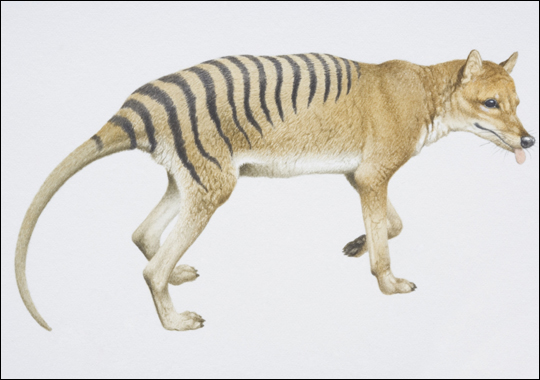
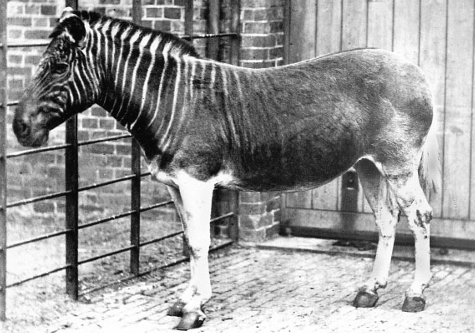
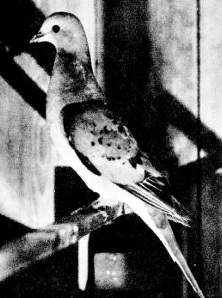
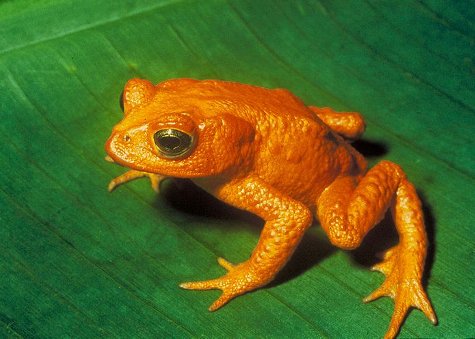
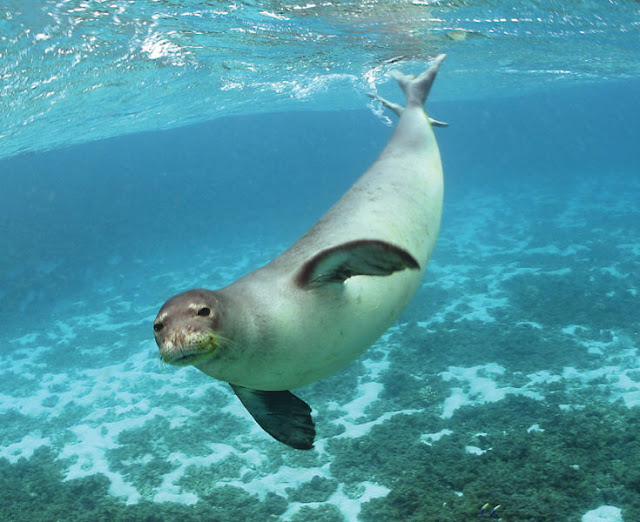
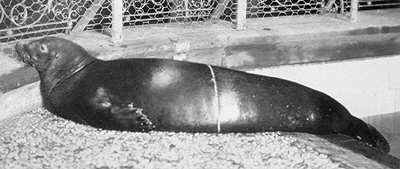
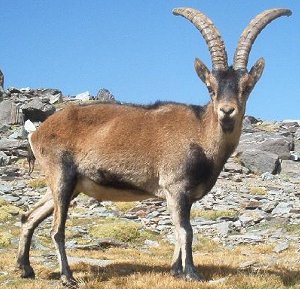
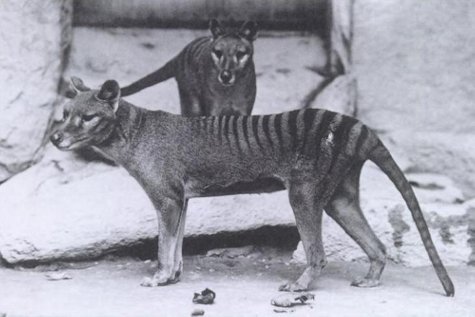
Here is a list of 11 extinct animals that were photographed while still alive. Includes the Tasmanian Tigers, Quagga, Passenger Pigeon, Golden Toad, Caribbean Monk Seal, Pyrenean Ibex, Bubal Hartebeest, Javan Tiger, Tecopa Pupfish, Syrian Wild Ass& the Baiji River Dolphin. The current rate of extinction is 100 to 1000 times higher than the average, or background rate, making our current period the 6th major mass extinction in the planet’s history!

Tasmanian Tiger


The last Tasmanian Tiger, or Thylacine, known to have existed died in the Hobart Zoo, in Tasmania, Australia, on September 7th, 1936. Despite being the last of its kind, the animal (named “Benjamin”) likely died due to neglect after being locked out of its sheltered quarters during extreme weather.

Although commonly referred to as ‘tigers’, and despite having the look of a canid, the Thylacine isn’t remotely related to cats or dogs. Rather, it was the largest carnivorous marsupial of modern times, meaning it carried its young in a pouch. Its closest living relative is the Tasmanian Devil.

The biggest cause of their extinction in the wild was a massive hunting campaign instituted by the Tasmanian government from 1888 to 1909, justified because the Thylacines were believed to be a threat to sheep and hens. The last known wild Tasmanian Tiger was killed by a farmer named Wilf Batty in 1930, after spotting the animal around his hen house.

Quagga

The Quagga was a unique variety of Plains Zebra, marked by having stripes only on the front of its body, with hair color transitioning toward a light brown or tan along its rear and underbelly, until becoming white along its legs. This picture represents the only Quagga ever to have been photographed alive, taken at the London Zoo in 1870.

Its unique hide made the Quagga a target for hunters and poachers, and the last known wild Quagga was probably killed in the late 1870’s. The species went extinct on August 12th, 1883, when the last specimen died at a zoo in Amsterdam, The Netherlands.
Passenger Pigeon

The story of the Passenger Pigeon is one of the most tragic extinction stories in modern times. As recently as around 200 years ago they weren’t anywhere near extinction. In fact, they were actually the most common bird in North America, and some reports counted single flocks numbering in the billions.

Colonial hunters happened. The pigeon meat was commercialized and recognized as cheap food, especially for slaves and the poor, which led to a catastrophic hunting campaign on a massive scale. Furthermore, due to the large size of their flocks, the birds were seen as a threat to farmers. In fact, in 1703 the Catholic bishop of Quebec actually excommunicated the entire species.
Golden Toad


The first recorded account of the Golden Toad was by herpetologist Jay Savage in 1966, and the last sighting of the species was made in 1989. The toad, showcased by its brilliant golden orange colorization, was native to the tropical cloud forests which surround Monteverde, Costa Rica.

Their extinction symbolizes a large scale decline in amphibian numbers worldwide over the last several decades, which has likely been caused by global warming and climate change. In fact, famed Australian biologist Tim Flannery has described the extinction of the Golden Toad to be the first demise of a species due primarily to global warming.


Caribbean Monk Seal


The Caribbean Monk Seal was the only known seal which was native to the Caribbean Sea and the Gulf of Mexico. It is also the only species of seal to go extinct directly due to human causes. It was officially declared extinct just last year, on June 6th, 2008, although the last recorded account of the species was made at Serranilla Bank between Honduras and Jamaica in 1952.

Their eventual demise, brought on by human hunting, was symbolized during Columbus’ 1494 voyage, when the tiny seals were described as “sea wolves” and 8 were recorded to have been killed and slaughtered for their meat.
Pyrenean Ibex

The Pyrenean Ibex has one of the more interesting stories among extinct animals, since it was the first species to ever be brought back into existence via cloning, only to go extinct again just seven minutes after being born due to lung failure. Here at Ecoworldly, we reported on the event, which happened in January 2009.

The last naturally born Pyrenean Ibex died on January 6th, 2000, after being found dead under a fallen tree at the age of 13. That animal’s only companion had died just a year earlier due to old age. Although the recent effort to resurrect the Ibex was short-lived, the event does bring optimism, and raise serious debate, about whether extinct creatures should be given a second chance.

Source from : http://www.funonthenet.in

For more information related to dinosaurs, visit rareresource.com.


Endangered Birds


Ivory-billed Woodpecker, Chester A. Reed


The last confirmed sightings, until February of 2004, were in 1972 in East Texas and Lousiana and in Cuba in 1986. Deforestation caused its decline as each pair required at least ten square miles of low-land hardwood forests. The State of Louisiana ordered a halt to logging while it checked out a reported sighting in 2000.

Bald Eagle Haliaeetus leucocephalus, Robert Ridgway

Congress prohibited killing the American Eagle in 1940. In 1963, 417 nesting Bald Eagle pairs were counted in the lower 48 States. They were listed as endangered south of the 40th parallel in 1967 and in 43 States in 1973. In 1999, it was estimated almost 6,000 pairs were nesting in the lower 48 States and the U.S. Fish and Wildlife Service proposed to delist the Bald Eagle.

California Condor Gymnogyps californianus
W.L.Finley & H.T.Bohlman


California Condors were listed as endangered in 1967. By 1982, there were less than two dozen in the wild. Mating Condor pairs produce only one egg every two years. Rescued from the brink of extinction by an intense captive breeding program, as of October 1, 2003 there was a total wild population of 83 and 137 in captivity. With a wingspan of over 9 feet, California Condors can soar more than 100 miles per day on updrafts searching for food. They have a life span of up to 60 years.

Attwater's Greater Prairie Chicken

The Greater Prairie Chicken was designated endangered in Texas in 1967. Nests in slight, grass lined hollows in the soil sheltered by grass tufts in open coastal grasslands, which have been reduced through cultivation and grazing. Populations have declined to less than 100, which sounds strikingly like the story of their extinct cousin, the Heath Hen. Eats grass and flower seeds. Their dancing mating spectacles are popular among birder and even inspired traditional Native American ritual dances. Preyed upon by hawks and owls, even cats and dogs.


For more information related to dinosaurs, visit rareresource.com.


Extinct Dinosaur Animals

Monday, February 21, 2011


Zeuglodon

The Zeuglodon, or Basilosaurus, "King of the Reptiles", lived during the Eocene about 40 to 50 million years ago. It was an early, 44 toothed, 55 to 75 foot long whale species with small hind legs. Zeuglodon remains have been found in North America and Africa and it's Alabama's State Fossil.
The Zeuglodon has been extinct for about 37 million years. Although you might want to keep your eyes open when swimming. Some believe the large serpent sightings of Loch Ness Monster in Scotland, Lake Okanagan in Canada and other lakes around the world may be descendants of the Zeuglocon or a related species.

Tylosaurus

The Tylosaurus was a large marine lizard, 20 to 45 feet long, which lived during the Cretaceous about 88 to 78 million years ago. It had lots of teeth and ate other marine creatures. Fossils have been found in North America and New Zealand.

Ichthyosaurus

Ichthyosaurs were reptiles (not fish) that lived during the Triassic (208 to 248 million years ago) and became extinct during the Cretaceous (65 to 146 million years ago) about 95 million years ago. They measured up to 40 feet long, had strong jaws, sharp teeth and big eyes to see their prey.

Ichthyosaurus Fossil

Dunkleosteus "terrible fish"


Dunkleosteus, a voracious carnivorous fish, lived about 400 million years ago. It measured up to 11.5 ft long and had huge jaws with scissor-like cutting serrated, razor-sharp bones instead of teeth. Its skull was was over 2 feet long. They were not sharks. They ate sharks!

Dinichthys

Dinichthys lived about 400 million years ago. It was about 30 feet long and weighed over 2 tons. It probably was not agile and waited in the plants of the sea floor to ambush its prey.

Source from : http://www.50birds.com

For more information related to dinosaurs, visit rareresource.com.