Dinosaurs and Mammals

Sunday, October 31, 2010


Many paleontologists thought the reason the dinosaurs became extinct was that the big, unwieldy reptiles were out competed by small, nippy mammals that ate their eggs and generally ran rings around them.


This quasi-anthropocentric view, of the unavoidable rise of humanity’s ancestors, took a thump when closer examination showed that dinosaurs, too, were often dexterous and warm-blooded.


Then it was found that the extermination was an accident, caused when an asteroid hit the Earth. Until that moment, the dinosaurs had reigned supreme and mammals were just an afterthought.


An Analysis by Edward Simpson and his colleagues of Kutztown University in Pennsylvania indicates that the relationship between dinosaurs and mammals was actually that of a diner to his lunch.


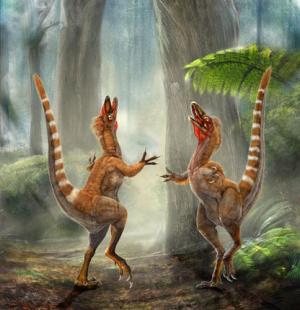
Dinosaurs Fossil teeth, and the occasional skeleton, show that small mammals were common at this time. That they should have lived in burrows is no surprise. But animals dig burrows for protection. The question is from what was this protection sought?.They analyzed the scrapings they realized that their shape suggested they had been made by the claws of predatory, feathered dinosaurs related to a well-known species called Velociraptors.


The claws of Velociraptors and its relations had up till now been regarded as weapons to be deployed against beasts of the aggressor’s own size—either other Velociraptors.


It is possible that the dinosaurs’ intentions were to build nests for their eggs, but the researchers argue that this is unlikely because known nests are of a consistent size that does not match that of these diggings.


Source from great site: http://www.rareresource.com

Read more interesting topic about dinosaur fossils.

Guinness World Record on Dinosaurs


Guinness World Records confirmed that a dinosaur museum in east China's Shandong Province has been the largest of its kind in the world, said by Museum’s officials,
In Pingyi County, the Shangdong Tianyu Museum of Nature which was opened in 2004 is devoted to dinosaur and other prehistoric fauna, applied for a Guinness World Record in early June and received the confirmation.


"It contains 28,000 square meters (301,389 sq ft) of exhibition space, housing 1,106 dinosaur specimens and thousands of other ancient fossils," the London-based agency said in a certificate to confirm it as the world's largest dinosaur museum.


The dinosaur specimens are all represented by almost complete skeletons, including 368 psittacosaurid specimens, 391 dromaeosaurid specimens, 255 Anchiornis specimens, 22 Jeholosaurus specimens, and 70 other rare dinosaurs and unnamed dinosaur fossils.


Before the new record, the museum had five other world records, including the longest silicified wood fossil, the biggest Sinosauropteryx fossil, the biggest amethyst cave, Yin said.


A ceremony to mark the recognition as the world's largest dinosaur museum will be held on Sept. 28 at Tianyu, and officials from Guinness World Records headquarters would attend, Yin said.


Source from great site: http://www.rareresource.com

Read more interesting topic about dinosaur fossils.

Aussie Dinosaurs' Digs


A novice paleontologist who is an expert on a dinosaur dig in outback Queensland in the hope of finding 100-million-year-old fossils.Along with paleontologist, about 40 children and adults will participate in the dig.


The dig would hollow out a site where two dinosaurs were discovered four years ago, said by Queensland Museum paleontologist Dr Scott Hocknull.He also said that "It was Banjo (Australovenator) the most complete meat-eating dinosaur in Australia and Matilda (Diamantinasaurus) a giant plant-eating dinosaur".


The annual dig was open to the public but had been booked out,said by Mr Hocknull.He also said that,"We're bringing in people who have never seen, dug or handled a dinosaur bone in their life and training them to be modern paleontologists in a matter of weeks".


He said bone discoveries by farmers in the district were in many cases just the tip of the iceberg.The dig runs from August 15 until September 4.


North-eastern Australia has the lion's share of dinosaur fossil discoveries because of a giant inland sea, 100 million years ago, he said.


Source from great site: http://www.rareresource.com

Read more interesting topic about dinosaur fossils.

Research on Dinosaurs in Newyork Central Park


In New York's Central Park, as many as 100 dinosaurs could have swarming, projected a paleontologist.James Farlow and his colleagues of Indiana University-Purdue University Fort Wayne have worked out the food needs and resources of a dinosaur's population preserved in a deposit called the Morrison formation, which stretches across Colorado, Utah and Wyoming.


Dating from around 150 million years ago, near the end of the Jurassic period, the Morrison formation holds many of the long-necked giants called sauropods.The formation also holds fossil ferns and cycads, which permitted Farlow and colleagues to guess how much food was existing for Jurassic herbivores to eat.In one layer, they counted 135 sauropods specimens - including 31 Apatosaurus, the behemoth formerly known as Brontosaurus.


Calculating dinosaur appetites was faintly more complicated task because their metabolism is unknown.If they were warm-blooded like mammals, their requirements would be like to those of modern hippos and elephants - even though their larger sizes should have made them somewhat more energy-efficient.


But if they had slow, cold-blooded metabolisms like lizards, they could have survived on a much more meagre diet, and the same area could hold tens of the giants.


on the other hand, perhaps 100 cold-blooded sauropods could have crowded into this Jurassic park.The study has been available in Historical Biology.


Source from great site: http://www.rareresource.com

Read more interesting topic about dinosaur fossils.

Is Dinosaurs Having Brain?


Historians, archaeologists, and all the other historical research people researched towards the end of the dinosaur age.

What about dinosaurs, the gargantuan creatures we are all still confused with even today? Dinosaurs have no brains but what they lacked in brains they compensated with muscle and brawn.

The tyrannosaurus rex, mastodon, pterodactyl and the brontosaurus are all tradition in this field. Some believed that whatever their strengths, ultimately their unawareness or pride caused their defeat when a mammoth meteorite struck the earth millions of years ago to end their reign.

Source from great site: http://www.rareresource.com

Read more interesting topic about dinosaur fossils.

Dinosaurs At Questacon


At Canberra's Questacon yesterday, it was a Sunday similar to any other in the dinosaur exhibit with a firm spectacle of parents carefully gauging their kids’ responses to the huge, robotic beasts. Typically, while few kids stared up at the animals with looks of fear and surprise, others cringed under the parents' arms, frightened of the looming faces and recorded roars of the Terrorsaurus exhibition.


It will arrive as a aid to some, then, that yesterday was the dinosaurs' last day at Questacon, before they start to Victoria. The dinosaurs to Melbourne's Science works was given by “The national science and technology centre".


Mr Kohlhagen said,"The kids will be able to get in there and raise a sweat and really physically engage with the exhibits".


The choice to give away the dinosaurs - some of which date back to 1988- has been seen with shock by parents who have relied in the past on the gripping effects of the bouncy animal movements and bizarre sounds to engage their restless kids.


Source from great site: http://www.rareresource.com

Read more interesting topic about dinosaur fossils.

A Huge Dinosaur graveyard Excavated in North East

Friday, October 29, 2010


A field of untouched fossilized dinosaur remains near Tumbler Ridge, B.C., proving that giant plant- and meat-eating prehistoric animals roamed northeastern British Columbia millions of years ago were discovered by a team of Researchers.

Last month during a three-day expedition into a remote forested area in B.C.’s Peace River area, Paleontologist Richard McCrea and his four-person research team made the discovery.

McCrea said, with up to 150 kilograms of fossilized dinosaur remains found on the surface, there was no digging required.

“We have bones from plant-eating dinosaurs and we have some bones from large meat-eating dinosaurs, probably a tyrannosaur,” he said.

“We did a sweep and the indications are pretty good we probably have quite a lot of bones in that area,” said McCrea. “We could possibly start two excavations in two widely separated areas we had explored. Things look promising.”

McCrea said the volunteer-operated paleontology research centre will run out of funds within a month because its annual grant from Tumbler Ridge’s municipal government was cut to $152,000 from $200,000 this year.

“We’re picking up the slack,” he said. “We have this amateur volunteer organization that’s taken on what should be a provincial responsibility and we’re doing a damn good job with the few resources we have.”

Source from great site: http://www.rareresource.com

Read more interesting topic about dinosaur fossils.

A Discovery On Tyrannosaurus Rex


Tyrannosaurus Rex- It remain us the massive teeth and diminutive arms which hunting humans in Jurassic Park standing reconstructed in the natural history museum.

Even in the last year and also in the last decade, there have been new studies on Tyrannosaurus Rex and their intimates that stood no taller than us for closely 100 million years.

Paleontologists lay out all the current discoveries that tell the story of the world’s favorite ancient monster in the journal Science in this week.

Stephen Brusatte,one of the study leaders of the American Museum of Natural History in New York says:

"Up until about ten years ago we only knew about Tyrannosaurus rex and a handful of its closest relatives - all colossal, apex predators from the end Cretaceous in North America,” Brusatte explained. “Now we know of about 20 tyrannosaur species that span a time period of 100 million years, most of which are very small.”

In the last year scientists have exposed six fresh species. The team writes in the study that one of those newly revealed species was “100 million years older and 1/100 the size of Tyrannosaurus rex.” University of Maryland tyrannosaur expert Thomas Holtz, Jr., added: “I like to call [early tyrannosaurs] the jackals of the Jurassic and Early Cretaceous.

Source from great site: http://www.rareresource.com

Read more interesting topic about dinosaur fossils.

Dino Mites Successing At museum


An A to Z of Dinosaurs was opened on South Shields Museum & Art Gallery and which has up to 100,000 visitors since June for Dino Mites.

on Saturday, September 25,the exhibit has so far attracted more than 90,000 visitors to the museum in Ocean Road.

Dino Mites, which contains 15 life-size baby dinosaurs, including the formidable T-Rex and Triceratops, originally appeared at the museum in 2000 and attracted a staggering 80,000 visitors during its summer run.

Mr Wilson said,""It's such an exciting exhibition, I can't say I'm surprised that it's captured the imagination of our visitors, especially the family audience who seem to want to come back again and again."

The exhibition is open until Saturday, September 25, when the museum plans to stage a family fun day to give the dinosaurs a good send-off.

The next exhibition, History in the Making: 150 Years of South Shields Museum & Art Gallery, opens on Saturday, October 16.

Source from great site: http://www.rareresource.com

Read more interesting topic about dinosaur fossils.

An Ancient Egg found outsite Geelong


In the Brisbane Ranges National Park,a secrecy about dinosaurs' survival in Geelong. Near Steiglitz Rd, an egg of pre-historic Dinosaur which is estimated to be 25 million years old was discovered.

Geelong subterranean historian Alan said, he had contacted the Melbourne Museum, who confirmed the history of the egg.He also said,"There's been no evidence of dinosaurs it that area before".

A study earlier this year conducted by a group of paleontologists claimed the feared Tyrannosaurus rex may have roamed the Otways coast.

Alan said his find could re-write the history books in Geelong and the surrounding region if the egg was proven to be the real deal.

"It could change the whole Geelong region, that's how significant it is," he said.
Alan estimated the egg could be worth upwards of $50,000 depending on its significance to the region.

In the 1970s and 1980s,a number of dinosaur fossils were found in the Otways but Alan's find is one of the first in Geelong for years.

Source from great site: http://www.rareresource.com

Read more interesting topic about dinosaur fossils.

Full-size mutable dinosaurs on show

Thursday, October 28, 2010


For the first time on the first day of the Ramzan, the world’s largest movable dinosaur show opened at Al Fitr holiday in Dubai.


It is organized by Dubai Events and Promotions Establishment’s as part of ‘Eid in Dubai’ celebrations,. The Dinosaurs Show will be held at Festival Centre, Dubai Festival City until December 2 which is UAE's National Day.


A statement said, it has full- sized moving dinosaur models, and taking place in the world’s largest helium balloon tents, the show will bring dinosaurs back to life.


Dinosaur guides will be provided to the visitors on the show which teaches people about ancient times and also it has some of the most amazing species to ever walk the planet.

Tickets are priced at Dh50 ($13.60) per person. Entrance tickets also include free entry into the Dino Live raffle draw to win a Dino Live car.

Source from great site: http://www.rareresource.com

Read more interesting topic about dinosaur fossils.

Modern Dinosaurs had tails like Fiberglass

Wednesday, October 27, 2010


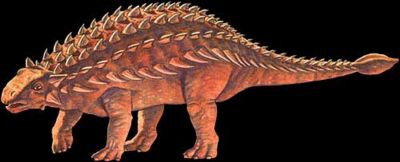
The ankylosaurus dinosaurs had club-like tails for protection. But these were more than primitive weapons. The backs and tails of some ankylosaurs were protected by tough, lightweight armor so complicated it resembles the structure of a surfboard or bulletproof vest.

Ankylosaurs grew up to 33 feet (10 meters) protracted. But they were vegetarians, and would have needed a good protective scheme. They lived in the late Cretaceous Period, around 70 million years ago -- equal time as T. rex.

Torsten Scheyer of the University of Bonn studied a full set of ankylosaur chain mail. His findings, unrestricted yesterday, are a bit of a disclosure. Scientists had consideration the bony plates were made of a simple structure much like those of new crocodiles.

Scheyer found two complex measures. In one, collagen fibers were interwoven in the bone calcium of the plates, forming mats that interweave from layer to layer. Within a mat, fibers were comparable, yet the fibers were vertical to those in the mats above and below.

Dinosaur

The armor was thus endowed with great strength in all directions, Scheyer said.

The strong dino material functioned much like the fiberglass used in boat hulls and surfboards or the tough-but-light Kevlar of bulletproof vests, Scheyer told LiveScience. And as with fancy technological materials, the complex dinosaur plates were thinner and lighter than simpler and weaker versions on other ankylosaurs.

The layering could attract large amounts of stress as the dinosaur swung its tail in self-defense. And providing it didn't roll over, it was well sheltered against a T. rex bite.

The ankylosaurs were certainly the most heavily unbreakable beasts among all dinosaurs, Scheyer said.

Source from great site: http://www.rareresource.com

Read more interesting topic about dinosaur fossils.

Feather fossils expose dinosaur's color


A meat-eating dinosaur that lived about 125 million years ago was decked out with orange and white rings running along the length of its tail, according to a study that has recognized the colour of dinosaurs for the first time.

Fossilised bristles – ancient feathers – on the dinosaur's tail hold microscopic structures or "organelles" that would have contained the pigments which produced the colored patterns on the tail, scientists have exposed.

The researchers also found proof of bloom in the fossilized feathers of a bird that lived at about the same time as the dinosaur, which had the same type of pigment-containing structures in its feathers. Both finds propose that feathers could have arisen as a way of displaying colors rather than as a way of insulating the body beside heat loss, or as an aid to the progress of gliding and powered flight, the scientists said.

It's the first time anybody has had proof of original color in a [fossilized] feather. We can't say what all the colors were as there are other coloring agents in feathers which may not be in the fossils, said Professor Mike Benton of Bristol University.

The study was agreed out with Chinese scientists from the Institute of Vertebrate Palaeontology and Palaeoanthropology in Beijing on fossils of the carnivorous therapod dinosaur Sinosautropteryx, which had orange and white rings on its tail, and the olden bird Confuciusornis, which was found to have patches of white, black and orange-brown coloring. The fossils were established in north-eastern China.

Source from great site: http://www.rareresource.com

Read more interesting topic about dinosaur fossils.
Crocodiles: The antique Cousins of the Dinosaurs


All the reptiles living nowadays, crocodiles and alligators may be the least altered from their ancestors of the late Cretaceous period--although the even earlier crocodiles of the Triassic and Jurassic sported some specifically un-croc like features, such as bipedal postures and vegetarian diets.


Crocodiles were an consequence of the archosaurs, the "ruling lizards" of the Triassic period that preceded the dinosaurs. To simplify matters significantly, by about 200 million years ago, archosaurs had evolved into three separate reptile families: dinosaurs, pterosaurs (flying reptiles), and crocodiles.


Confusingly, the initial dinosaurs and crocodiles resembled one another a lot more than either resembled the first pterosaurs. What illustrious crocodiles from their worldly cousins was the shape and musculature of their jaws, which tended to be much more toxic. It was only tens of millions of years afterward that crocodiles evolved the traits with which they're linked today: stubby legs, sleek bodies, and aquatic lifestyles.


Crocodiles at the past time:

Before the first crocodiles emerged on the view, there were the phytosaurs ("plant lizards"): reptiles that looked very much similar to crocodiles, apart from that their nostrils were located on the tops of their heads rather than the tips of their snouts. You might presume from their name that phytosaurs were vegetarians, but in detail they subsisted on fish and marine organisms in freshwater lakes and rivers. Amongst the most notable phytosaurs were Rutiodon and Mystriosuchus.

Unusually enough, except for the place of their nostrils, phytosaurs looked more like modern crocodiles than the very first crocodiles did. While they first evolved, crocodiles were normally fast, terrestrial, two-legged sprinters, and some of them were vegetarians (presumably because neighboring dinosaurs were better adapted at hunting for live prey). Erpetosuchus and Doswellia are superior candidates for the first true crocodiles, while the exact evolutionary relationships are still uncertain.

Crocodile at the present time :

By the start of the Jurassic period (about 150 million years back), crocodiles had mostly deserted their terrestrial lifestyles. This is when we begin to see the aquatic adaptations that describe modern crocodiles and alligators: Long bodies, splayed limbs, and narrow, flat, tooth-studded snouts with powerful jaws (a necessary feature, since most crocodiles feasted on large dinosaurs and other animals that ventured too close to the water). There was still room for modernism, though: for example, paleontologists consider that Stomatosuchus subsisted on plankton and krill, like a blue whale!

By about 100 million years back, some crocodiles had begun to emulate their dinosaur cousins by rising to enormous sizes. The king of the Cretaceous crocodiles was Sarcosuchus, dubbed "SuperCroc" by the trendy media, which attained sizes of about 40 feet long and 8 tons. And let's not forget the somewhat smaller Deinosuchus, the "deino" in whose name connotes the same thing as the "dino" in dinosaurs: "terrible" or "fearsome."

One way in which crocodiles were certainly more formidable than their terrestrial cousins was their facility to survive the K/T Extinction, which wiped the dinosaurs off the face of the earth 65 million years ago. Today's crocodiles and alligators are slight changed from their olden ancestors, a telling hint that these reptiles were (and remain) really well adapted to their environment.


Source from great site: http://www.rareresource.com

Read more interesting topic about dinosaur fossils.
Pterosaurs Dinosaurs: The Flying Reptiles


Pterosaurs hold a exceptional place in the history of life on earth: they were the first creatures, other than insects, to fruitfully populate the skies. The evolution of pterosaurs approximately paralleled that of their terrestrial cousins, the dinosaurs, as small, basal genuses from the late Triassic period slowly gave way to bigger, more advanced forms in the Jurassic and Cretaceous.

Before we proceed, though, it's significant to address one important issue. Paleontologists have found indisputable evidence that modern birds are descended not from pterosaurs, but from land-bound dinosaurs. This is a paradigm of what biologists call convergent evolution: nature has a way of finding the similar solutions (wings, hollow bones, etc.) to the similar problem (how to fly).
Flying Reptiles

Early Pterosaurs:

As is the case with dinosaurs, paleontologists don't yet have enough proof to identify the ancient, non-dinosaur reptile from which pterosaurs evolved (the lack of a missing link a terrestrial dinosaur with half-developed flaps of skin--is inspiring to creationists, but you have to memorize that fossilization is a matter of luck. Most prehistoric species aren't represented in the fossil record, simply because they didn't die in conditions that enabled their conservation.)

The first pterosaurs for which we have fossil proof flourished in the middle to late Triassic, about 230 million years before. These flying reptiles were characterized by their little size and long tails, as well as obscure anatomical features (like the bone structures in their wings) that eminent them from the more evolved pterosaurs that followed. These rhamphorhynchoid pterosaurs, as they're sometimes called, contain Eudimorphodon (one of the first pterosaurs known), Dorygnathus and Rhamphorhynchus, and they persisted into the premature to middle Jurassic.

Later Pterosaurs:

By the late Jurassic, rhamphorhynchoid pterosaurs had been attractive much replaced by pterodactyloids--larger-winged, shorter-tailed flying reptiles exemplified by the well-known Pterodactylus and Pteranodon. With their bigger, more maneuverable wings, these pterosaurs were capable to glide farther, faster, and higher up in the sky, swooping down like eagles to pluck fish off the float up of oceans, lakes and rivers.

During the Cretaceous period, pterodactyloids took after dinosaurs in one significant respect: an increasing trend toward gigantism. In the middle Cretaceous, the skies of South America were ruled by huge pterosaurs like Tapejara and Tupuxuara, which had wingspans of 16 or 17 feet; still, these big fliers looked like sparrows next to the true giants of the delayed Cretaceous, Quetzalcoatlus and Zhejiangopterus, whose wingspans exceeded 30 feet (far bigger than the largest eagles alive today).

Source from great site: http://www.rareresource.com

Read more interesting topic about dinosaur fossils.

The Paleontologist and the Three Different Dinosaurs


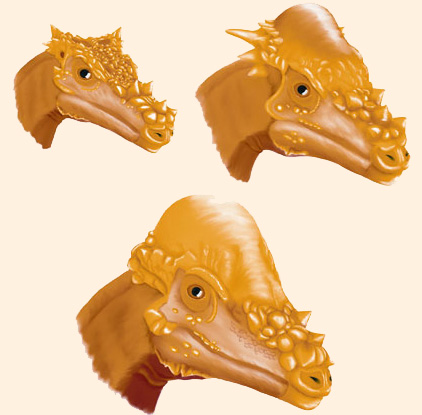
Three different dinosaurs — Dracorex, Stygimoloch and Pachycephalosaurus (clockwise from top left) — might really be the juvenile, teen and adult of the same dino.

Holly Woodward

A new twist in an old story about dinosaur bones sounds like a pixie tale for fossil fans: Once upon a time, scientists revealed three different dinosaur skulls in the northern United States. The first skull, found in 1931, was big and round. The second, found in 1983, was lesser and narrower—and had spikes sticking out of the back of its head. The third, which had horns on its nose, was found in 2006. This was the minimum skull of all.

Like all good tales, there’s a revelation at the end of this dino story. Scientists have long thought that these three skulls belonged to three dissimilar kinds of dinosaurs. But don’t inform that to Jack Horner, a paleontologist at the Museum of the Rockies in Bozeman, Montana. He says that’s possibly not true. According to a new study by Horner and his team, the three skulls are more liable from a kid, teenager and adult of the similar kind of dinosaur.

All three dinosaurs lived about 65 million years past in an area now known as Hell Creek, in Montana and South Dakota. The technical name for the first, largest-skulled dinosaur is Pachycephalosaurus wyomingensis. The second, with the spikes, is Stygimoloch spinifer, which means horned mischievous sprite from the river of death. The third dinosaur takes its name from the globe of Harry Potter—it is called Dracorex hogwartsia¬, which means dragon king from Hogwarts.

Horner began to suspect the fact about the three skulls after he heard about studies of duck-billed dinosaurs. In those studies, scientists found that a set of skulls that all looked dissimilar were found to be from different ages of the similar type of dinosaur. To investigate his hunch, Horner and his group studied bone fragments from the three thickheaded skulls.

It’s real simple to tell young bone from old bone, Horner told Science News. Young bones are still growing and require a lot of blood flow, so they have more tunnels and passageways for blood vessels. (With all the tunnels and holes, the insides of these bones look a small like sponges.) Older bones are more dense, which means they look more solid and don’t have as numerous tunnels and passageways going through.

Horner and his team found that the largest skull had few tunnels in it, which suggests the skull comes from an adult dinosaur. The two lesser skulls both had many tunnels, which suggest that those dinosaurs were younger when they died.

The scientists found other proof: They took CAT scans, or special pictures alike to X-rays, of the smaller skulls and saw that the bones had not yet grown entirely together, as they do in adults.

Horner’s method of studying the bone structure of skulls is a new way to seem at dinosaurs. In the past, people have been very unwilling to cut open skulls and look at their bone histology, he told Science News. This will show them you can get a terrible lot of information from doing that.

The Museum of the Rockies, where Horner works, has the biggest collection of dinosaur bones in the world—as well as the largest T. rex skull ever establish. With his new discovery, Horner fortuitously made a lot of work for himself.

I made a brand new dinosaur hall at the museum three years past, and now I have to alter it, he said. He may also have made a lot more work for other scientists. Future studies may reveal that some other dinosaur bones also came from the similar type of dinosaur at different ages, rather than from dissimilar types of dinosaurs.


Source from great site: http://www.rareresource.com

Read more interesting topic about dinosaur fossils.
Fossil Ruins State Agricultural Chemist of Maryland


The geological researches of Mr. P.T. Tyson, State Agricultural Chemist of Maryland, have lately brought to light some very interesting fossil ruins, which have been emtombed during perhaps countless ages in the iron hills between this town and Baltimore.

The formation consists mainly of thick beds of lead-colored clays with lignite. The iron ore is in the form of bulky nodules, and consists of the carbonate of iron. The fossils revealed are:

1. Fossil teeth, which have been completely investigated by Dr. Christopher Johnston, of Baltimore, and resolute to those of a Theodont Saurian, not hitherto described.

We regret to learn that numerous vertebrae, which doubtless formed part of this enormous animal, and which were thrown out by the ore diggers at Mr. Tyson reached the place.

This Saurian has been named, conditionally by Dr. Johnston, "Astrodon," from the stellated appearance of cross sections of the teeth below the microscope.

2. At a petite distance from where the Saurian remains had been buried was found a fragment of what must have been a rib of a big Cetacean.

3. Also, about six feet in length and more than two feet in diameter, the trunk of a tree totally silicified, or, in popular language, "turned into stone." Dr. Johnston's microscopic investigations confirm this to have belonged to the coniferous or languish family.
All the over were found about 220 feet above the stage of tide water.

4. Above one mile far, on the farm of Dr. Theodore Jenkins, a vegetable fossil was found by Dr. J. which belongs to the cycades, (a tribe of tropical plants,) like the existing sago palm frequently seen in our hothouses. It is shaped somewhat like the pine-apple, and is about eighteen inches tall and fifteen inches in diameter, and is also silicified.
These discoveries show that the clays and iron ore ranging from Washington, via Baltimore, to the environs of Elkton, constitute secondary strata possibly older than the cretaceous green sand of New Jersey. In fact, the investigations of Dr. Johnston stipulate that the Saurian teeth may have belonged to a much older period.

These discoveries show that the clays and iron ore ranging from Washington, via Baltimore, to the environs of Elkton, constitute secondary strata possibly older than the cretaceous green sand of New Jersey. In fact, the investigations of Dr. Johnston stipulate that the Saurian teeth may have belonged to a much older period.

The continued inclement weather since these fossils were discovered has arrested additional researches for the present, but we are informed that they will be resumed by Mr. Tyson untimely in the ensuing spring. It is his opinion that the cretaceous green sand, so mainly and usefully applied as marl in New Jersey, may be expected to rest upon the southeastern edge of this iron ore structure, and be reachable within a few miles of the Washington and Baltimore railroad.

This must not be perplexed with the eocene green sands or marls of Charles, Prince George's, Anne Arundel, Cecil, and Kent counties of Maryland, and which are more or less watery with siliceous sand. The lower beds of the Jersey green sand or marl are almost free from siliceous sand. It contains from eight to twelve percent of potash, and is highly prized as a dung. It will prove to be a precious resource if it shall be found in Maryland contiguous to a railroad or tide-water. This article is mainly exported from New Jersey, and enters into the composition of some of the synthetic fertilizers imported from New York or its vicinity.

What amazing changes must have taken place in this part of the world since Whales and Saurians were entombed upon this (then) boggy coast! The ruins of the Saurian and Cycas indicate that a tropical weather then prevailed in this latitude. At the same time also almost the only portion of what now constitutes the only portion of what now constitutes the dry earth of Maryland and Delaware was north and west of a curved line drawn from Wilmington, near Elkton and Baltimore, to Washington. All the residue, comprising half of Maryland and almost the whole of Delaware, was covered by the waters of the ancient sea.


Source from great site: http://www.rareresource.com

Read more interesting topic about dinosaur fossils.

Jurassic by unknown from Liebig Card 1892 Germany

Tuesday, October 26, 2010


The Jurassic is a geologic period and system that extends from about 199.6± 0.6 Mya (million years ago) to 145.5± 4 Mya, that is, from the end of the Triassic to the beginning of the Cretaceous. The Jurassic constitutes the middle period of the Mesozoic Era, also known as the Age of Reptiles. The start of the period is marked by the major Triassic–Jurassic extinction event. However, the end of the Jurassic Period did not witness any major dinosaur extinction event. The start and end of the period are defined by carefully selected locations; the uncertainty in dating arises from trying to date these horizons.


Source from great site: http://www.copyrightexpired.com

Read more interesting topic about dinosaur fossils.

Heinrich Harder


Heinrich Harder was a German artist and an art professor at the Akademie der Künste in Berlin.


Heinrich Harder, as a landscape painter exhibited paintings inspired by the scenery of Lüneburg, Mecklenburg, the Harz mountains, Sweden and Switzerland, at the Grosse Berliner Kunstausstellung in 1891.


He also illustrated natural history articles. These included a series accompanying Wilhelm Bolsche articles on earth history for Die Gartenlaube a weekly magazine. He also illustrated 60 dinosaur and prehistoric mammal cards for the Reichardt Cocoa Company.


Source from great site: http://www.copyrightexpired.com

Read more interesting topic about dinosaur fossils.

Elasmosaurus


Elasmosaurus is a genus of plesiosaur with an extremely long neck that lived in the Late Cretaceous.


It was about 14 m (46 ft) in length and weighed over 2,000 kg (2.2 tons), making it the second longest plesiosaur. It had a large body and four flippers for limbs. More than half of its length was neck, which had more than 70 vertebrae, more than any other animal. It had a relatively small head with sharp teeth.


Elasmosaurus platyurus was described in March, 1868 by Edward Drinker Cope from a fossil discovered and collected by Dr. Theophilus Turner, a military doctor, in western Kansas, USA. Although other specimens of elasmosaurs have been found in various locations in North America, Carpenter (1999) determined that Elasmosaurus platyurus was the only representative of the genus.


When E. D. Cope received the specimen in early March, 1868, he had a pre-conceived idea of what it should look like, and mistakenly placed the head on the wrong end (e.g. the tail). In his defense, at the time he was an expert on lizards, which have a short neck and a long tail, and no one had ever seen a plesiosaur the size of Elasmosaurus.


An outdated historical depiction of Dryptosaurus confronting Elasmosaurus, with two Hadrosaurus in the background. By Edward Drinker Cope, 1869.


Although popular legend notes that it was Othniel Charles Marsh who pointed out the error, there is no factual justification for this account (see below). However, this event is often cited as one of the causes of their long-lasting and acrimonious rivalry, known as the Bone Wars. In fact, although Marsh personally collected at least one plesiosaur from Kansas, and had several more from Kansas in the Yale Peabody collection, he never published a single paper on them (Everhart, 2005).


Source from great site: http://www.copyrightexpired.com

Read more interesting topic about dinosaur fossils.

Heinrich Harder


Heinrich Harder was born in 1858 and lived in the Northeast part of Germany, where he studied painting under Eugen Bracht. Living mainly as a painter and selling his landscapes, he also provided illustrations of animals for books. He took on some students around 1906.


That same year Harder did a series of illustrations for the Naturalist Wilhelm Bolsche, who wrote a short history of the planet earth. The articles appeared in the weekly family magazine Die Gartenlaube.


When the Berlin Zoo added an Aquarium in 1913, Harder was commissioned to paint murals of extinct creatures around the perimeter walls. He also created relief sculptures of some of the animals as well.


The main entrance to the new Aquarium was adorned with a life sized Iquanodon sculpture by Harder. The Reichardt Cocoa company had been issuing a series of collector cards of prehistoric animals and Harder was recruited to illustrate two series of them, for a total of 60 illustrations.


Wilhelm Bolsche wrote the description of the creatures for the back of the card. Harder also illustrated a book by Bolsche, Tierwanderungen in der Urwelt in 1915. Harder went on to become an art professor at the Berlin University.

Source from great site: http://www.copyrightexpired.com

Read more interesting topic about dinosaur fossils.

Dinosaur Species Excavated At China


Scientists in China have exposed the fossils of a beforehand-mysterious dinosaur group - a meat-eating theropod on Beijing at Oct 10.


Dong Zhiming, a researcher from the Chinese Academy of Sciences' Institute of Vertebrate Paleontology and Paleoanthropology said, ‘the fossils of the dinosaur were unearthed at Longshan in Yi Autonomous Prefecture of Chuxiong in September”.


The dinosaur was anticipated to have lived before 180 million years, or during the near the beginning of Jurassic Period, the People's Daily reported Sunday.


Dong Zhiming also said, the size of the Dinosaur is 120 cm long and 70 cm tall and it also had a long tail and sharp teeth.


The excavated dinosaur was associated to the Coelophysises Dinosaurs. These Coelophysises were small, meat-eating dinosaurs and they were lived in the North American continent in the late Triassic period.


The officials said that the new species will be named after a more detailed research.

Source from great site: http://www.rareresource.com

Read more interesting topic about dinosaur fossils.
Fossils Excavated At Colorado National Monument


Dinosaur fossils are not exceptional for paleontologists to dig up on the Colorado National Monument, as this place is showing some big finds in dinosaur fossils. Paleontologists have discovered two different fossilized tracks that are not bigger than a quarter but they are printing a rare scene for researchers and creating quite a stir.


Dr. John Foster (paleontologist) says that "Tracks are evidence of a living animal going about its business and these prints of a lizard and some turtles are 150 million years old. They are generations that were lived in the shade of the bigger dinosaurs like Stegosaurs and Brachiosaurus.


Dr. George Callison says - Some shows more than one turtle heading in the same direction that gives raise to speculation that maybe we are looking at a herd of turtles. Often, small animal tracks are swept away long before they're preserved and they are rare to find in the Morrison Formation.


However, these findings play an important role in finding how an animal like the turtle lived and fossils will be display at the Colorado National Monument's visitor center until October 22nd.


Source from great site: http://www.rareresource.com

Read more interesting topic about dinosaur fossils.
Dinosaurs Life cycle

Monday, October 25, 2010


Source from great site: http://www.rareresource.com

Read more interesting topic about dinosaur fossils.

Dinosaur Egg Types


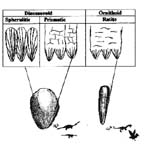
Two major types of dinosaur eggs are recognized: spheroidal and elongated. These types can be further sub-divided based on length/diameter ratios, the thickness of the shell, the type of pores and the surface of the egg (may be ornamented).

Dinosaur - Egg TypesThe egg structure consists of a series of basic vertical units that grow from particular sites on the surface of the shell.

The organization of these units determines the classification scheme, being either spherulitic or prismatic:

1. Spherulitic egg shells show spherical patterns in the crystalline structure, and they are seen in sauropods and hadrosaurs.

2. Prismatic egg shells grow into spherical crystals only in the lower portion of the shell, while crystals in the upper portion are prisms.

3. Ornithoid eggs (also seen in birds) are generally laid by theropods. In this type only the very bottom part of the shell exists as separate or discrete units (mammilae). The upper and mid-portions of the shell consist of a mass of biocrystalline material with a spongy (squamatic) ultrastructure that comprises a homogeneous layer.

The largest eggs come from sauropods, in particular the titanosaurs. These eggs are up to 18cm long and up to 5mm thick, able to contain 5.5 litres of fluid. A metre-long egg would be several centimeters thick, making respiration and hatching near impossible. Imagine how thick an egg several times the size of a human would be!
How a sauropod from an 18 cm diameter egg could grow to a 30 metre long animal weighing about 20 tones? There are two possible answers:

1. The animal grows throughout its lifecycle, perhaps continuing to grow until death. Many reptiles do a similar thing.

2. The animal undergoes accelerated growth in 5-15 years. Growth patterns from dinosaur bone such as the 'duck-billed' dinosaur Maiasaura indicate it reached adult size in 5 years. Elephants take about 15 years to reach sexual maturity. Maybe sauropods lied in between.

Other dinosaur eggs are often smaller. The smallest eggs are perhaps from the prosauropods. Eggs from South Africa are reported to be only 6.5 cm long and 5.5 cm wide. The shell is only 0.2/0.3 mm (0.02 cm!) thick. Theropod eggs are generally 10-15 cm long, and a couple of millimeters thick. Duckbills (hadrosaurs) also have eggs 10-12 cm long and 7.9 cm wide.


Source from great site: http://www.rareresource.com

Read more interesting topic about dinosaur fossils.

Dinosaur Anatomy


How do scientists know what the dinosaurs looked like? No-one can say for sure, but there are some lines of evidence in the fossil record, and from studies of modern animals. Putting it all together is like the detective work in solving a difficult murder case.When you see a colour painting, or an animation, of a dinosaur as a living animal, this has been based on a series of steps in reconstruction:

• The skeleton is rebuilt from the bones that are extracted from the rock.
• The muscles can be laid on with some confidence, since each end of the muscle is fixed into the bone, and marks may be seen on the fossil bones.
• Other soft parts, like the guts, eyeballs, tongue, and so on can be added partly by guesswork, and comparison with living animals.
• The skin texture may be reconstructed precisely, since impressions of dinosaur skin have been fossilized. There are even a few rare cases of organic preservation of dinosaur skin.
• The colour is entirely guesswork. Was Tyrannosaurus blue with yellow spots, or maybe you like red stripes? Colours are based on modern animals, and a bit of inspired imagination by the scientists and artists.

Dinosaurs Teeth:

Tyrannosaur teeth were uneven, which placed most of the force of the bite on just a few teeth at a time, giving them more penetrating power.When a number of teeth penetrated the fibers, then the tyrannosaur just tore on the dotted line.

Dinosaurs Skin:

Dinosaur skin is amazing. We do have some preserved skin impressions. Most of them show polygonal scales in different groupings. Duckbills had a background of small scales with patches of larger scales every now and then.

The patches were bigger and more common on the back. On the crest the impression was more like a rooster’s comb. Horned dinosaurs had similar scales, but a little larger. Instead of the patches that duckbills had, for a change of pattern the horned dinosaurs had large rounded scales with a rosette of polygonal scales making the change back to the basic pattern.The big round scales were more common on the back and sides. Long-necks like Seismosaurus had large scales, about 2-3 cm, with small bumps, about 2 mm, all over them. They also had a fringe down the back that stood up and were tall thin triangles. Dinosaurs could have bony scales like the bumpy ones on alligators. They could be scattered almost anywhere, but were more common on the back and sides. In the Stegosaurus, some of them formed huge plates that went down the back, and even the spikes on the tail were these bony scales. In the Ankylosaurs, they formed a “shell” over the whole body. In the horned dinosaurs, they attached to the skull and formed the ornate horns of the frills. Some dinosaurs even appear to have had feathers!
Duckbill Dinosaur Skin Impression
Horned Dinosaur Skin Impression
Stegosaurus Tail Spike
Stegosaurus Back Plate

Dinosaurs Horn:

The horned dinosaurs were from North America. There were two major types; the centrosaurines, like Styracosaurus and the chasmosaurines, like Triceratops. The centrosaurines generally had a big nose horn, although some just had a “nasal boss”. They had more ornate frills than the chasmosaurines. The chasmosaurine generally had the frontal horns (brow horns) as the major horns. The chasmosaurines had a hollow cup at the base of the frontal horns that must have given them a nice clacking sound when they fought with each other. Some of the skulls have holes in the bones that look like they were made by fighting with other horned dinosaurs. The horn had a bone core covered with chitin - like your fingernails. Cow Horn in cross section, showing the bone core and the chitinous sheath.
Chasmosaurine Frontal Horns.

Dinosaurs Brain:

Here are castings of two dinosaur brains. The one on the right is a Maiasaurua and the pictures on the left are a Tyrannosaurus. Wes cut a cow skull in half so that you can see where the brain would be. The cow brain is much bigger than any dinosaur brain. We have even bigger brains and feel that intelligence is very important. Dinosaurs did amazingly well with their little brains and never had to worry about global thermonuclear war or MAD - Mutual Assured Destruction. Of course, they couldn’t know about the comet that was on a path leading to a collision with the earth. After all, their best astrophysicist had a brain the size of a walnut.

Dinosaurs Food:

Dinosaurs must have eaten something, and a lot of it. It is fairly easy to imagine that Tyrannosaurs ate other dinosaurs - and anything else that they wanted. But what did the plant-eating dinosaurs eat? Plants have been evolving for millions of years. When most of the dinosaurs lived, there were no grasses. Early in the age of dinosaurs there were no plants with flowers, but cycads seem to have been common. Cycad seeds would have been good and cycad trunks have a lot of starch in them . Some people eat cycads today. Another tree that was common was the Ginkgo. Ginkgo leaves are edible and the seeds are considered a delicacy in China. There is some evidence from gut contents and droppings that duckbills ate conifers - like Christmas trees.

Dinosaurs Claws:

Claws, like horns, have a bony core with a hard chitin sheath. Some claws allowed the predatory dinosaurs to tear into the flesh of their victims. Claws could also have been used to hold down prey while the dinosaur used its powerful jaws and serrated teeth to rip off large chunks of flesh. The foot seen at the left is from a small tyrannosaur. The claw in the middle is the killing claw from the back leg of Utah Raptor. It was used to rip a long deep gash in another animal, like a kick boxer with a switch-blade. The sharp curved claw of the Allosaurus was a meat hook. It allowed the Allosaurus, seen on the right to grab and hold on to another animal.

Dinosaurs Backbone:

The large vertebra has a hole in the side. That is the opening to the air space in side of the vertebra. In many dinosaurs the back bone is hollow. This hollow space made the bones lighter. The back bone allows the body to bend while forming a strong support for the body.

Dinosaurs Whip-Tail
:

A whip-tailed Seismosaurus could possibly thrash a predator even approaching from the front. Poor Allosaur. One estimate based on Diplodocus is that the tip of the tail could exceed the speed of sound. It would have generated a sonic boom when it was whipped. So much energy would be in the whip and released as a boom that it would have been as loud as the blast of a 16-inch gun from a battleship! Seismosaur is even bigger - about 50% bigger. That is at least double the power! Besides being a weapon, the sound may have been used to communicate with other Seismosaurs.

Dinosaurs Sounds:

If you know that a big animal can make loud trumpeting sounds from its head, what does that tell you about its behavior? Why would a dinosaur need to have this peculiar feature? You can find answers by looking at modern animals that share similar features. An elephant makes loud trumpeting sounds through its trunk. Elephants use these sounds for two main reasons; to communicate with other members of its herd and to warn away its enemies. Scientists who study elephants have found that there are many different sounds they make to communicate different things. There are sounds of warning, sounds of fear, and sounds for excitement, happiness and sadness. Many paleontologists think that Parasaurolophus used its ability to make sounds in much the same way as modern elephants.


Source from great site: http://www.rareresource.com

Read more interesting topic about dinosaur fossils.

Dinosaur Birth


Everyone has heard about the dinosaurs. No doubt one of the reasons why is because of their size, another being the fact that they ruled the Earth just like humans do now. In the grand scheme of things, dinosaurs represented a major turn in the evolutionary development of organisms on Earth.

Dinosaurs, the Greek word meaning terrible lizard, were the most advanced reptiles of all time; due to the fact they were allowed to occupy as many ecological niches as they could without much competition in any form. Literally, the sky was the limit. Although the sky was the limit, it is thought that the original dinosaurs were of very similar nature to that of the early reptiles mentioned on the previous page. Over time, these organisms slowly moved away from moving with 4 feet to 2 feet, essentially bipedal motion.

Dinosaur Birth

The first distinct dinosaurs occurred within the beginning of the Triassic Period, named after this occurrence. Two distinct types of dinosaurs had evolved, some that were bird-like and some that were reptile-like. Within these two categories, dinosaurs further diversified to become carnivores, herbivores or indeed omnivores. The main fact to heed is that the dinosaurs evolved and diversified at an amazing and effective rate, to the extent that they 'ruled the world'.

The most notable thing about these organisms is their size; they were huge compared to any other organism that had preceded them. This had obvious selective advantage, particular in the form of sheer bulk and power. The herbivores were also tall enough to graze on the top of trees, which were rarely taken advantage of as a source of food by organisms of the time, purely because they could not reach the top of trees.

Essentially, the dinosaurs continued to evolve, and in some cases became bigger and stronger, such as Tyrannosaurus Rex, the largest carnivore on Earth at the time. The Jurassic period also witnessed the emergence of the pterodactyl, a pendactyl digitate organism that ruled the skies. A balanced relationship would have occurred between the dinosaur herbivores and carnivores. The relationship between them, their relationship between other organisms, their relationship with the environment and the movement into new environments would all be under the influence of natural selection in the long run. While the dinosaurs ruled the Earth, a competitor was emerging, the Mammalian classification of species, of which, man belongs to.

Source from great site: http://www.rareresource.com

Read more interesting topic about dinosaur fossils.

Dinosaurs Graph


What is Evolution?

In a nutshell, it is a theory that many different forms of one species are created, butonly the ones with advantages survive to reproduce, and spread these advantages.These advantages could include better camouflage, more strength, better eyesight, and so forth.Slowly, over many generations, the simple single-celled life forms, evolved into more and more complex multiple-celled organisms, adapting to the changing environment of the earth.

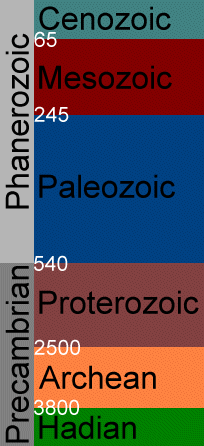
Past life is often referred to being a part of a certain era, or a certain point on the geological timescale. There are 6 eras on the geological timescale, consisting of the Hadean, Archaean, Protezoic, Paleozoic, Mesozoic, and the Cenozoic.

Hadean:

GraphThe Hadean era did not contain life as we know it, but rather the building blocks of life, such as amino acid, proteins and the like, mentioned previously. It lasted approximately from 3.8 to 4.5 billion years ago.
Archaean

This era took place from about 3.8 to 2.5 billion years ago and also saw the formation of the first cells, as described in the ’The First Cell’ section. Also, it is likely that approximately 70% of the world's landmasses where created during this era.This era saw the creation of simple bacteria and plant like algae, which could actually feed off pure energy in the form of sunlight. They became the building blocks for evolution of life , and the basis of early food chains.

Protezoic:

This era took place approximately 2.5 billion to 544 million years ago. Many fossils have been found from this Era, mostly in the form of Bacterial life and Archaean life (Archaeans are physically similar to bacteria, but are biochemically different so much that they are considered a separate from bacteria. They are known for living in very extreme environments) About 1.8 billion years ago, eukaryotic cells began to appear (Eukaryotic cells are ones containing a nucleus, which stores genetic information. Eukaryotic cells are contained in many species today, such as plants, fungi, animals, insects and so forth.) Another important event in the Proterozoic era was the first evident of oxygen buildup in the atmosphere. This meant death for early bacteria, which could not survive in oxygen environments, but allowed eukaryotic cells to thrive.The end of this era also saw the beginnings of multi-cellular life forms, such as certain algae and simple animals.

Paleozoic:

During the Paleozoic era, many life forms began to flourish. Many of these life forms we would not recognize today. These life forms slowly evolved in the ocean, and began to step out onto land, originally with amphibious life forms, and eventually with reptiles.Marking the end of this era, here was the mass Permian extinction, approximately 245 million years ago, in which many of the life forms that once flourished died off.

Mesozoic:

The Mesozoic era has three time periods. The cretaceous (146-65 mya), the Jurassic (208-146 mya) and the Triassic (245-208) Mesozoic carries the meaning of middle animals. The Mesozoic saw the creation of many different life forms, including the famous dinosaurs. There where also many new plants, including early coniferous plants. However, many of these life forms succumbed to extinction, or evolution, and are not around today in the form they originally where.

Cenozoic:

The Cenozoic is the most current era, taking place from the last mass extinction of all land-based dinosaurs (approximately 65 million years ago) to the present day. This era saw the rise of many mammals, such as whales, the great hunter cats, as well as Humans. But it also saw the rise of the birds, insects, and many new plants, including flowering plants. Much of life as we know it today evolved during this era.


Source from great site: http://www.rareresource.com

Read more interesting topic about dinosaur fossils.

Dinosaur Principles


Not much is known about the earliest development of life. However, all existing organisms share

certain traits, including the cellular structure, and the genetic code. Most scientists interpret this to mean all existing organisms share a common ancestor, which had already developed the most fundamental cellular processes, but there is no scientific consensus on the relationship of the three domains of life (Archea, Bacteria, Eukaryota) or the origin of life. Attempts to shed light on the earliest history of life generally focus on the behavior of macromolecules, particularly RNA, and the behavior of complex systems.

Though the origins of life are murky, other milestones in the evolutionary history of life are well-

known. The emergence of oxygenic photosynthesis (around 3 billion years ago) and the subsequent emergence of an oxygen-rich, non-reducing atmosphere can be traced through the formation of banded iron deposits, and later red beds of iron oxides. This was a necessary prerequisite for the development of aerobic cellular respiration, believed to have emerged around 2 billion years ago. In the last billion years, simple multicellular plants and animals began to appear in the oceans. Soon after the emergence of the first animals the Cambrian explosion (a period of unrivaled and remarkable, but brief, organismal Persity documented in the fossils found at the Burgess Shale) saw the creation of all the major body plans, or phyla, of modern animals. About 500 million years ago, plants and fungi colonized the land, and were soon followed by arthropods and other animals, leading to the development of land ecosystems with which we are familiar.

Most scientists assume that all life evolved through a succession of stages from a common ancestor,

generally thought to be a single-celled simple organism, like a bacterium, or a blue-green alga, that lived over 3500 million years ago. There is a great deal of evidence to relate all present-day organisms to each other, and that they all arose from this single ancestor.

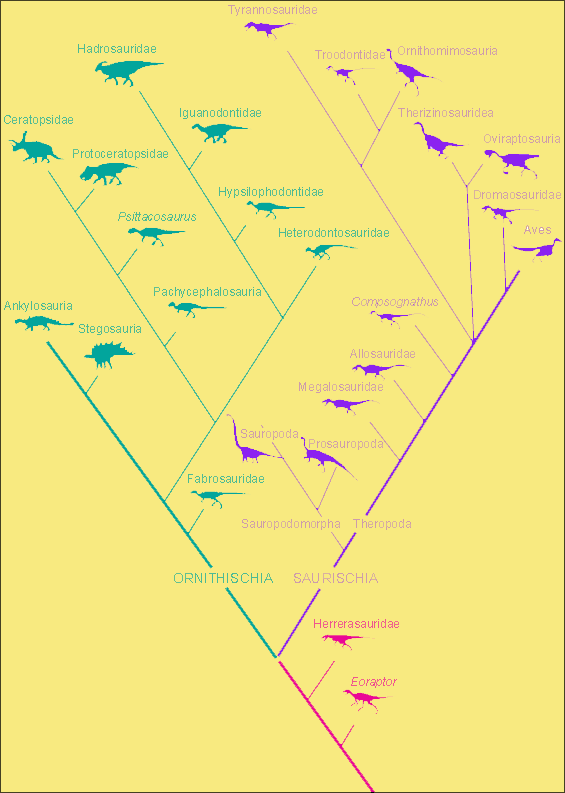
Many scientists are interested in what these relationships would be like and they reconstruct them to look very much like a branching tree. The pattern of these branching relationships is called a phylogeny. Because the pattern of a phylogeny is essentially branching, it is possible to arrange all species of plants and animals into a hierarchical arrangement, where species fit into genera, genera into families, and so on, up to kingdoms.

Source from great site: http://www.rareresource.com

Read more interesting topic about dinosaur fossils.
Sinosauropteryx Dinosaur

Sunday, October 24, 2010


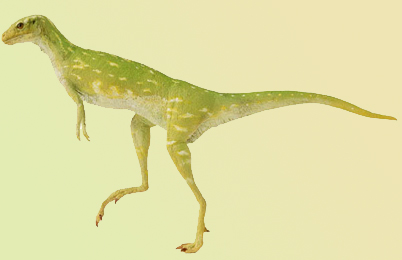
Sinosauropteryx is a lately discovered feathered dinosaur. It lived in China during the Cretaceous time and is related to Compsognathus. It was around 3 feet long, most of which was taken up by its very long tail. The remarkably well-preserved fossils show that Sinosauropteryx was enclosed with a furry down of very simple feathers.


Sinosauropteryx is significant because it appears to have had feathers, and yet was not very closely related to birds. There are many dinosaur families that were more intimately related to birds than Sinosauropteryx, counting the deinonychosaurs, the oviraptosaurs and therizinosaurs. This indicates that feathers may have been a trait of many theropod dinosaurs, not just the clearly bird-like ones, making it quite possible that equally distant animals such as Ornitholestes, Coelurus and even Tyrannosaurus rex may have had feathers.


Sinosauropteryx was establish in Liaoning, China, which is now considered to be a "hotspot" for dinsoaurs, chiefly those with birdlike features such as Caudipteryx.


Source from great site: http://www.rareresource.com

Read more interesting topic about dinosaur fossils.
Sinornithosaurus Dinosaur


Sinornithosaurus millenii ("Chinese lizard-bird of the new millennium") is a feathered dromaeosaurid dinosaur genus from the Lower Cretaceous (Middle Barremian) of the Yixian Formation in China. It is the fifth feathered dinosaur exposed, and is the neighboring of them all to the birds. It provides additional proof supporting the "ground up" theory of flight, which proposes that feathers first developed in terrestrial dinosaurs, instead of in climbers. It also suggests that additional dromaeosaurids, like Velociraptor, may have had feathers.

Fuzzy-feathered runner

The feeling of proto-feathers was found in the rock surrounding Sinornithosaurus. They were calm of filaments, and showed two features that indicate they are early feathers. First, several filaments were connected together into "tufts", similar to the way down is structured. Second, a row of filaments (barbs) were joined as one to a main shaft (rachis), similar to the way normal bird feathers are designed. However, they do not have the secondary branching and tiny little hooks (barbules) that current feathers have, which allow the feathers of modern birds to form a discrete vane.
Sinornithosaurus Dinosaur

This chains the "ground up" theory of avian flight. The "tree down" theory postulates that birds evolved from tree-climbing (arboreal) dinosaurs, which glided from tree to tree. The "ground up" theory, on the other hand, suggests that birds descended from running dinosaurs, which used their feathers for lagging or as part of mating displays, before they started using them to fly.

In addition to the feathers, Sinornithosaurus might flap its arms — it is the first dinosaur exposed with a bird-like shoulder girdle. It also has a bird-like pelvic girdle and hind limbs, and very long arms.

Classification

The dromaeosaurids are a collection of agile, meat-eating dinosaurs with large claws and big brains, which comprise the Deinonychus and the Utahraptor. As a group, they have been badly represented in the fossil record, and are known only from scattered bones and partial skeletons.

Sinornithosaurus lived about 125 million years before in the Barremian age of the Lower Cretaceous time, which makes it the earliest and almost certainly the most primitive dromaeosaurid yet discovered. Sinornithosaurus is the fifth known feathered dinosaur genera, but all the others are higher. The presence of proto-feathers on an early dromaeosaurid indicates that all dromaeosaurids may have had proto-feathers instead of scales, even if later and higher species may have lost them.

Analysis of known features also indicates that the dromaeosaurid family is more intimately related to birds than the troodontids (see also: cladistics). Most paleontologists now consider that birds branched off from the dromaeosaurids, and much earlier than was previously believed, maybe 150 million years past, during the late Jurassic.

Discovery

Sinornithosaurus was exposed by Xing Xu, Xiao-Lin Wang and Xiao-Chun Wu of the Institute of Vertebrate Paleontology and Paleoanthropology of Beijing. An almost-complete fossil, with proto-feather impressions, was recovered from Liaoning Province, China, in the Yixian configuration; the same incredibly rich location where four dinosaurs with feathers were exposed previously, Protarchaeopteryx, Sinosauropteryx, Caudipteryx, and Beipiaosaurus.

Source from great site: http://www.rareresource.com

Read more interesting topic about dinosaur fossils.
Giganotosaurus Dinosaur


Giganotosaurus is a dinosaur that lived about 100 to 90 million years past during the mid Cretaceous time and is measured to be the heaviest known terrestrial carnivore.

About 70 percent of the holotype specimen's (MUCPv-Ch1) skeleton was improved by paleontologists, including the skull, pelvis, leg bones, and most of the backbone. An eight percent longer specimen (MUCPv-95) also has been improved. The largest Giganotosaurus specimen is predictable to be 14.3 m (47 ft) in length and weigh up to 8,000 kg (9 tons), surpassing Tyrannosaurus rex by almost 2 m and 2,000 kg (6.5 ft and 2.2 tons). The specimen’s skull alone measures 1.95 m (6 ft 5 in).

Though longer and heavier than T. rex, G. carolinii was moderately slender and had a smaller braincase in comparison. However, even although the brain of Giganotosaurus was the size of a banana, a well-developed olfactory region indicates that it may have had a good intellect of smell.

Titanosaurid fossils have been improved near the remains of Giganotosaurus, leading to speculation that these carnivores may have preyed on the giant herbivores.

G. carolinii was named for Ruben Carolini, an amateur fossil hunter who exposed the fossils in the deposits of the Rio Limay Formation of Patagonia, in 1993. The genus name "Giganotosaurus" is consequent from the Greek gigas ("giant"), notos ("south wind") and sauros ("lizard"). Both names were published by Rodolfo Coria and Leonardo Salgado in the periodical Nature in 1995. The original fossils stay at the Carmen Funes Museum in Neuquen, Argentina, although replicas are commonly established in other places. The family of Giganotosaurus and Carcharodontosaurus is in fact Carcharodontosauridae.


Source from great site: http://www.rareresource.com

Read more interesting topic about dinosaur fossils.
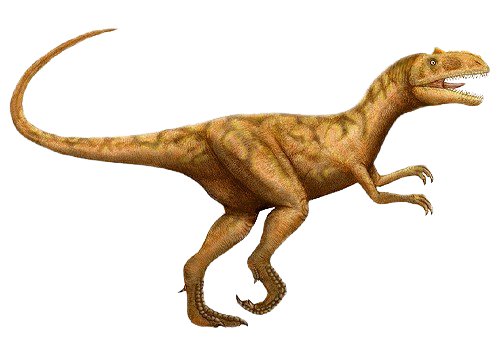
Ultrasauros Dinosaur


Ultrasauros (formerly Ultrasaurus) is at present invalid sauropod genus, with a complicated history. When a compilation of bones from it seems that hitherto undiscovered dinosaur was set up in 1979 at the Dry Mesa Dinosaur Quarry in Utah by James A. Jensen, it was hailed as the main dinosaur known to date. Unfortunately, the specimen was in fact composed of bones from a Supersaurus and a large Brachiosaurus.

Jumbled bones

The backbone (a dorsal vertebra, labeled BYU 9044) that was second-hand to define the new species in fact belongs to a Supersaurus. In fact, it almost certainly belongs to the original Supersaurus, which was exposed in the same quarry in 1972. Other bones, like the shoulder girdle (scapulocoracoid, BYU 9462) belong to a Brachiosaurus, perhaps a large specimen of Brachiosaurus altithorax. (Curtice, 1996)

The Brachiosaurus bones point to a large, but not record-breaking individual, a little larger than the Giraffatitan brancai in the Humboldt Museum of Berlin, which was the main known dinosaur for decades. Larger specimens of Brachiosaurus are known from the Tendaguru Beds of Tanzania, in east Africa.

Originally, the bones were supposed to represent an single dinosaur that was about 25 to 30 meters (80 to 100 feet) long, 8 meters (25 feet) high at the shoulder, 15 meters (50 feet) in total height, and weighing maybe 70 metric tonnes (75 tons). At the time, mass estimates ranged up to 180 tons, which located it in the same group as the blue whale and the equally problematic Bruhathkayosaurus. More present estimates are far more conservative.


Source from great site: http://www.rareresource.com

Read more interesting topic about dinosaur fossils.
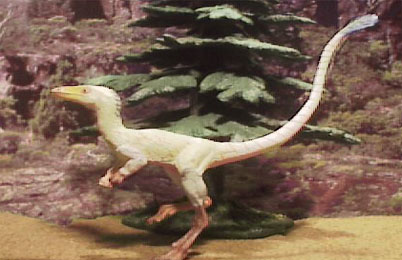
Titanosaurids Dinosaur


Titanosaurids, or members of the relations Titanosauridae, are sauropod dinosaurs such as Saltasaurus and Titanosaurus. This family includes some of the heaviest creatures ever to walk the soil, such as the Argentinosaurus and the Paralititan — which might have weighed up to 100 tonnes (110 short tons), or perhaps even double that, if some poorly-described data is supposed (see the Bruhathkayosaurus).


Characteristics

Titanosaurs had small heads, even when compared to other sauropods. The head was also wide, alike to the heads of the Camarasaurus and the Brachiosaurus, but more stretched out. Their nostrils were large ("marcronarian"), and they all had crests shaped by these nasal bones. Their teeth were either somewhat spatulate (spoon-like), or like pegs or pencils, but were forever very small.


Their necks were comparatively short, for sauropods, and their tail was whip-like but not as long as a diplodocid. While the pelvis (hip area) was slimmer than some sauropods, the pectoral (chest area) was much wider, giving them an exclusively "wide-gauged" stance. As a result, the fossiled trackways of titanosaurs are definitely broader than than other sauropods. Their forelimbs were also stocky, but their rear limbs were longer. Their vertebrae (back bones) were solid (not hollowed-out), which may be a throwback to more primitive saurischians. Their spinal column was suppler, so they were probably more agile than their cousins, and better at education up.


From skin impressions establish with the fossils, it has been strong-minded that their skin was armored with a small mosaic of small, bead-like scales approximately a larger scale. One species has even been exposed with bony plates, like the Ankylosaurus.


While they were all huge, many were fairly standard in size compared to the other giant dinosaurs. There were even some island-dwelling dwarf species, almost certainly the result of allopatric speciation.


Nesting grounds

A large titanosaurid nesting earth was recently exposed in Auca Mahuevot, in Patagonia, Argentina, and another colony has allegedly been discovered in Spain. The small eggs, about 11–12 cm (4–5 in.) in diameter, restricted fissile embryos, complete with skin impressions (though there was no sign of feathers or dermal spines). Apparently more than a few hundred female saltosaurs dug holes, laid their eggs, and then buried them under dirt and vegetation. This gives proof of herd behavior, which the length of with their armor may have been a defense next to large predators like the Abelisaurus.


Range

The titanosaurs were the last great collection of sauropods before the Cretaceous-Tertiary death event, about 65–90 million years past, and were the dominant herbivores of their time. The other sauropods, like the diplodocids and the brachiosaurids, died out flanked by the late Jurassic and the mid-Cretaceous, while the titanosaurs appeared in the early Cretaceous, and grew in power until the end.


They were widespread, particularly in the southern continents that were then part of the supercontinent of Gondwana. Only Central and North America (then part of the Laurasia supercontinent), and Antarctica come into view to have never been occupied by titanosaurs.


Classification

For such a wipespread and winning group (they represent roughly a third of the total sauropod diversity known to date), the fossil evidence of titanosaurs is poor. Only recently have skulls or comparatively complete skeletons of any of the roughly 50 species of titanosaur been exposed. Many are poorly known, and much of the material may be deemed invalid or reclassified as sympathetic of the clade grows. The anchor taxon, the Titanosaurus, is chiefly poorly known.


Source from great site: http://www.rareresource.com

Read more interesting topic about dinosaur fossils.
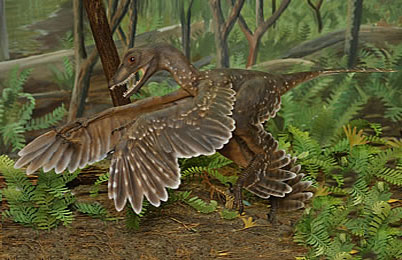
Lesothosaurus Dinosaur


Lesothosaurus is a part of the herbivorous clade of dinosaurs, the Ornithischia. It was named by paleontologist Peter M. Galton in 1978, the name denotation "lizard from Lesotho".


Lesothosaurus was originally measured an ornithopod. However, more recent work by Paul Sereno has optional that it may actually represent one of the primitive of all known ornithischian dinosaurs. The taxonomic history of Lesothosaurus is multifaceted, and it has long been puzzled with Fabrosaurus, another small ornithischian from the same locality.


Lesothosaurus was a small (one meter in length), bipedal plant-eater. It lived in the hot, arid circumstances of Lesotho and South Africa during the Early Jurassic. Remains of Lesothosaurus have been composed from the Upper Elliot Formation.


Source from great site: http://www.rareresource.com

Read more interesting topic about dinosaur fossils.
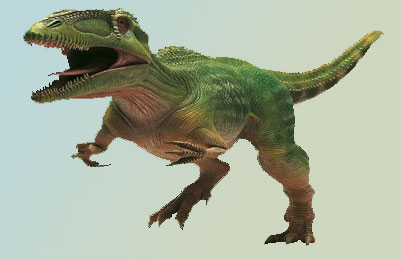
Theropods Dinosaur

Thursday, October 21, 2010


Acrocanthosaurus (meaning "high-spine lizard" because of the spikes growing out of its spine) was a fierce predator that was roughly 30-40 feet (9-12 m) long and weighed about 5,000 pounds (2300 kg). It had a big head, with a 4.5 foot (1.4 m) long skull and 68 thin, sharp, serrated teeth. It had 17-inch (43 cm) spikes extending from its vertebrae, along the neck and tail that may have formed a thick, fleshy sail on its back. It had powerful arms, and each hand had three fingers, equipped with long, sickle-like claws. Acrocanthosaurus lived during the early Cretaceous period, roughly 115-105 million years ago, in the tropics near sea level.

Albertosaurus:

Albertosaurus was a relative of Tyrannosaurus rex; Albertosaurus was smaller than T. rex and lived a few million years earlier. Albertosaurus walked on two legs and had a large head with sharp, saw-toothed teeth. It had two-fingered hands on short arms. Its long tail provided balance and quick turning. It had powerful back legs with clawed, three-toed feet. Albertosaurus was about 30 feet (9 m) long, about 11 feet (3.4 m) tall at the hips, and up to 3 tons in weight (averaging roughly 2500 kg). The lower jaw of Albertosaurus had from 14 and 16 teeth; the upper jaw had 17-19 teeth. It had one row of teeth in each jaw but had at least one replacement tooth growing up from under each tooth.Albertosaurus lived in the late Cretaceous period, about 76-74 million years ago, toward the end of the Mesozoic; the Age of Reptiles.Albertosaurus was a carnivore (a meat eater). It probably ate plant-eating dinosaurs.

Allosaurus:

Allosaurus was a large, meat-eating dinosaur. It was the biggest meat-eater in North America during the late Jurassic period.

Allosaurus was the biggest meat-eater during the late Jurassic period, about 154 to 144 million years ago.Allosaurus was a huge carnivore, a meat eater equipped with sharp, pointed teeth in large, powerful jaws - it was the biggest meat-eater in its habitat. This theropod also had long, sharp clawed hands. Allosaurus probably ate large, plant-eating dinosaurs, like Stegosaurus.

Baryonyx:

Baryonyx means heavy claw was an unusual theropod with huge 1-foot (30.5-cm) long claws on its hands, and long, narrow, crocodile-like jaws with 96 small, serrated teeth (this is 1.5 times the number of teeth that most other theropods had). It had a small crest on its snout. Baryonyx had a long, straight neck (unlike other theropods, which had s-shaped necks) and a long tail. Its low-slung body was supported by 2 large rear legs and 2 slightly smaller arms. It was a carnivorous dinosaur from the early Cretaceous period, about 125 million years ago. This predator was about 32 feet (9.5 m) long, weighing perhaps over 2 tons. Baryonyx lived during the early Cretaceous period, about 125 million years ago, in what is now England. Baryonyx was a carnivore, a meat eater with huge claws and many small, sharp teeth in powerful, crocodile-like jaws. It had 64 teeth in the lower jaw but only 32 teeth in the upper jaw (the upper teeth were larger than the lower teeth). Baryonyx was a large predator that ate fish. A fossilized Baryonyx was found with a fossilized meal in its stomach; this stomach contained fish scales, fish bones, and some partially digested bones of a young Iguanodon. So far, Baryonyx is the only known dinosaur that ate fish. It may have waded in rivers and shallow seas to catch fish (just as some modern-day bears do).

Carcharodontosaurus:

Carcharodontosaurus was a huge meat eater from the Cretaceous period. This North African carnosaur had a massive tail, a bulky body, and heavy bones. Its arms were short and had three-fingered hands with sharp claws. Carcharodontosaurus was from 26-44 feet long (8-14 m), perhaps weighing up to 8 tons. It had a skull that was as big as a person - 5'4" (1.6 m). It had large, powerful jaws with long, serrated, sharp teeth up to 8 inches long. Although Carcharodontosaurus was larger than T. rex, its brain was smaller. Carcharodontosaurus was closely related to Giganotosaurus but not to T. rex. Carcharodontosaurus was a more primitive dinosaur than T. rex. Carcharodontosaurus lived in the Cretaceous period, about 110 to 90 million years ago. Carcharodontosaurus was a carnivore, a meat eater. It was a large, fierce predator that could kill even large sauropods. Carcharodontosaurus may also have been a scavenger.

Source from great site: http://www.rareresource.com

Read more interesting topic about dinosaur fossils.